Winter Street Church
Across from Bath’s Library Park, the white tower of Winter Street Church rises above Washington Street. Pointed windows and slender spires give the building its Gothic character, while its wooden construction places that design firmly in the New England town around it. The church was built in 1843 by Anthony Coombs Raymond, a master builder from nearby Brunswick. It is recognized as one of the finest surviving examples of wooden Gothic Revival church architecture in New England.
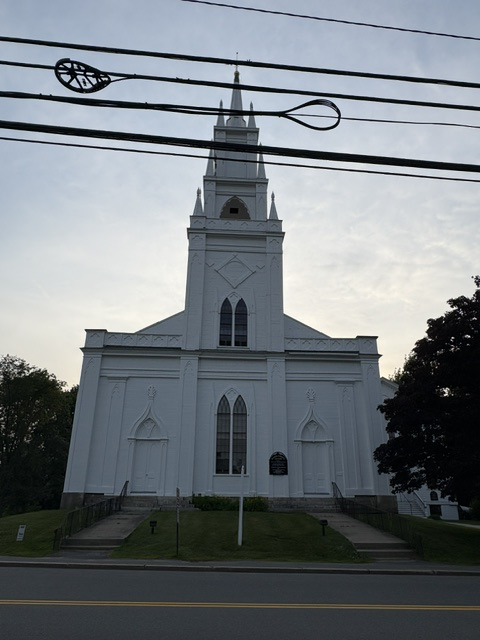
For more than a century, it was the Winter Street Congregational Church. By 1971, the building faced demolition. Bath residents responded by forming Sagadahoc Preservation, Inc. to save it. Their effort preserved the church and began an organization that would continue working to protect historic buildings throughout the area
Now known as the Winter Street Center, the building has a new public life. Its hall is used for gatherings and events, and preservation work continues. The pointed windows and tall steeple still express the purpose for which it was built, while the activity inside reflects the decision Bath made to keep using a place it valued.
Winter Street Church tells two chapters of Bath’s history at once: the ambition of a growing nineteenth-century city and the determination of a later generation to care for what it inherited. Its survival was a choice, made by people who saw that an old building could still have a place in the life of their community.
Read More From Nancy
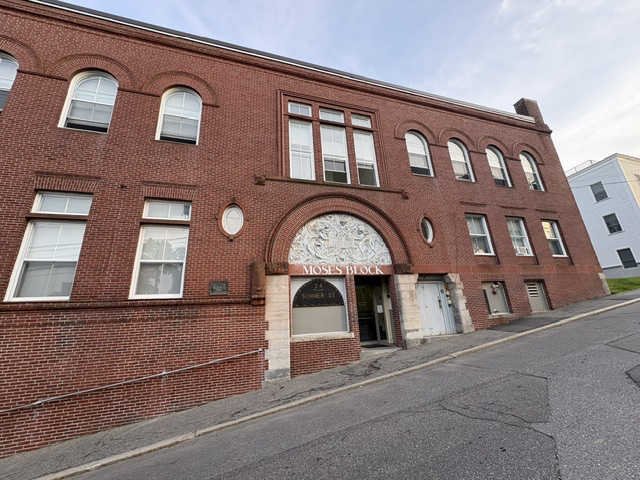
The Moses Block and Bath’s First YMCA Home
On Bath’s Front Street, the brick façade of the Moses Block holds a clue to a life that once unfolded inside it. Near the entrance, a small plaque dedicates the building to Bath’s young men. It recalls the years when this was home to the city’s YMCA, a place for learning, recreation, and companionship in a […]
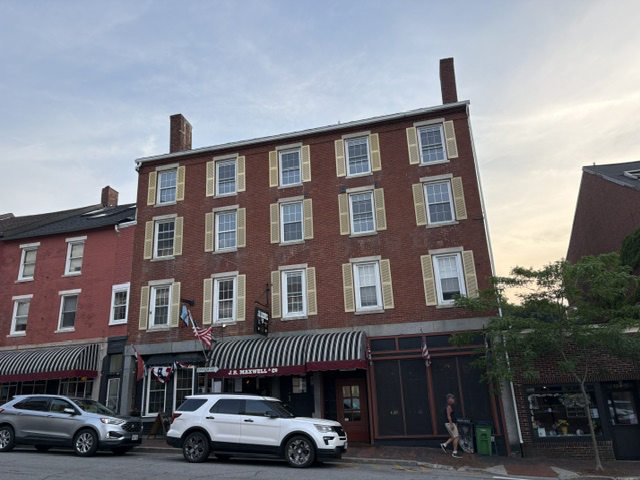
The Elliot House Block
A tall brick building on Bath’s Front Street recalls a time when the city’s waterfront drew travelers as well as ships. John Elliot had the building constructed as a hotel in 1840. Rising above many of its neighbors, the Elliot House would have been a prominent address in a town growing through shipbuilding and trade. Its […]
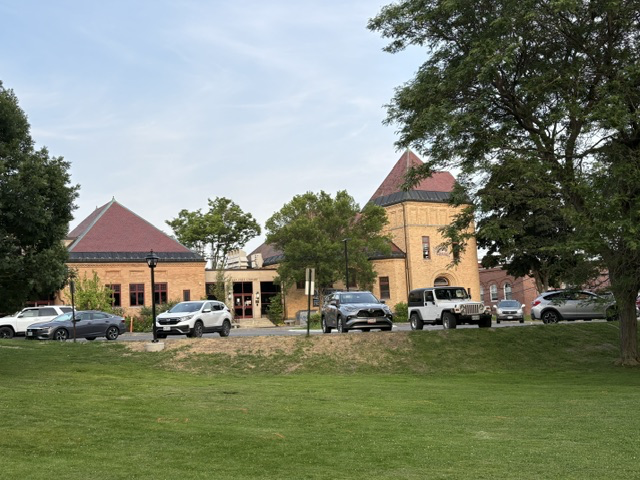
Patten Free Library
Patten Free Library began long before it had a building of its own. Founded as the Patten Library Association in 1847, it was a subscription library whose books moved through rented rooms and, later, a donated house. George and John Patten were among its generous early supporters, but a different gift would change who could […]

