The Moses Block and Bath’s First YMCA Home
On Bath’s Front Street, the brick façade of the Moses Block holds a clue to a life that once unfolded inside it. Near the entrance, a small plaque dedicates the building to Bath’s young men. It recalls the years when this was home to the city’s YMCA, a place for learning, recreation, and companionship in a busy shipbuilding city.
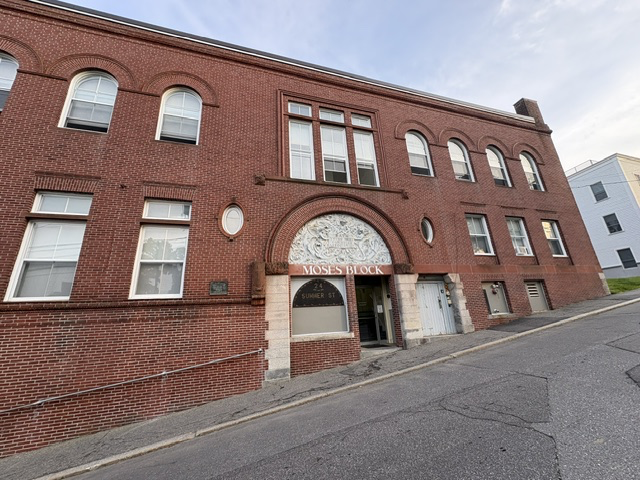
Bath’s YMCA began in 1856 with meetings at the Central Church. In its early years, members gathered in borrowed spaces for Bible classes, lectures, debates, and readings. As the organization grew, it needed rooms of its own. A fire destroyed the earlier Columbia Block in 1893, and the replacement was planned with substantial space for the YMCA. Galen C. Moses, who had also helped make Bath’s library free to the public, contributed $50,000 toward the YMCA portion of the new building. The organization moved in during 1894.
What happened inside changed with Bath itself. Young people played basketball there before the high school had a gym. During World War I, when shipbuilding drew workers into the city, part of the building provided lodging for workers and seamen. During World War II, the USO used some of its space. Over the decades, the YMCA added activities ranging from bowling and swimming to clubs and community programs.
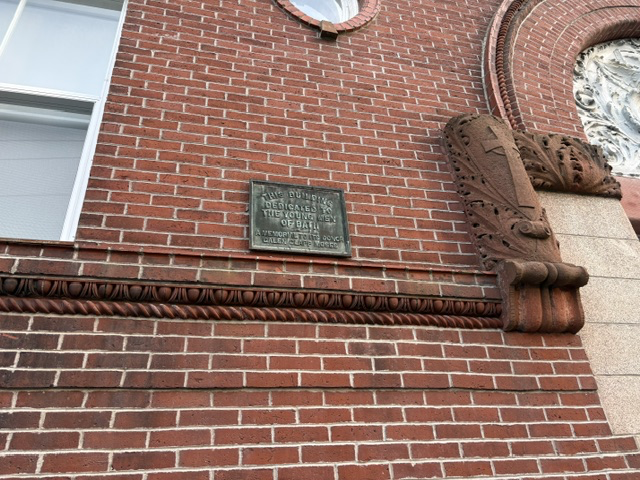
The YMCA moved to a larger home on Centre Street in 2001, but the old building retained its place on Front Street. Its shops, upper floors, brickwork, and dedication plaque preserve traces of a time when the block was a center of daily life for generations of Bath residents. Like the Patten Free Library, the Moses Block tells a story about what Galen Moses chose to give his city, and about all the people who found a place within that gift.
Read More From Nancy
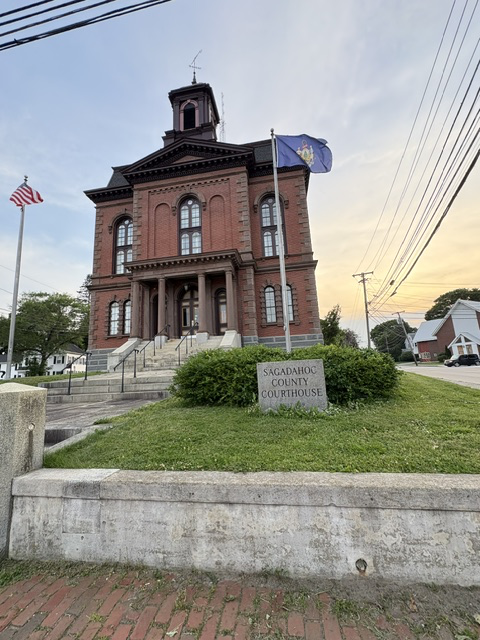
The Sagadahoc County Courthouse
The Sagadahoc County Courthouse rises above Bath’s streets with the confidence of a building meant to last. Its broad steps lead to a columned entrance, while tall arched windows, patterned brickwork, and a small cupola give the façade its distinctive character. It was built at a time when Bath was growing rapidly, and its public buildings were […]
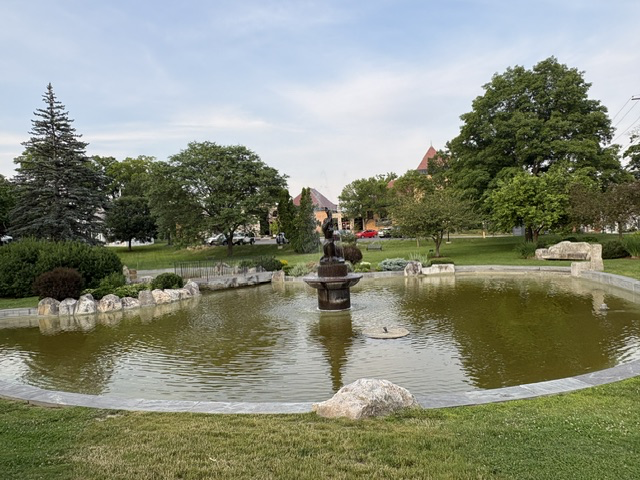
The Spirit of the Sea
As we walked through Bath’s Library Park, we came upon a broad pool with a bronze figure rising from its center. Water fell around her into the basin below. The fountain belonged to the park’s quiet setting, yet the figure’s upward reach gave it a sense of movement that drew us closer. The sculpture is Spirit […]
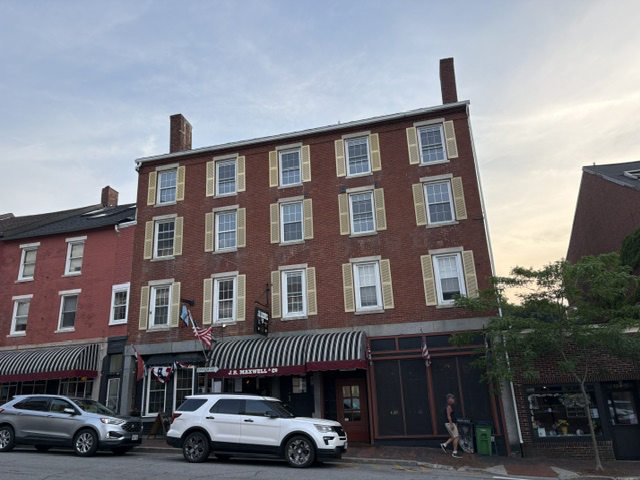
The Elliot House Block
A tall brick building on Bath’s Front Street recalls a time when the city’s waterfront drew travelers as well as ships. John Elliot had the building constructed as a hotel in 1840. Rising above many of its neighbors, the Elliot House would have been a prominent address in a town growing through shipbuilding and trade. Its […]

