The Soldiers Monument
While walking through Charlottetown, we came across this monument to the men of the Royal Canadian Regiment who served in the South African War of 1899–1902. It immediately caught my attention because it commemorates a war that we rarely encounter on monuments at home in the United States.
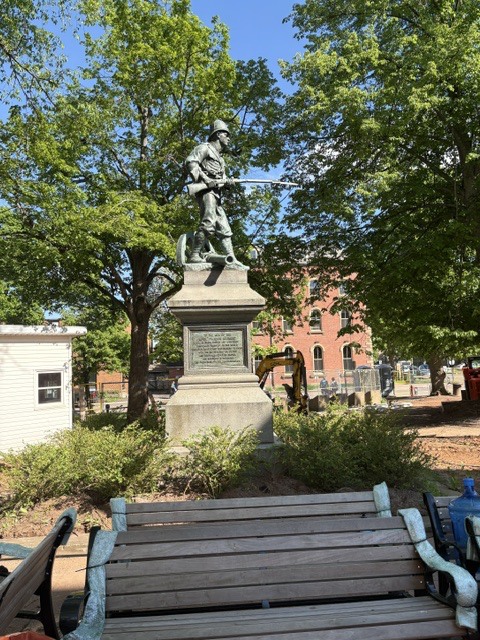
The reason is simple: the United States was not a participant in this war. This was a conflict of the British Empire, fought in southern Africa between Britain and the two Boer republics: the South African Republic and the Orange Free State. Canada, still closely connected to Britain and the Empire, sent more than 7,000 volunteers to serve in South Africa.
For Canadians, the decision to participate was significant and controversial. Canada had been a country only since 1867, and there was disagreement over whether it should become involved in Britain’s imperial wars. Many English Canadians strongly supported sending troops, while many French Canadians opposed Canadian participation. The debate raised a question that Canada would continue to wrestle with for years: how independent should Canada be from Britain in determining when and where Canadians would fight?
The Charlottetown monument grew directly from the Island’s participation. In October 1900, as the first Island contingent was returning home, Charlottetown citizens began raising money for a memorial. More than $2,000 came from public subscriptions, Island schoolchildren contributed nearly $200, and the provincial and city governments also contributed. Even a theatrical performance was staged to raise money.
The bronze soldier was designed by sculptor Hamilton P. MacCarthy. Rather than portraying a general or political leader, MacCarthy created an ordinary young soldier of the Royal Canadian Regiment. He is shown in the middle of battle, defending a dismantled gun with his rifle and fixed bayonet. The pedestal was made by Charlottetown craftsman E. F. Purdy. The completed monument was unveiled on July 6, 1903.
The monument originally remembered two Prince Edward Islanders who died at Paardeberg in South Africa: Roland Taylor and Alfred Riggs. Taylor was only 21 years old when he died on February 18, 1900. Riggs died nine days later, on February 27th Paardeberg became particularly significant in Canadian military history because Canadian soldiers played an important role in what became the first major British victory of the war.
But it was the inscription on the monument that interested me most. It praises Canada’s willingness to share with the “Motherland” the responsibilities of Empire. Those words place us directly into Canada of 1903. Britain was still being described as the Motherland, and military service on behalf of the British Empire was presented here as a source of Canadian pride.
That is what makes this monument particularly interesting to me as an American visitor. We have countless monuments to our own wars in towns and cities throughout the United States, but we would not normally encounter a local memorial to the South African War. The United States did not send troops to fight alongside Britain. Prince Edward Island did.
The monument itself has continued to evolve in meaning. On its 100th anniversary in 2003, it was rededicated to all Islanders who volunteered for Prince Edward Island’s South African contingents and served with the Royal Canadian Regiment between 1899 and 1902.

Read More From Nancy
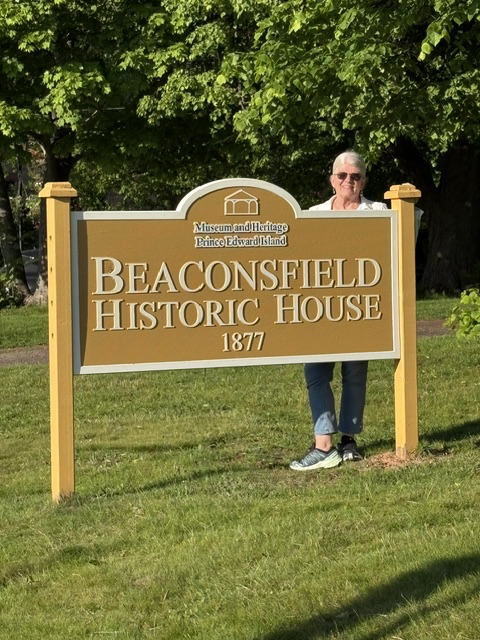
Beaconsfield Historic House
While exploring Charlottetown, we stopped at Beaconsfield Historic House, a beautiful Victorian home overlooking Charlottetown Harbour. Standing on its broad veranda and looking toward the water, it is easy to understand why this would have been one of the city’s most desirable places to live in the late 19th century. Beaconsfield was designed and built […]
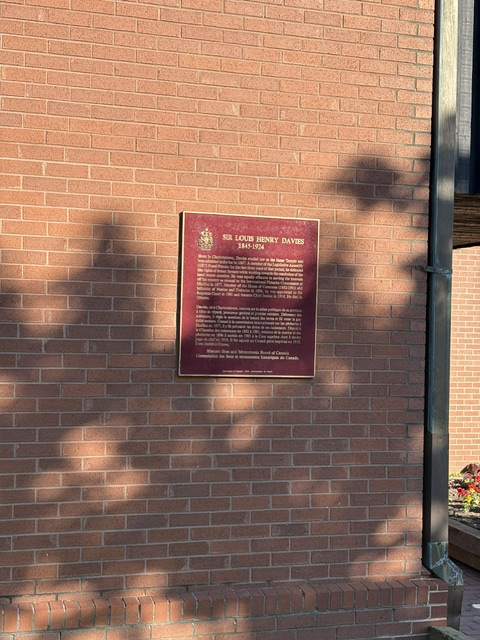
Sir Louis Henry Davies
While walking through Charlottetown, I noticed this plaque commemorating Sir Louis Henry Davies. I didn’t know who he was, but the positions listed beneath his name caught my attention. Here was a man from Prince Edward Island whose career eventually took him to some of the highest offices in Canada. Louis Henry Davies was born […]
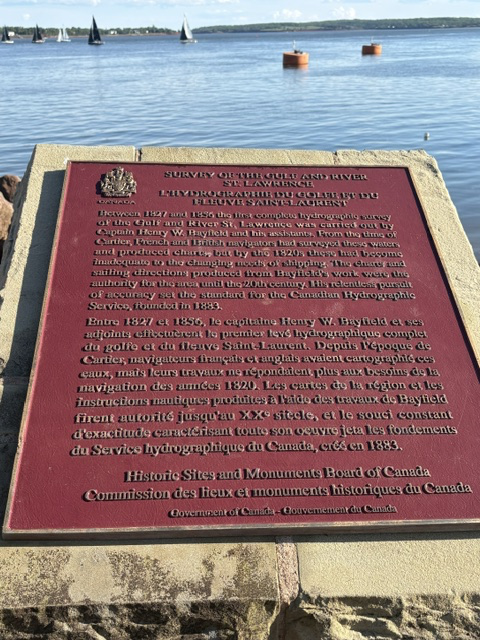
Captain Henry Wolsey Bayfield
Walking along the Charlottetown waterfront, it is easy to simply enjoy the view across the harbor. Sailboats move across the water, the opposite shore seems close by, and today we give little thought to knowing exactly where the channels, shoals and underwater hazards are located. A plaque along the waterfront introduced me to Captain Henry […]

