The Gainsford House
While walking along Water Street in Charlottetown, I photographed this substantial brick house without realizing just how old it was. Built between 1832 and 1834, the Gainsford House is the oldest surviving brick residence in Charlottetown and one of the city’s important links to its early 19th-century past.
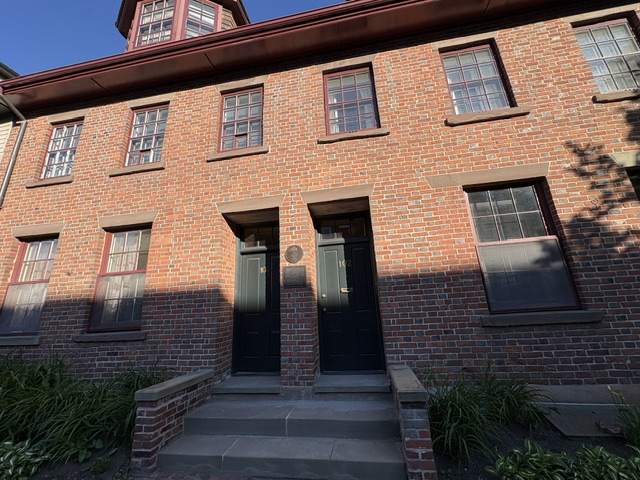
John and Elizabeth Gainsford built the house as a double residence, essentially two homes joined together. But even the ownership of the property tells us something about life in that period. In 1832, the land was placed in trust for Elizabeth Gainsford through three prominent local men. Under the laws then in effect on Prince Edward Island, a married woman could not independently purchase, hold or sell property. It would be decades before that changed.
The decision to build in brick was unusual. Charlottetown was still predominantly a town of wooden buildings. John Gainsford, however, was a partner in a brickyard and may have produced the bricks used for his own home. The resulting building was so distinctive that it became a local landmark. People sometimes described other properties simply by saying they were across from or beside Gainsford’s brick house.
In December 1857, a serious fire swept through this section of Water Street, destroying most of the surrounding block. The Gainsford House survived. Its brick walls helped protect it, but the wooden roof remained vulnerable to flying sparks. Accounts credit determined neighbors with helping save the building by keeping wet sheets and blankets spread across the roof.
Nearly two centuries after John and Elizabeth Gainsford built their unusual brick home on Water Street, it is still there—no longer simply a landmark for giving directions, but a rare survivor from the Charlottetown that existed long before Canada itself.
Read More From Nancy
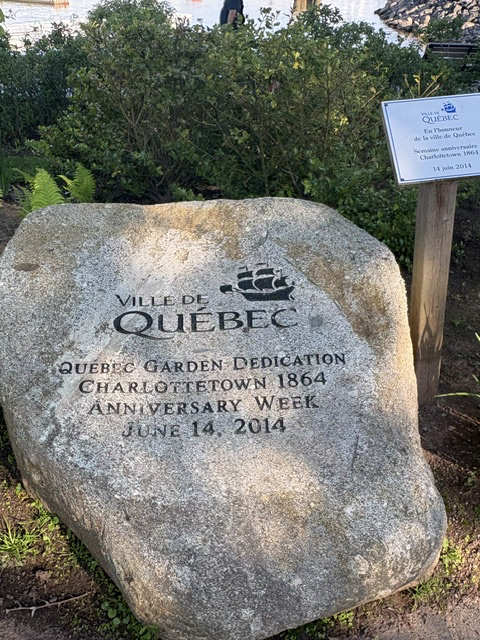
Québec Garden
While walking through Charlottetown, I came across this stone marking the Québec Garden, dedicated by Québec City in June 2014 during the 150th anniversary year of the Charlottetown Conference. Its location in Charlottetown represents an important connection between two Canadian cities. In September 1864, delegates gathered in Charlottetown and began seriously considering the creation of […]
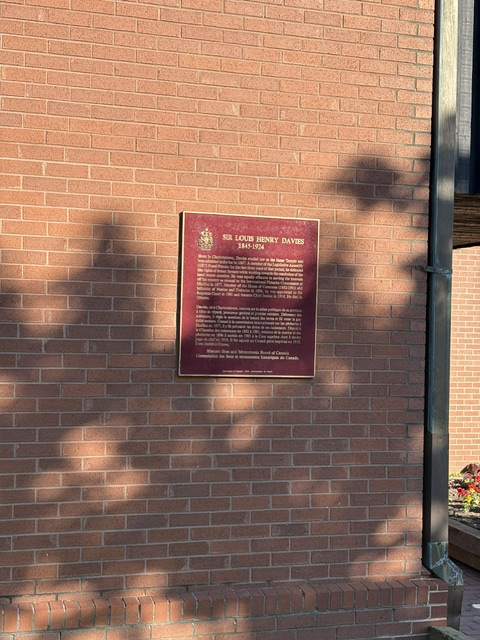
Sir Louis Henry Davies
While walking through Charlottetown, I noticed this plaque commemorating Sir Louis Henry Davies. I didn’t know who he was, but the positions listed beneath his name caught my attention. Here was a man from Prince Edward Island whose career eventually took him to some of the highest offices in Canada. Louis Henry Davies was born […]
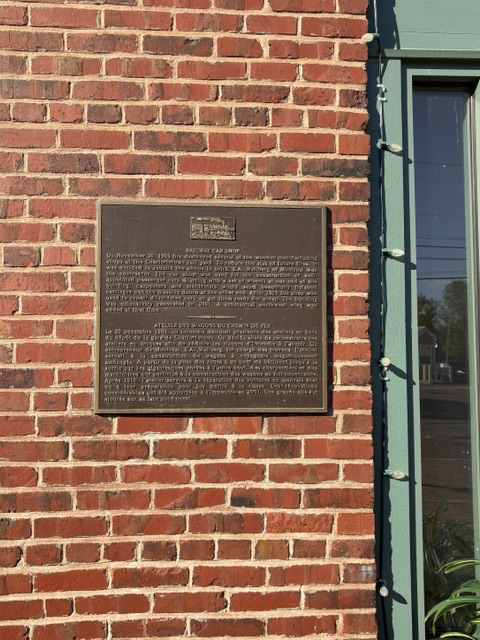
The Railway
While walking through Charlottetown, I came across this old Railway Car Shop. At first, it seemed like another surviving industrial building, but the nearby interpretive panels revealed a much larger story. Prince Edward Island’s railway didn’t simply change how Islanders traveled. It helped change the political future of the Island itself. Before the railway was […]

