The Rowlandson Cupboard
Displayed in the Historical Museum at Lancaster’s Thayer Memorial Library, the cupboard is believed to have belonged to the family of Reverend Joseph Rowlandson, the first minister of Lancaster, and his wife, Mary Rowlandson. More than three hundred years ago, this piece of furniture stood in one of the earliest homes in the Massachusetts Bay Colony, quietly witnessing everyday family life during a turbulent period of American history. Because of the people who once owned them. This remarkable seventeenth-century cupboard is significant for both reasons.
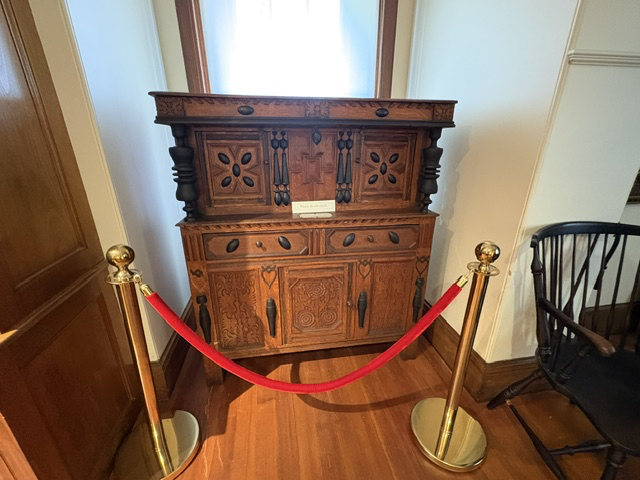
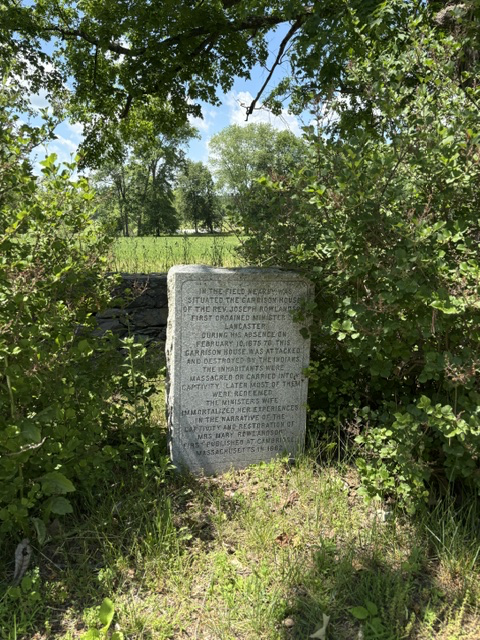
The cupboard’s connection to Mary Rowlandson gives it extraordinary historical importance. On February 10, 1676, during King Philip’s War, Lancaster was attacked by Native forces allied under the leadership of Monoco (Nanomocomuck). Reverend Rowlandson was away seeking military assistance, while Mary and her children remained at the garrison house. During the attack, the house was destroyed, many settlers were killed, and Mary and several of her children were taken captive. After nearly eleven weeks, she was ransomed and eventually returned home. Her account of those experiences, The Narrative of the Captivity and Restoration of Mrs. Mary Rowlandson, published in 1682, became one of the earliest and most widely read books produced in colonial America. It has remained continuously in print for more than three centuries and is considered a landmark in American literature.
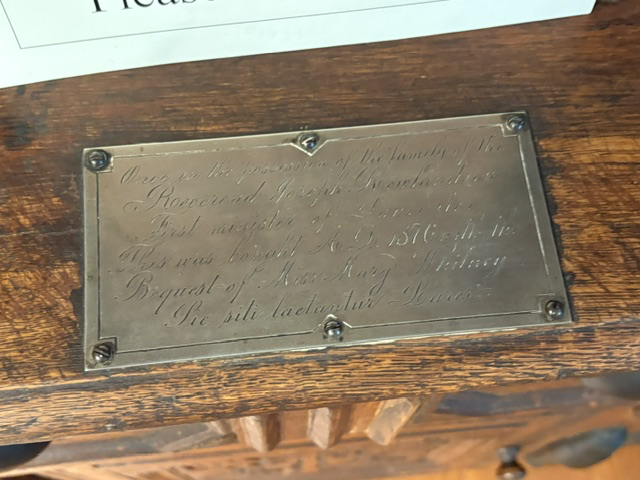
For many years, historians believed that furniture from the Rowlandson home had been destroyed during the attack. During the nineteenth century, however, researchers traced the ownership of this cupboard back through the Rowlandson family. In 1876, using a bequest from Mary Whitney, Lancaster purchased the piece so it could be preserved for future generations. Careful restoration revealed the beautiful grain and craftsmanship hidden beneath layers of paint and varnish, allowing visitors to appreciate both its artistry and its remarkable history.
The cupboard itself is a beautiful example of early New England furniture. Its paneled doors, hand-carved decoration, and solid oak construction reflect the craftsmanship brought to the colonies by English settlers during the seventeenth century. At a time when most families owned very little furniture, a cupboard like this represented one of the household’s most valued possessions. It stored important documents, linens, silver, and treasured family belongings.
Read More From Nancy
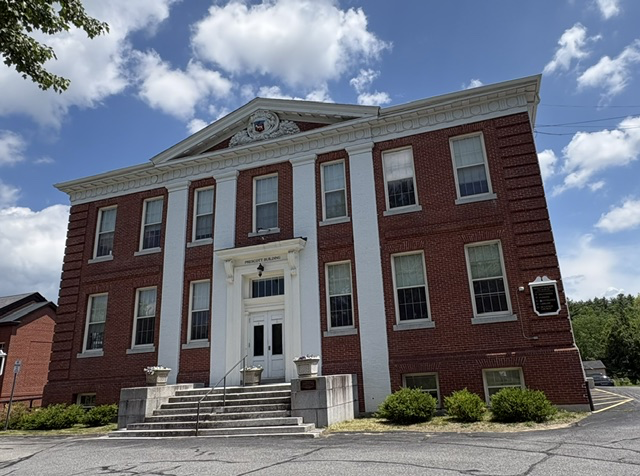
Prescott Building
Exploring Lancaster, I came upon the Prescott Building, one of the town’s most important civic landmarks. Standing prominently near the town center, the stately brick structure reflects the pride and sense of community that characterized early twentieth-century New England. With its classical proportions, white pilasters, and formal entrance, the building conveys a sense of permanence […]
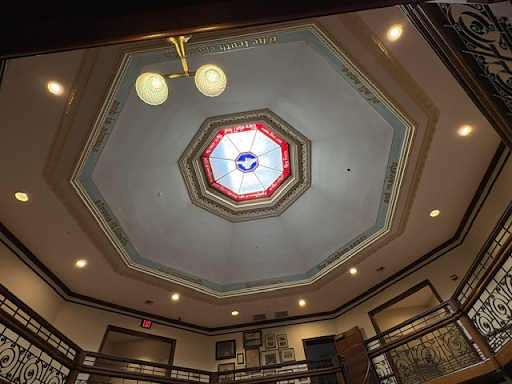
Peace Ceiling of Thayer Library
One of the most beautiful and symbolic features we discovered during our tour of the Thayer Memorial Library was the remarkable Peace Ceiling. Looking upward into the octagonal rotunda, we saw a stained-glass skylight surrounded by inscriptions and decorative artwork that reflect the ideals upon which Memorial Hall was founded. The effect is both inspiring […]
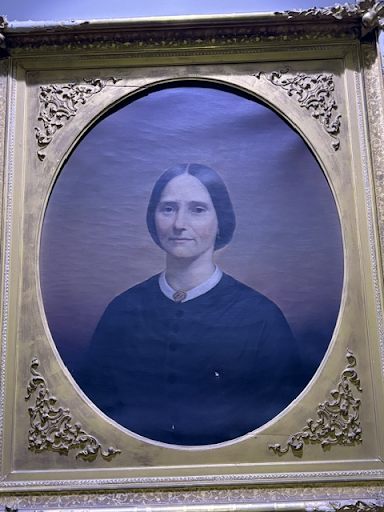
Cornelia Van Rensselaer Thayer: Connected to a Founding Father
Among the treasures preserved in the Lancaster Historical Museum is this 1853 portrait of Cornelia Patterson Van Rensselaer Thayer, painted by renowned American artist George Peter Alexander Healy, one of the most sought-after portrait painters of the nineteenth century. What makes this portrait particularly fascinating is Cornelia’s connection to one of America’s Founding Fathers. Her mother, Margaret […]

