South Lancaster Engine House
One of the architectural gems we encountered in Lancaster was the South Lancaster Engine House, the oldest operating fire station in the town and one of the oldest continuously active firehouses in the region. Located in the village center of South Lancaster, the handsome white building immediately caught my attention with its Victorian charm, decorative shingles, and graceful bell tower rising above the roofline.
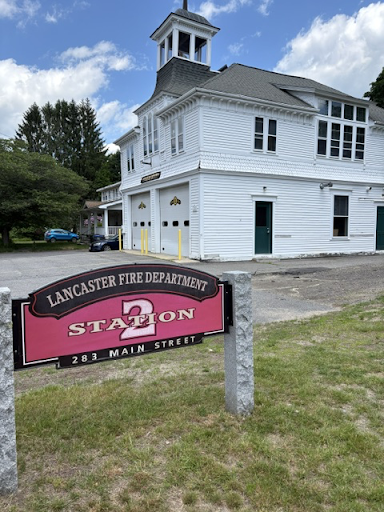
Built in 1888, the South Lancaster Engine House was the first structure erected specifically by the town to house its firefighting equipment. Although Lancaster had maintained a municipal fire service since 1848, earlier engines and apparatus had been stored in other locations. In its early years, the station housed engines, wagons, and even a sleigh for winter use. Some of the equipment was pulled by manpower, while other apparatus depended on horses, reflecting the transition from hand-powered firefighting to more modern methods.
The building itself is a distinctive example of Victorian civic architecture. Its flared walls with decorative cut shingles, round-arched windows, and open belfry topped by a curved roof give the structure both elegance and practicality. Originally, large swinging doors opened onto the street, allowing firefighters and their equipment to respond quickly to emergencies. Today, modern overhead doors have replaced them, but the building retains much of its nineteenth-century appearance.
Listed on the National Register of Historic Places in 1976, the South Lancaster Engine House remains an active part of the Lancaster Fire Department, currently housing Engines 3 and 4. More than a century after its construction, the station continues to fulfill the purpose for which it was built.
Standing before this remarkable building, I was struck by the continuity it represents. Few places allow visitors to see such a direct connection between the past and present. The same station that once sheltered horse-drawn apparatus and hand-pulled equipment continues to protect the community today, making it not only a beautiful example of Victorian architecture but also a living monument to generations of firefighters who have served the people of Lancaster.
Read More From Nancy
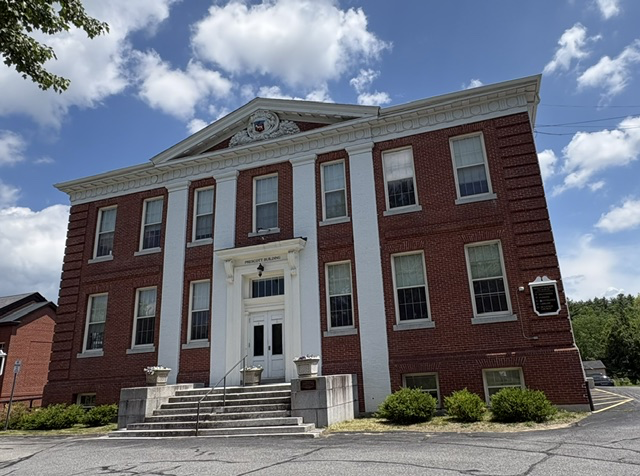
Prescott Building
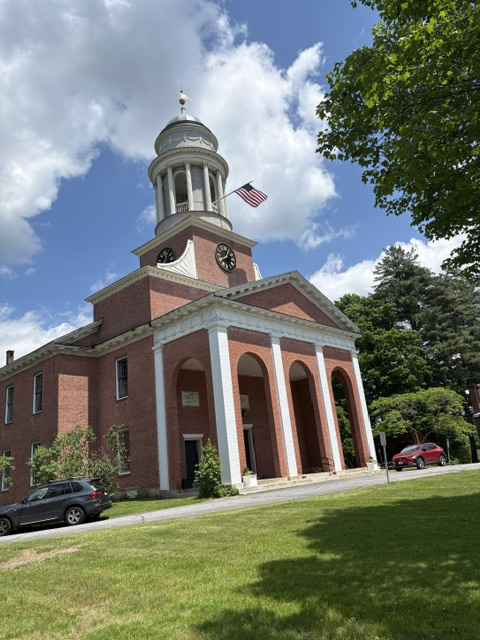
Exploring Lancaster, I came upon the Prescott Building, one of the town’s most important civic landmarks. Standing prominently near the town center, the stately brick structure reflects the pride and sense of community that characterized early twentieth-century New England. With its classical proportions, white pilasters, and formal entrance, the building conveys a sense of permanence […]
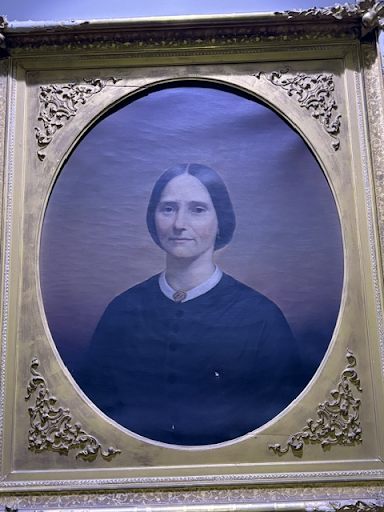
Cornelia Van Rensselaer Thayer: Connected to a Founding Father
Among the treasures preserved in the Lancaster Historical Museum is this 1853 portrait of Cornelia Patterson Van Rensselaer Thayer, painted by renowned American artist George Peter Alexander Healy, one of the most sought-after portrait painters of the nineteenth century. What makes this portrait particularly fascinating is Cornelia’s connection to one of America’s Founding Fathers. Her mother, Margaret […]
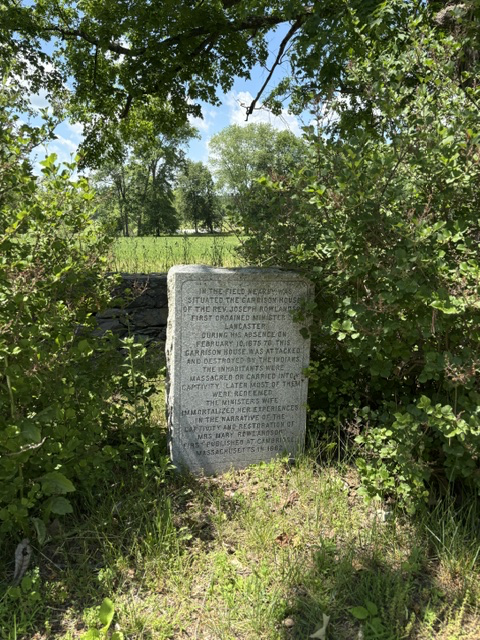
Site of Rowlandson Garrison
One of the most poignant markers I encountered in Lancaster commemorates the site of the garrison house of Reverend Joseph Rowlandson, where one of the most dramatic episodes of King Philip’s War unfolded. On February 10, 1676, during an attack on the frontier settlement, Native warriors destroyed much of Lancaster. The Rowlandson home was burned, […]

