The Pettingill-Mason House and the Dorr Rebellion Room
Traditionally dated to 1747, the Pettingill-Mason House is a substantial colonial home standing at the foot of Acote’s Hill. Constructed with a heavy post-and-beam frame, the house was organized around a large central chimney with four fireplaces. Its hand-hewn timbers, wide-plank floors, narrow stairways, and stone foundation preserve the character of an eighteenth-century Rhode Island home.
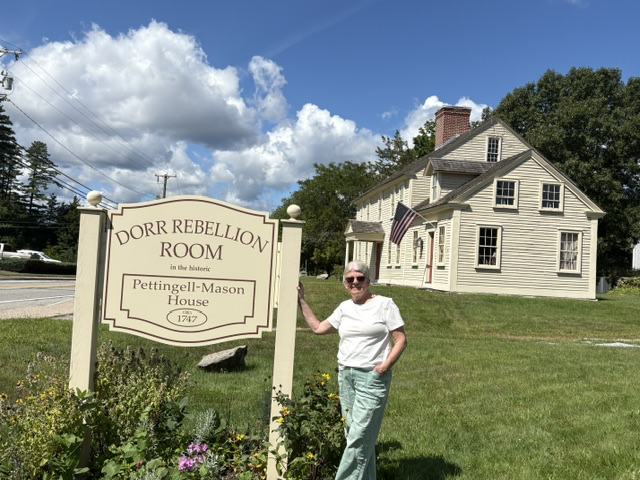
Dr. Reuben Mason purchased the property in 1774 and used it as both his residence and medical office. Mason practiced medicine here until his death in 1799 and served as a surgeon during the American Revolution. The house therefore had a long connection to local medicine before it became involved in the political crisis that unfolded in Chepachet in 1842.
During the Dorr Rebellion, Thomas Wilson Dorr and his supporters gathered in Chepachet to challenge Rhode Island’s established government and its restrictions on voting. Dorr used nearby Sprague’s Tavern as his headquarters while his followers constructed defensive positions on Acote’s Hill. When approximately 2,500 state troops advanced toward the village, Dorr recognized that his small force could not prevail. He disbanded his followers and fled before a major battle occurred.
After securing Acote’s Hill, the state militia commandeered the Pettingill-Mason House as a base of operations and designated it as a field hospital. Its location at the foot of the hill made it well suited for receiving soldiers if fighting broke out. Fortunately, the expected battle never took place, and the house was not required to care for large numbers of casualties.
The Glocester Heritage Society later restored the house and created the Dorr Rebellion Room inside. The room now serves as a museum and educational space devoted to the struggle over voting rights, the rival governments that divided Rhode Island, and the confrontation that brought both sides to Chepachet.
Today, the Dorr Rebellion Room brings the two histories together: an eighteenth-century physician’s home that became a field hospital in 1842 and now provides a place where the political struggle that unfolded around it can be remembered and understood.
Read More From Nancy
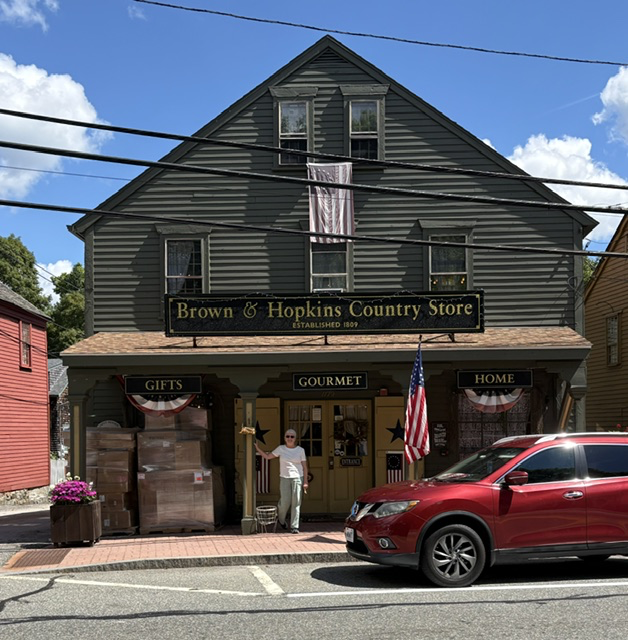
Brown & Hopkins Country Store
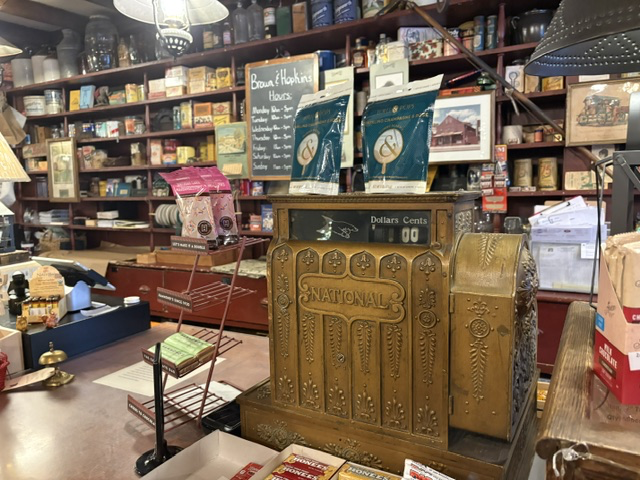
Standing along Putnam Pike in the center of Chepachet, Brown & Hopkins Country Store is recognized as the oldest continuously operating country store in the United States. The building was constructed in 1799 by Timothy Wilmarth as a residence and hattery, where hats were made and sold. In 1809, Ira Evans purchased the property and […]
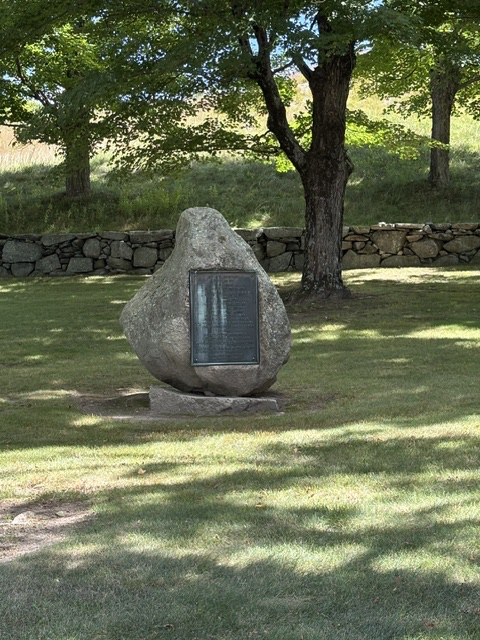
The Dorr Rebellion Memorial
This boulder monument stands in Acote’s Hill Cemetery, near the ground where the Dorr Rebellion reached its final confrontation in June 1842. Although it is located in a cemetery, it is not Thomas Wilson Dorr’s grave. Dorr died in 1854 and was buried at Swan Point Cemetery in Providence. This memorial marks the place where […]
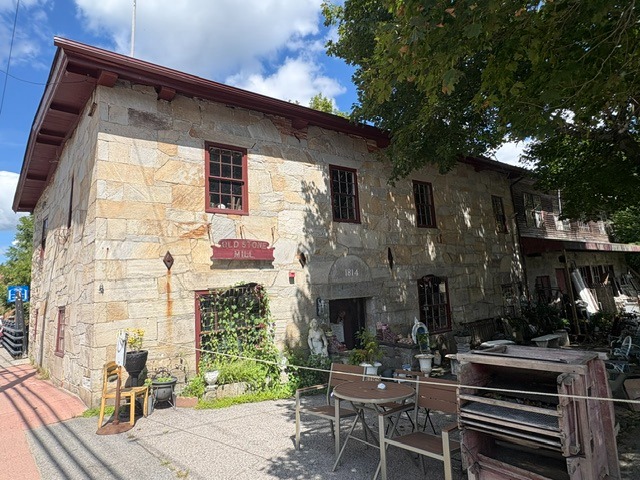
The Old Stone Mill
Beside the Chepachet River, the Old Stone Mill preserves a substantial remnant of the village’s early textile industry. Also known as the Lawton Owen Mill, the building bears the date 1814 above its entrance. Its stone walls stand close to both the river and Putnam Pike, placing it within the landscape of waterpower, transportation and […]

