The Chepachet Meeting House
The Chepachet Meeting House has stood along Putnam Pike for more than two centuries. Constructed in 1821, it was built before the Chepachet Baptist Church itself was formally organized. A group of 36 residents known as the Proprietors of the Chepachet Meeting House initially pledged $1,135.50 toward the creation of “an house for the publick worship of God” in the village. By January 1822, the organization had grown to 45 proprietors and received a charter from the Rhode Island General Assembly. Remarkably, the building is still owned by the Proprietors under that original charter.
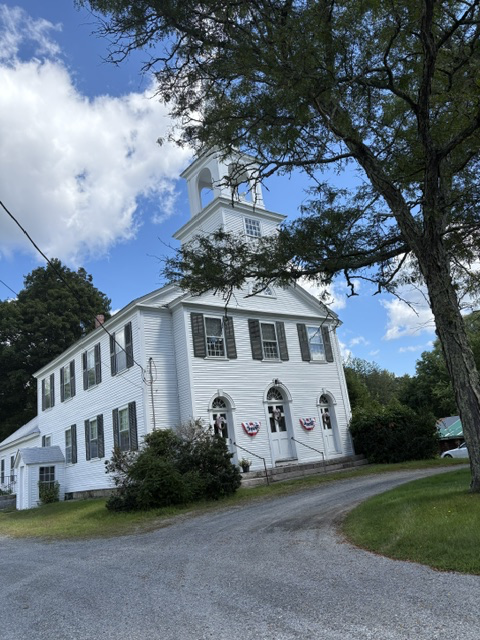
The Chepachet Baptist Church, historically known as the Chepachet Free Will Baptist Church, was organized in 1822 and has worshiped in the meetinghouse ever since. The building therefore represents both the religious life of a congregation and the cooperative efforts of the residents who believed their growing village needed a permanent place for public worship.
Designed by noted New England church architect Elias Carter, the building reflects the symmetry and balance of the Federal style. Its evenly arranged windows, three front entrances, central tower, belfry, and steeple create the orderly appearance associated with early New England meetinghouses. Construction was supervised by Chepachet master builder Clark Sayles, who had trained under Carter. The meetinghouse rests upon a stone foundation, and its original oak beams and joists continue to support the structure.
Several important early features remain. The granite steps across the front are original, while the glass panes in the entrance doors, arranged to suggest crosses, date from at least the 1870s. Inside, the sanctuary retains much of its traditional meetinghouse character, including balconies that increase its seating capacity to approximately 235 people. Before the installation of a furnace, worshipers carried heated stones, bricks, or warming pans to help keep themselves warm during winter services.
The bell hanging in the tower was cast in 1822 by George Holbrook of Medway, Massachusetts. Holbrook had learned the bell-making trade as an apprentice to Paul Revere and later became one of the country’s most respected bell founders. The Chepachet bell is among the oldest known surviving Holbrook bells. It remains suspended in its wooden cradle and is still rung by hand with a rope.
The Chepachet Meeting House is part of the Chepachet Village Historic District, but it is not simply a preserved relic. The Baptist congregation continues to worship here, just as it has since 1822. The building remains a functioning part of the community while preserving the craftsmanship, religious traditions, and cooperative spirit of the people who created it more than two hundred years ago.
Read More From Nancy
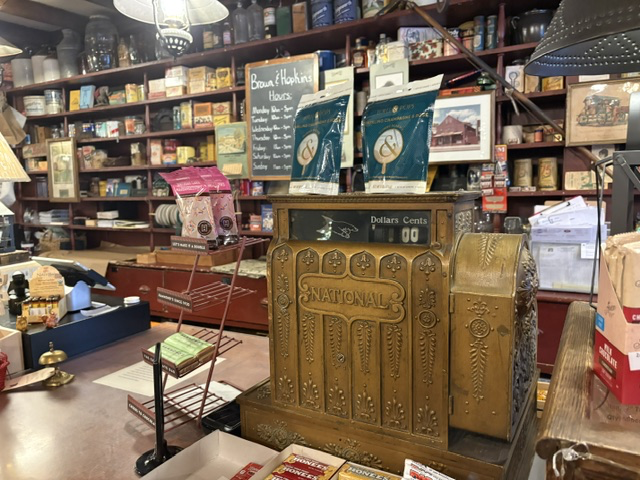
The Penny Candy Counter at Brown & Hopkins
Inside Brown & Hopkins Country Store, the penny candy counter preserves one of the most familiar traditions of the old American general store. Glass jars, wooden shelves, vintage containers, advertisements, and small pieces of merchandise fill the space behind the counter. Rather than presenting history in a formal museum display, the store allows visitors to […]
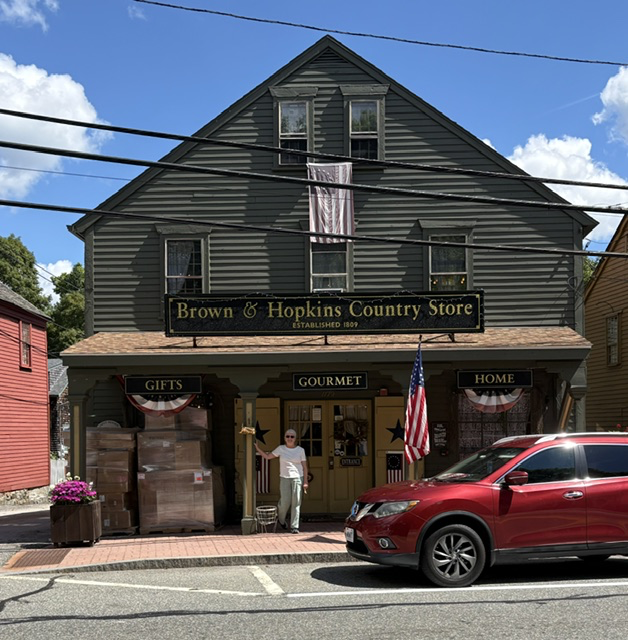
Brown & Hopkins Country Store
Standing along Putnam Pike in the center of Chepachet, Brown & Hopkins Country Store is recognized as the oldest continuously operating country store in the United States. The building was constructed in 1799 by Timothy Wilmarth as a residence and hattery, where hats were made and sold. In 1809, Ira Evans purchased the property and […]
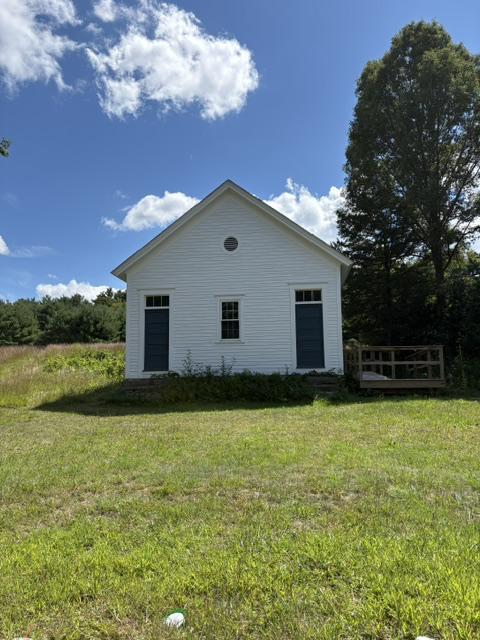
The Evans One-Room Schoolhouse
This modest white building is the Evans Schoolhouse, a surviving example of the small district schools that once served the rural families of Glocester. Built around 1867 by local resident Daniel Evans, it originally stood on Evans Road in East Glocester and served as the school for District No. 2. During the nineteenth century, rural […]

