The Eiffel Bridge
As we explored Girona, the bright red iron bridge crossing the Onyar River immediately stood out against the closely grouped buildings lining the water. Its official name is Pont de les Peixateries Velles, or the Bridge of the Old Fishmongers, although it is commonly known as the Eiffel Bridge.
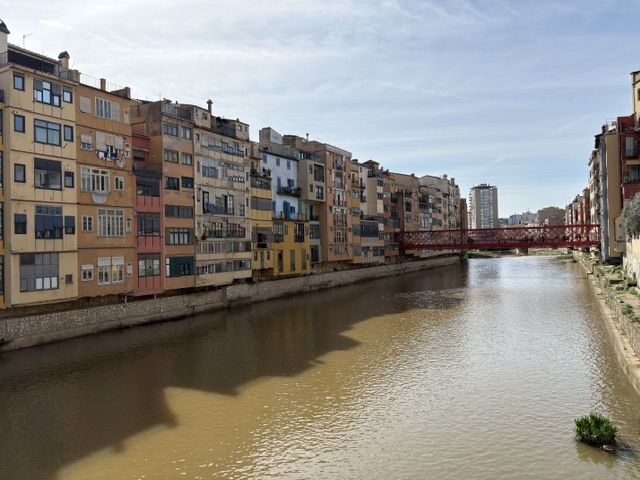
The bridge was constructed in 1877 by Eiffel et Cie, the company founded by French engineer Gustave Eiffel. It was completed twelve years before the Eiffel Tower opened in Paris and demonstrates the company’s early use of prefabricated iron components and open lattice construction.
Its official name preserves the memory of the fishmongers and market stalls that once operated near the eastern end of the crossing. The bridge provided a practical pedestrian connection between the commercial streets of the historic city and the neighborhoods developing on the opposite side of the Onyar.
The red framework gives the bridge a much lighter appearance than Girona’s older stone bridges. Its geometric ironwork frames views of the river and the colorful buildings on both banks, making the act of crossing the river part of the experience of seeing the city.
The Eiffel Bridge is an example of an ordinary piece of urban infrastructure becoming an enduring landmark. Created to help people move through Girona, it now connects the city’s historic riverfront with the story of one of the nineteenth century’s most recognizable engineering companies.
Read More From Nancy
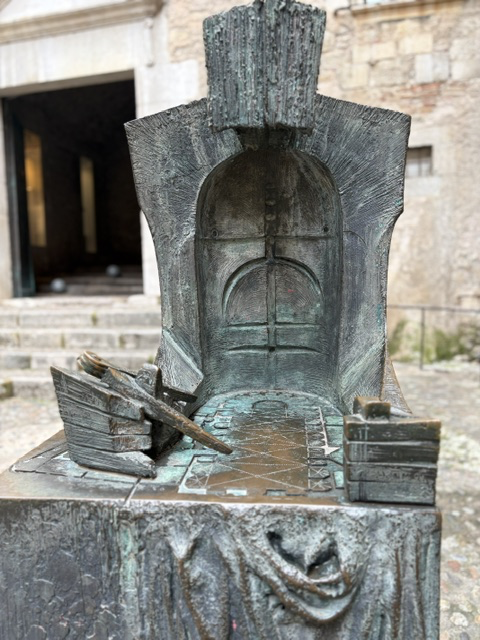
Studio of Modest Urgell
A bronze sculpture outside this stone building recreates the intimate world of an artist’s studio. Within its small architectural setting are the tools and furnishings associated with creative work, inviting passersby to look more closely. A plaque on the nearby wall explains the reason for its placement: Catalan painter and writer Modest Urgell i Inglada […]
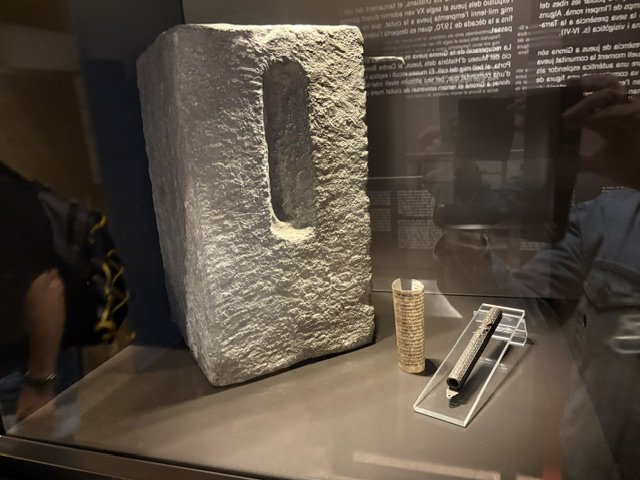
The Mezuzah
Inside Girona’s Museum of Jewish History, a large piece of an old doorway preserves the long, narrow recess that once held a mezuzah. Displayed beside examples of parchment scrolls and protective cases, the stone connects a continuing Jewish tradition with the families who lived in Girona’s Jewish Quarter centuries ago. The tradition originates in two […]
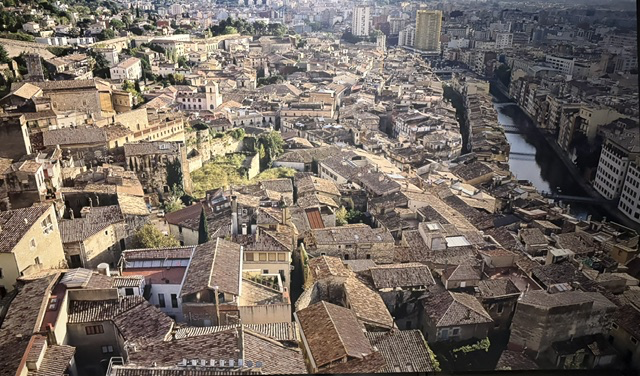
A Neighborhood Within the City
We traveled to Girona specifically to explore its Jewish Quarter, known in Catalan as the Call. Although we had seen photographs of its narrow streets and stone passageways, the aerial view in the Museum of Jewish History helped us understand the neighborhood in a different way. From above, the Call appears woven into the densely […]

