The Mezuzah
Inside Girona’s Museum of Jewish History, a large piece of an old doorway preserves the long, narrow recess that once held a mezuzah. Displayed beside examples of parchment scrolls and protective cases, the stone connects a continuing Jewish tradition with the families who lived in Girona’s Jewish Quarter centuries ago.
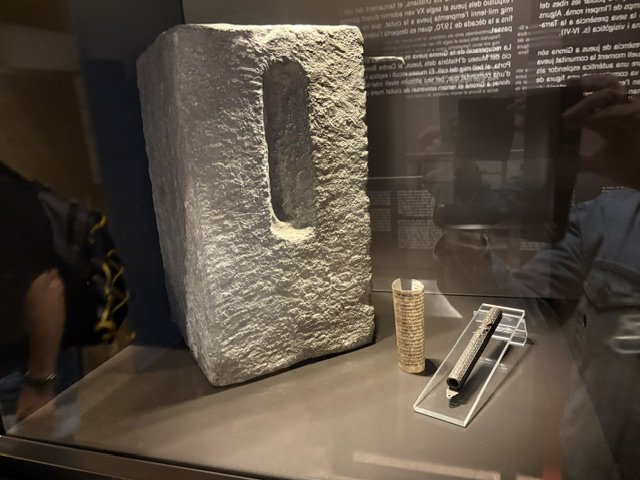
The tradition originates in two passages from Deuteronomy. The Israelites are instructed to keep God’s words in their hearts, teach them to their children and “write them on the doorposts of your house and on your gates.” The Hebrew word mezuzah originally meant the doorpost itself. Over time, Jewish law established the practice of writing the passages from Deuteronomy 6:4–9 and 11:13–21 on parchment, rolling the scroll and placing it in a protective case attached to the doorpost.
The mezuzahs that once marked the homes of Girona’s Jewish families were removed long ago. Over the centuries, most of the original doorways were also altered, covered or replaced. As a result, visitors walking through the Jewish Quarter today generally do not see mezuzahs or their mounting places on the buildings.
A small number of stones containing the original recesses have survived, including the example preserved in the museum. The parchment and cases disappeared, but the openings cut into the stone remained. Centuries after Girona’s Jewish community was forced to leave the city, these rare architectural traces continue to preserve evidence of its presence.
Read More From Nancy
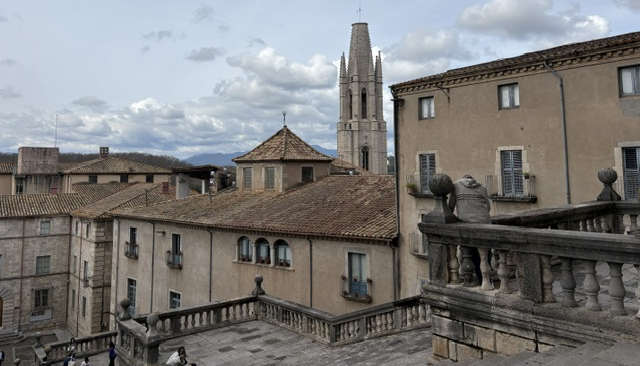
Basilica of Sant Feliu
Rising above Girona’s Old Quarter, the Basilica of Sant Feliu is one of the city’s most recognizable landmarks. Its tall Gothic bell tower dominates the surrounding rooftops and forms an important part of Girona’s historic skyline. Although it is sometimes overshadowed by the nearby cathedral, Sant Feliu has its own remarkable history extending back to […]
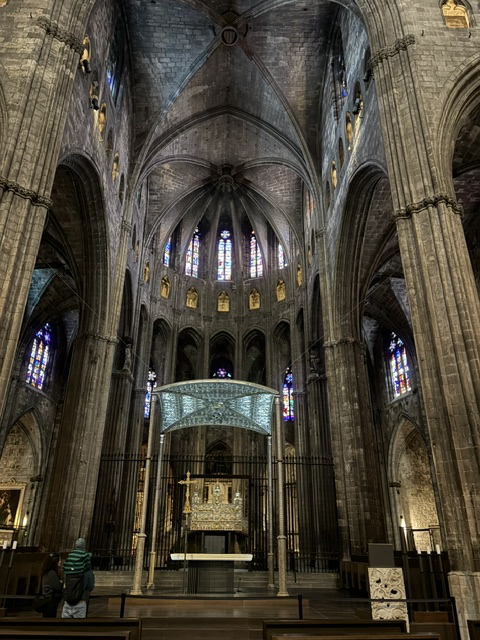
Inside the Cathedral of Saint Mary
Stepping inside the Cathedral of Saint Mary of Girona reveals a space very different from its elaborately decorated Baroque exterior. The façade is filled with statues, columns and carved ornaments, but the interior is dominated by the strength and simplicity of stone. Massive piers rise into pointed arches, ribbed vaults stretch across the ceiling and […]
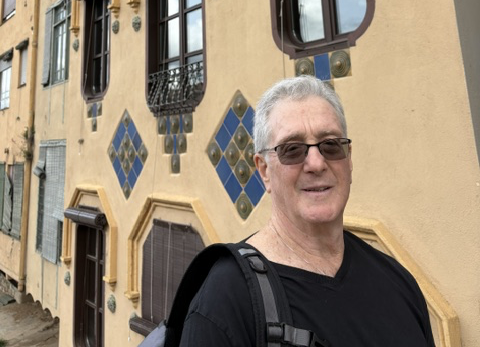
Casa Masó
Standing along Carrer de les Ballesteries in Girona’s historic center, Casa Masó offers a fascinating contrast to the medieval buildings for which the city is best known. Its warm ochre exterior, dark wooden window frames, wrought-iron balconies and geometric arrangements of blue and green glazed tiles immediately distinguish it from the surrounding buildings. The façade […]

