The Portal de Sobreportes
As we walked through Girona’s old quarter, two enormous circular towers rose above the narrow cobblestone street. Their height, thickness and close position immediately suggested that this was once more than an ordinary passageway. These towers guarded the Portal de Sobreportes, one of the principal entrances into the historic city.
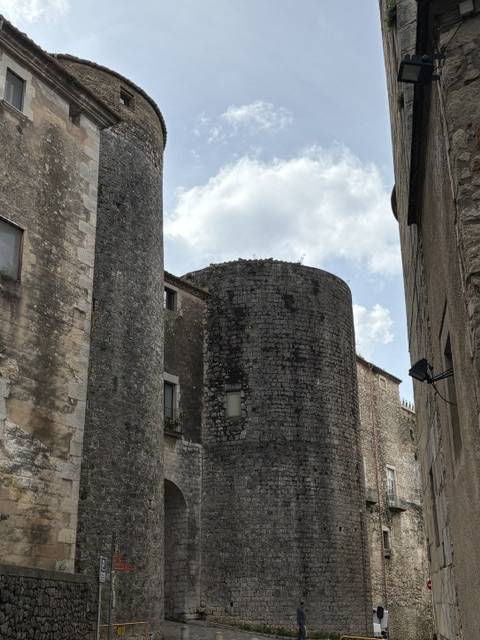
The gateway originated as the northern entrance to Gerunda, the Roman city established here more than two thousand years ago. Anyone arriving from the north would have passed through this point before entering the protected settlement. Portions of the Roman gate and defensive walls remain incorporated within the later structure.
The entrance was strengthened during the Carolingian period and had developed into a feudal fortress by the 11th century. During the Middle Ages, the original square Roman towers were enclosed within the massive cylindrical towers visible today. Their rounded walls made the gateway easier to defend and helped protect the approach to the city.
The portal stood at the boundary between Girona’s fortified center and the neighborhoods that developed beyond its walls. Travelers, merchants, soldiers and residents passed through this entrance for centuries. When danger threatened, its gates could be closed, separating the protected city from the surrounding area.
Today, the gateway has become so completely integrated into the neighboring buildings that it is possible to walk past without immediately recognizing its age or importance. Yet the stonework preserves several periods of Girona’s history in one place—from the Roman city and medieval fortifications to the streets and homes that later grew around them.
Standing beneath the towers allowed us to experience the scale of Girona’s defenses from the perspective of those who once approached the city from outside. The Portal de Sobreportes remains a physical reminder that these quiet streets once formed the guarded entrance to a heavily fortified city.
Read More From Nancy
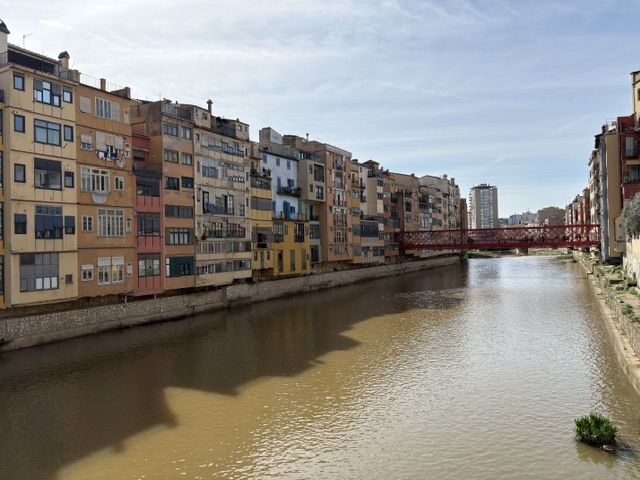
The Eiffel Bridge
As we explored Girona, the bright red iron bridge crossing the Onyar River immediately stood out against the closely grouped buildings lining the water. Its official name is Pont de les Peixateries Velles, or the Bridge of the Old Fishmongers, although it is commonly known as the Eiffel Bridge. The bridge was constructed in 1877 […]
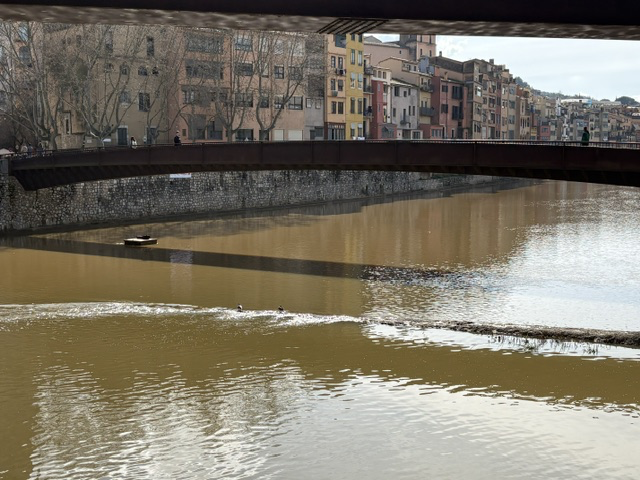
The Onyar River
The Onyar River flows northward through the center of Girona before joining the larger Ter River. It is one of four rivers associated with the city, together with the Ter, Güell and Galligants, and has played an important role in shaping Girona’s growth and appearance. As we walked along the river, we stopped to take […]
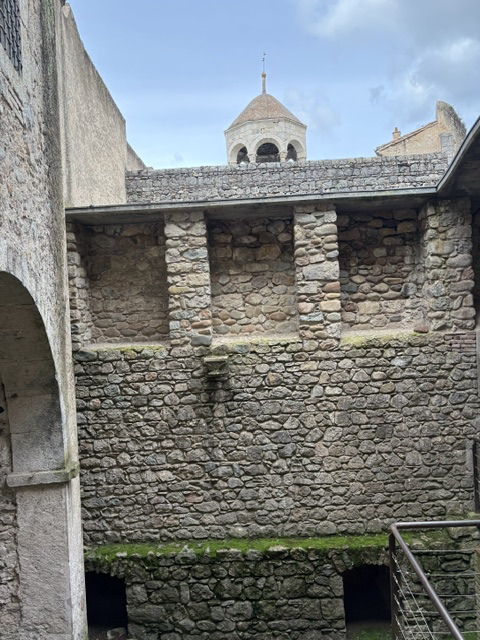
The Arab Baths
Hidden among the stone buildings of Girona’s old quarter, the Arab Baths reveal very little from the outside. Only the octagonal lantern rising above the roof suggests that something unusual lies within. The building appears ancient and austere, its weathered walls blending almost seamlessly with the medieval city surrounding it. Despite their name, the baths […]

