The Buttrick Homestead
The red-brick house overlooking Concord’s North Bridge was once the home of the Buttrick family, whose connection to this landscape stretched back to the seventeenth century. Although visitors now enter it as the North Bridge Visitor Center, its columns, balustraded balcony, and broad façade belong to its earlier life as a substantial private residence. Construction began in 1911 for Stedman Buttrick, a descendant of Major John Buttrick, the colonial officer who ordered the militia to return British fire at the bridge in 1775.
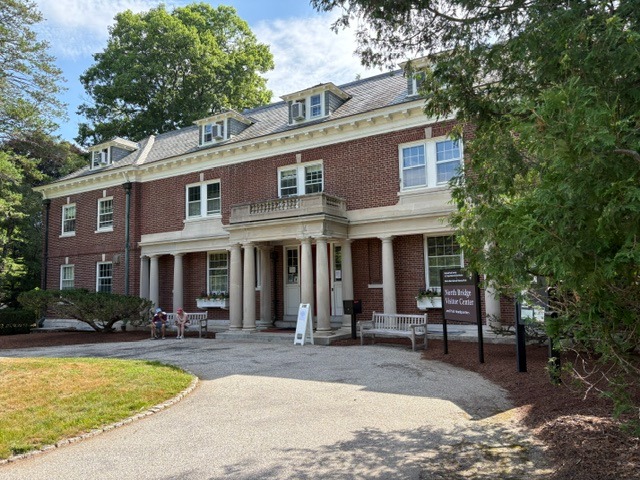
Boston architect James Purdon designed the house on the hill above the battlefield. The estate included a carriage house, a caretaker’s cottage, an orchard, gardens, and a tennis court. An older Buttrick house was moved to Monument Street as the new estate took shape. These changes transformed part of the family’s agricultural landscape into an early twentieth-century country estate.
Behind its impressive appearance lay a family story shaped by both achievement and loss. In a 1997 oral-history interview, the builder’s grandson, also named Stedman Buttrick, recalled that his grandfather had become successful in investment banking. His wife, Olive Bagley, daughter of Michigan governor John Judson Bagley, died in childbirth in 1909. His grandson associated the building of the large new home with that period of grief and intense work. A housekeeper, Miss Pride, helped run the household.
The grandson remembered the property as the family “homestead,” rather than a mansion. He grew up there, and described a socially active household where relatives came for extended stays. His aunt Olive arrived from England with her children in June 1939 and stayed about a year before moving elsewhere in Concord. He also recalled that his parents loved the grounds more than the house, whose grand proportions did not entirely suit them. His memories give the formal building a more intimate history of children, visitors, and family expectations.
The gardens became a particularly distinctive part of the property. Developed across generations, they included terraced beds filled with irises, peonies, daylilies, lilies, phlox, and other perennials. Nearly two hundred varieties of bearded iris were represented, and the family’s white and blue varieties appeared in American and British flower shows. Landscape designers Charles Wheeler and Harold Blossom contributed to the grounds at different stages.
A Concord neighbor, Pierce Browne, later remembered the gardens as a local showplace. He recalled that the younger Stedman Buttrick served as president of the American Iris Society and hosted gatherings beneath a large tent when the flowers reached their June peak. Gardeners maintained the elaborate plantings, and visitors came to enjoy a landscape that had become an attraction in its own right.
The property passed to the National Park Service in the early 1960s, bringing its years as a private family residence to a close. The house eventually became the visitor center and park headquarters. Its preservation retained another chapter of Concord’s history: the country estate created by later generations of a family whose name was already inseparable from the nearby battlefield.
Read More
Read More From Nancy
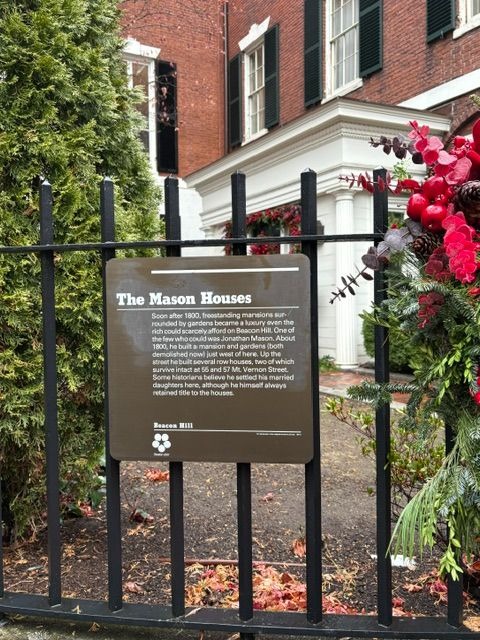
The Mason Houses
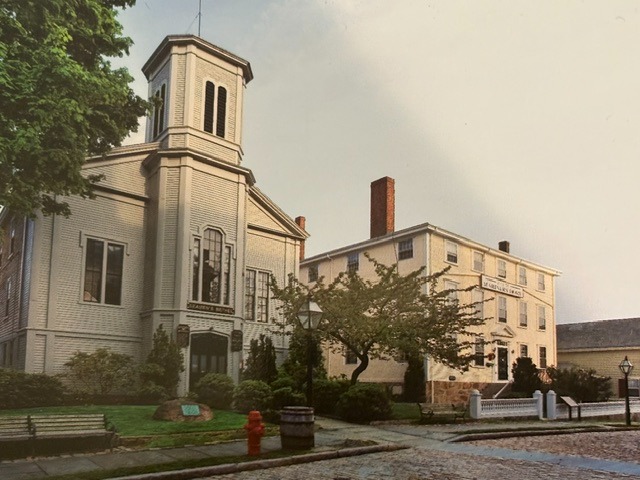
Beacon Hill’s closely spaced brick houses can make it difficult to imagine the neighborhood when freestanding mansions and gardens occupied much of the hillside. Jonathan Mason, a lawyer, politician, and real estate developer, helped shape that transformation. Around 1800, he built his own mansion on Mount Vernon Street, with grounds that offered considerably more open […]
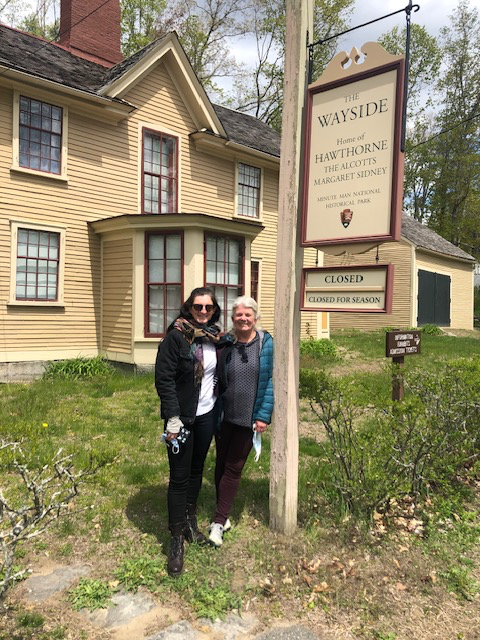
The Wayside
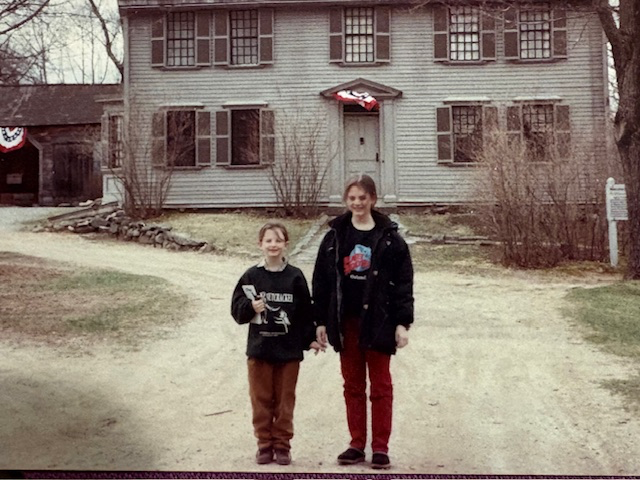
There are houses that preserve history, and then there are houses that helped shape it. The Wayside in Concord, Massachusetts, is one of those extraordinary places. This house has always held a special place in our family’s story. Both of our daughters gave tours here, sharing the remarkable history of the people who lived within […]
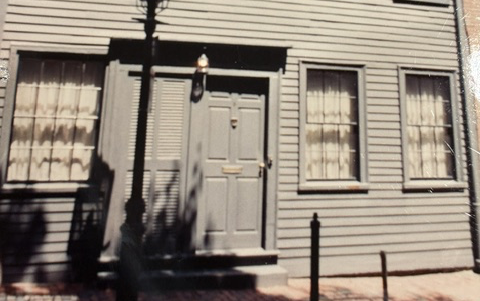
George Middleton House
Standing at 5 Pinckney Street on Boston’s Beacon Hill, the George Middleton House preserves an important chapter in the city’s early African American history. Constructed between 1786 and 1787, it is considered the oldest surviving residence on Beacon Hill and a rare example of a late-eighteenth-century Boston home built and owned by African Americans. The […]

