The Amazing World of Dr. Seuss Museum
When The Amazing World of Dr. Seuss Museum opened in 2017, I traveled to Springfield to see it for myself. I may have been the only adult visiting without a child that day, but I was just as interested in discovering the person and history behind the familiar stories. I have since returned with Marty, sharing with him a museum that connects the imaginative world of Dr. Seuss with the city where that imagination first developed.
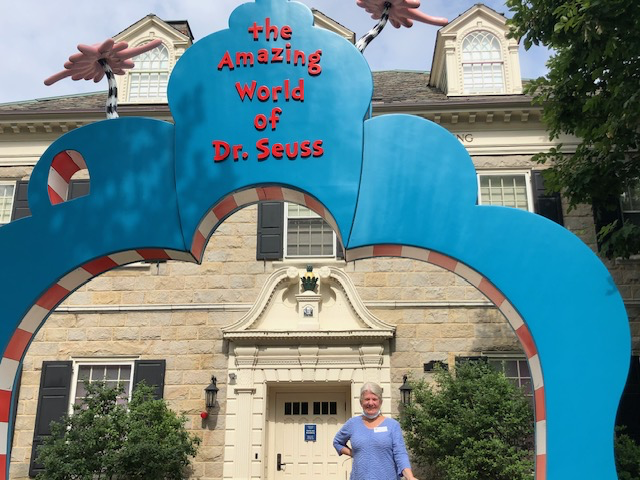
The museum is in Springfield because Theodor Seuss Geisel was born here in 1904 and spent his childhood in the city’s Forest Park neighborhood. Long before he created the Cat in the Hat, the Grinch, Horton, and his many other characters, he was a Springfield boy observing the people, animals, streets, and businesses around him. Those early experiences remained with him after he left Massachusetts and eventually found their way into his books.
Several recognizable elements of Springfield are reflected in his work. The city’s Mulberry Street provided the name for his first children’s book, “And to Think That I Saw It on Mulberry Street”. His father worked at Forest Park and later became superintendent of the city’s parks, giving young Ted frequent opportunities to observe animals. Springfield was also home to Indian Motorcycle and other industries whose machines, signs, and unusual shapes contributed to the visual world surrounding him.
The museum occupies the William Pynchon Memorial Building within the Springfield Museums complex. Its exhibits combine information about Geisel’s childhood and family with interactive environments based on his books. Visitors can explore recreations of Springfield settings, encounter familiar characters, experiment with words and rhymes, and learn how Geisel helped change the way generations of children learned to read.
Outside, the Dr. Seuss National Memorial Sculpture Garden brings many of his best-known characters into the center of Springfield’s museum district. Together, the museum and sculpture garden return Dr. Seuss to the city where his story began. Although his career eventually carried him far from Springfield, the museum demonstrates that many of the observations, places, and experiences that inspired his extraordinary world were rooted here.
Read More From Nancy
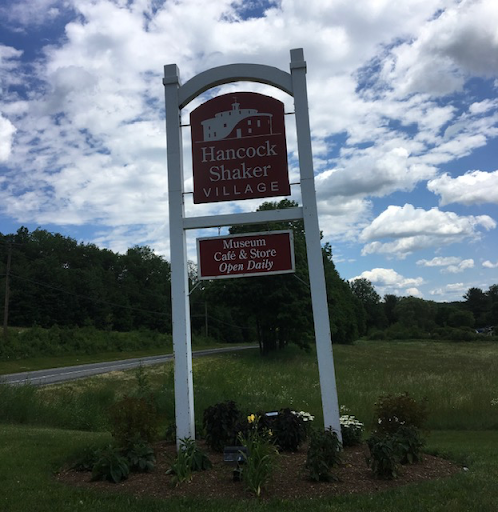
Hancock Shaker Village
When you visit Hancock Shaker Village, you are not simply touring historic buildings—you are stepping into one of the most successful communal societies in American history. The village tells the story of the Shakers, whose commitment to faith, innovation, and craftsmanship transformed this corner of the Berkshires into a thriving community that still inspires visitors […]
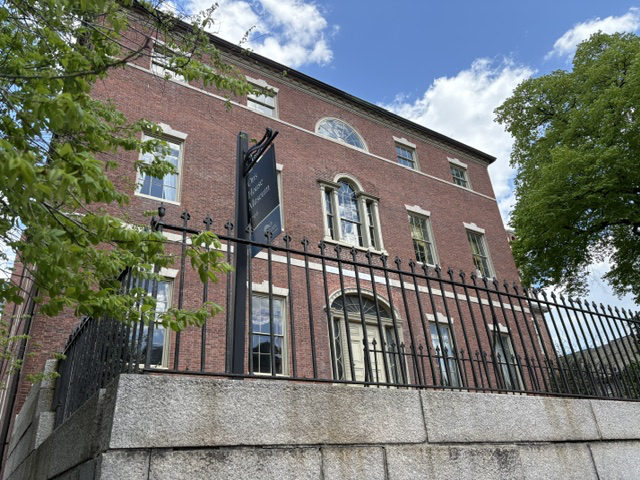
Headquarters of the Society for the Preservation of New England Antiquities (SPNEA)
I have already written about the Otis House as one of Boston’s important historic homes, but seeing this plaque on the building opened another story. The house is significant not only because of the people who once lived within it. For more than a century, it has also been closely associated with an organization devoted […]
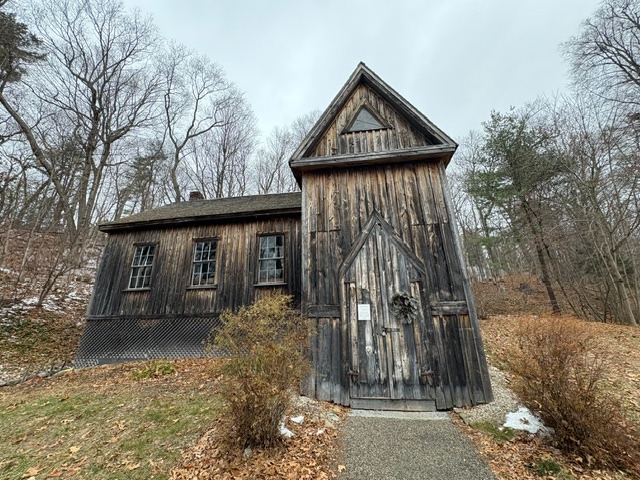
The Concord School of Philosophy
Beside Orchard House stands a small wooden building that preserves another chapter of the Alcott family’s history. Known as Hillside Chapel, it was built for the Concord School of Philosophy, a gathering devoted to the discussion of ideas. While Orchard House is closely associated with Louisa May Alcott’s writing, the school reflects the educational ambitions […]

