The Concord School of Philosophy
Beside Orchard House stands a small wooden building that preserves another chapter of the Alcott family’s history. Known as Hillside Chapel, it was built for the Concord School of Philosophy, a gathering devoted to the discussion of ideas. While Orchard House is closely associated with Louisa May Alcott’s writing, the school reflects the educational ambitions of her father, Amos Bronson Alcott.
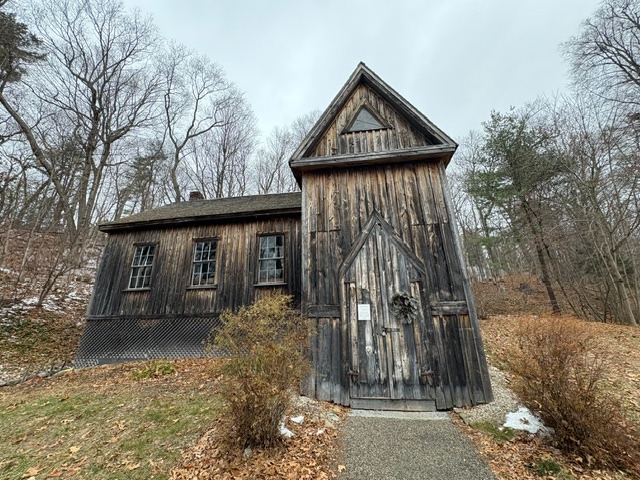
Alcott opened the school in July 1879, when he was nearly eighty years old. Its first sessions took place in his study at Orchard House. With assistance from educator and philosopher William Torrey Harris and Concord reformer Franklin Benjamin Sanborn, he brought together lecturers and listeners to explore philosophy, literature, religion, and education.
The gathering soon needed more space. A contribution from philanthropist Elizabeth Thompson made possible the construction of Hillside Chapel, which opened on July 12, 1880. Its plain wooden walls, benches, and modest lecture platform reflected Alcott’s conviction that the value of the gathering lay in its ideas and conversations.
Despite its name, the school was a summer lecture and discussion program rather than a conventional school for children. Participants came to listen, question, and consider different approaches to enduring subjects. It brought Concord’s Transcendentalist traditions into conversation with other philosophical perspectives, including those represented by Harris.
After Alcott suffered a stroke in 1882, Harris assumed a greater role in directing the program. The school continued until 1888, closing with a memorial gathering following Alcott’s death that spring.
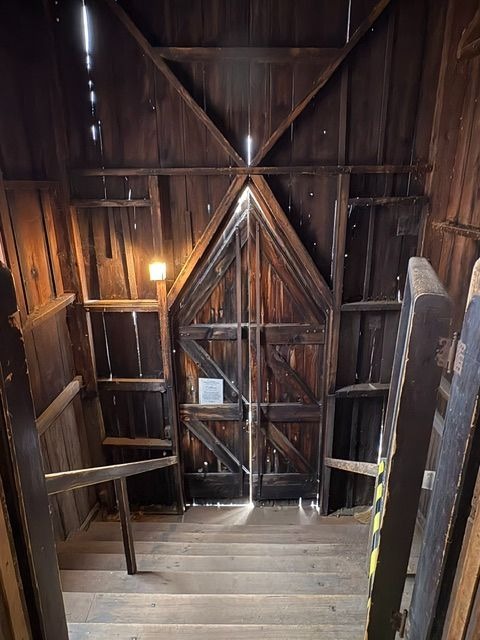
The surviving chapel gives physical form to an ambition Alcott pursued late in life: creating a place where adults could continue learning together. Its modest scale recalls a period when a summer gathering in a small New England town could draw people into sustained discussion about education, belief, and the meaning of a thoughtful life.
Read More From Nancy
Wellesley Historical Society
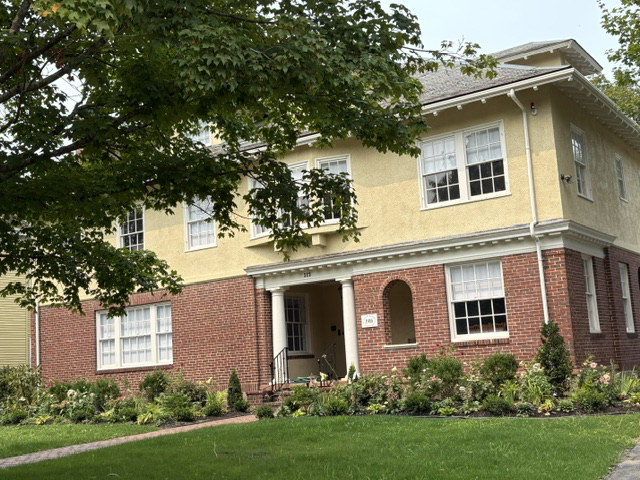
Standing at 323 Washington Street in Wellesley Hills, the Stanwood House has been part of this neighborhood for more than a century. Today it is the home of the Wellesley Historical Society and the Wellesley History & Exhibit Center, but the building began as both the family home and medical office of one of Wellesley’s […]
Glass Museum
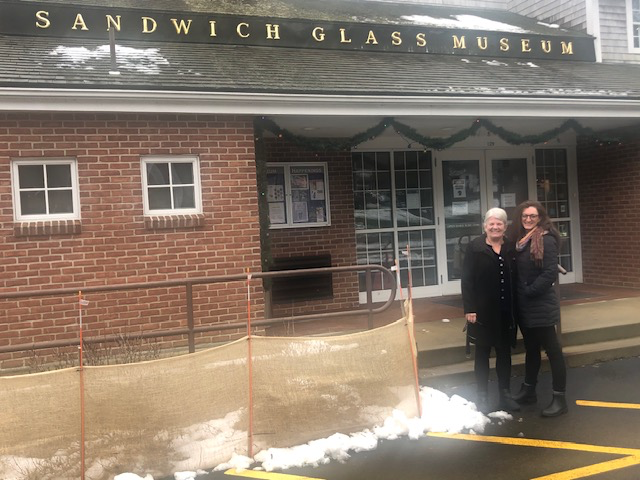
In December 2020, I was searching for something meaningful to do for my birthday. COVID-19 had brought much of the MetroWest Boston area to a standstill, and nearly everything was closed. After months of restrictions and canceled plans, even a simple day trip felt like a welcome escape. When I learned that the Sandwich Glass […]
The Amazing World of Dr. Seuss Museum
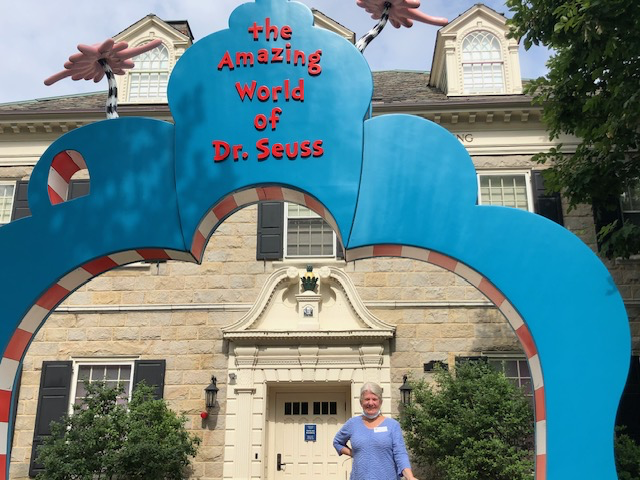
When The Amazing World of Dr. Seuss Museum opened in 2017, I traveled to Springfield to see it for myself. I may have been the only adult visiting without a child that day, but I was just as interested in discovering the person and history behind the familiar stories. I have since returned with Marty, […]

