The 1924 Brewster Brougham
The 1924 Brewster Brougham at Heritage Museums & Gardens carries the traditions of luxury carriage making into the automobile age. Its upright passenger compartment, decorative bodywork, and separate chauffeur’s position reveal how established ideas about comfort and status influenced early motoring.
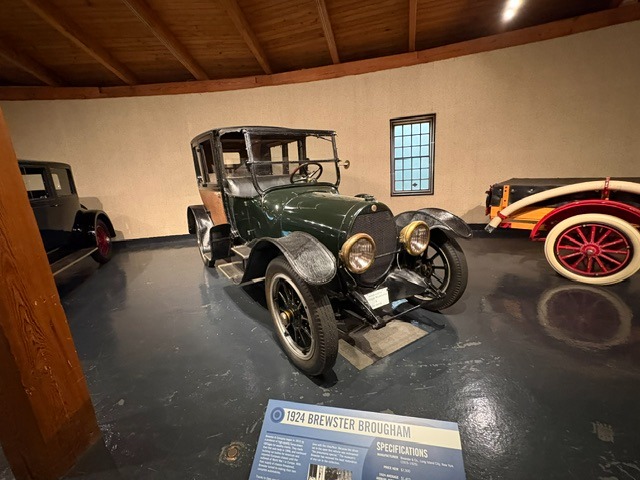
Brewster & Company began making fine horse-drawn carriages in 1810 and produced its first automobile body in 1896. It later built complete cars when World War I threatened its supply of European chassis.
This example’s distinctive features include an oval radiator, leather fenders, and painted decoration imitating woven cane. These details reward close inspection, giving the car a character quite different from later streamlined automobiles.
The enclosed passenger compartment offered shelter and privacy, while the chauffeur occupied an exposed driving position. A speaking tube allowed passengers to communicate with the driver. That arrangement preserved a social division familiar from horse-drawn town carriages.
Its quiet sleeve-valve engine suited city travel, and its $7,500 price placed it firmly in the luxury market.
Preserved in Sandwich, the Brougham records a transition in both craftsmanship and transportation. Automobile technology changed how people traveled, while carriage-building traditions continued to shape what wealthy customers expected from the journey.
Read More From Nancy
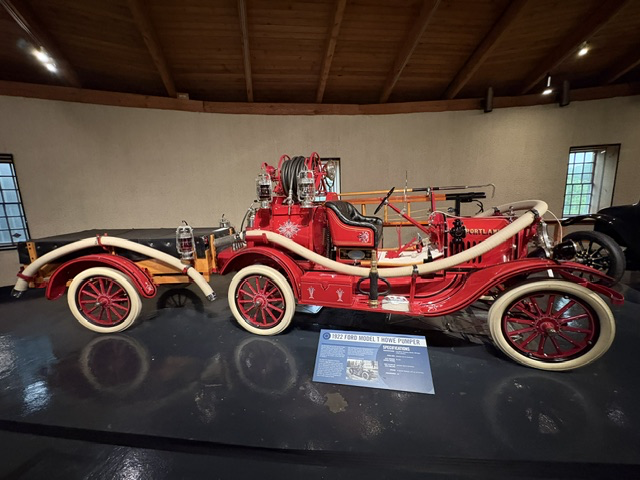
1922 Ford Model T Howe Pumper
This 1922 Ford Model T Howe Pumper tells the story of how motorized vehicles transformed firefighting in small American communities. Before trucks like this became available, many rural fire departments depended upon hand-operated or horse-drawn equipment. Firefighters often had to transport heavy pumps, ladders, and hoses over unpaved roads while every passing minute allowed a […]
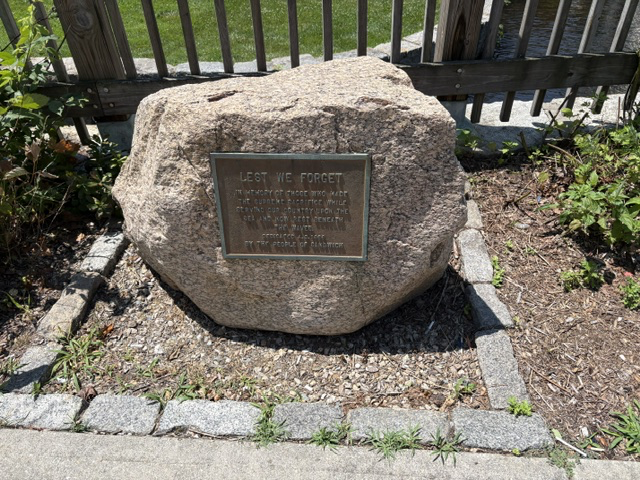
Lest We Forget
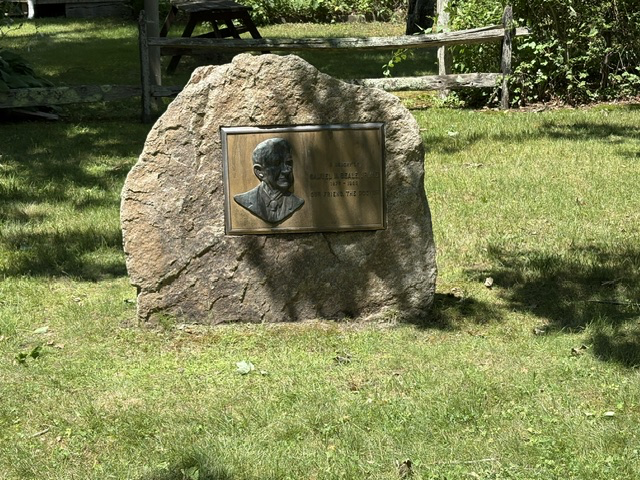
Set into a simple boulder, this plaque in Sandwich commemorates those who made the supreme sacrifice while serving their country at sea and who now rest beneath the waves. Dedicated in 1968 by the people of Sandwich, it remembers men and women whose lives were lost far from home and whose remains were never returned […]
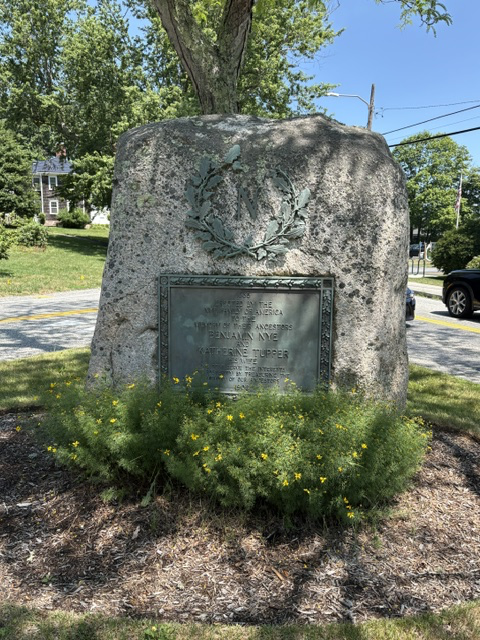
Benjamin Nye and Katherine Tupper Memorial
While exploring Sandwich, I came across this large stone memorial to Benjamin Nye and his wife, Katherine Tupper. I had already visited the Benjamin Nye Homestead in East Sandwich, so finding their names again in another part of town helped connect the house I had seen with the larger story of the family. Benjamin Nye […]

