The Nye Mill
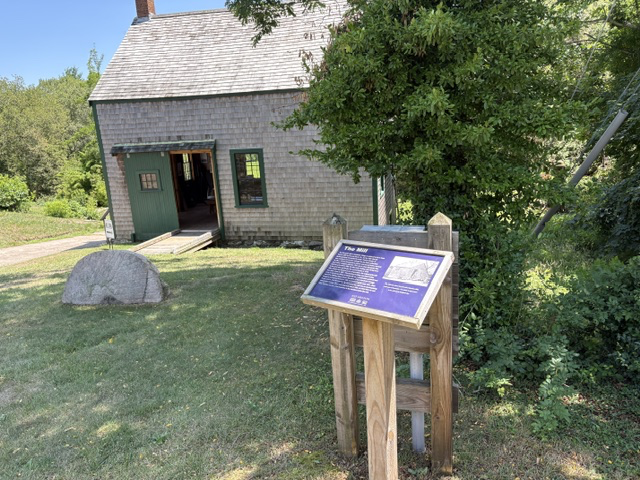
Behind the Benjamin Nye Homestead stands this small, shingled mill building. It represents an important part of the Nye family’s story because milling was central both to their livelihood and to the early East Sandwich community.
The first gristmill in Sandwich Village is believed to have been built around 1640 by Thomas Dexter Sr. By 1656, that mill was apparently no longer adequate for the growing settlement. Thomas Dexter Jr. was causing a stir in town by constructing a new mill without first receiving permission, and the town eventually approved the project on the condition that he grind corn for the community.
Benjamin Nye entered the milling story in 1669. He built his own gristmill and later, in 1675, established a fulling mill nearby. A gristmill ground farmers’ corn and other grains into meal or flour. A fulling mill served a different purpose: it processed woven woolen cloth, pounding and working the fabric to clean, thicken and strengthen it.
These were essential services in a seventeenth-century community. Families could grow grain and weave wool at home, but mills used the power of moving water to accomplish work that would otherwise require enormous amounts of human labor.
The location was therefore no accident. The Nye family settled beside the stream because flowing water was a source of power. Long before electricity or gasoline engines, a reliable stream could operate machinery day after day.
Benjamin’s original gristmill was taken down in 1867. The milling tradition, however, did not disappear. In 1887 his descendant Samuel H. Nye purchased an 1855 gristmill located several miles away on the Bumps River in Centerville. After the East Sandwich Grange was organized, members purchased the mill from Nye, dismantled it, moved it to East Sandwich and reconstructed it near the site of Benjamin Nye’s original mill.
The relocated mill operated cooperatively for several years. In 1897 it was sold to John Armstrong, who converted it into an electrically powered jewelry factory. That business operated until about 1905, after which Armstrong and John Carleton established a trout hatchery in the meadow below the mill.
The building in my photograph, therefore, is not Benjamin Nye’s original seventeenth-century mill. That distinction is important. It is an 1855 mill that was moved here in 1889, but it stands within a landscape where the Nye family had been harnessing water power since the 1600s.
I find that continuity particularly interesting. The homestead tells us where the family lived. The Grange Hall tells us how later generations gathered as a community. But the mill tells us something even more fundamental about how people made a living.
The stream running through this property wasn’t simply part of the scenery. For generations, it was power. It ground grain, helped process cloth, supported a cooperative mill, powered a jewelry factory and eventually supplied water for a trout hatchery. This small building preserves the story of how one natural resource helped sustain work on this piece of Cape Cod for centuries.
Read More From Nancy
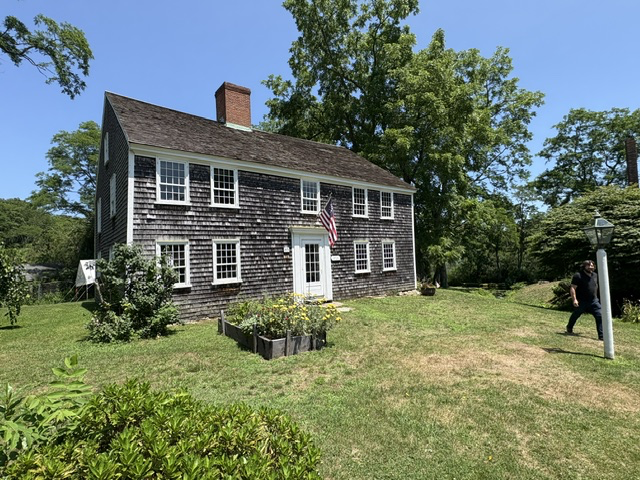
The Benjamin Nye Homestead
While exploring East Sandwich, I stopped at the Benjamin Nye Homestead. From the outside it looks like the kind of weathered, shingled house that seems completely at home on Cape Cod. What I didn’t initially appreciate was just how old it is. The earliest portion of this house was built in 1678, making it one […]
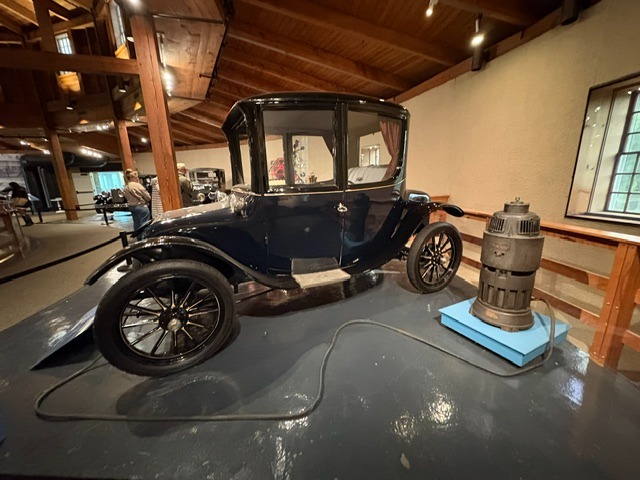
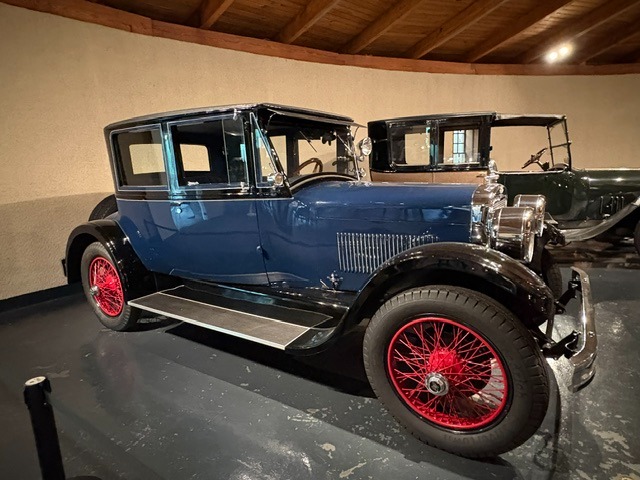
The 1917 Milburn Light Electric
The 1917 Milburn Light Electric at Heritage Museums & Gardens preserves a chapter of motoring that can seem surprisingly familiar. More than a century ago, manufacturers were already addressing questions about battery charging, convenience, and how electric vehicles could fit into daily life. Built by the Milburn Wagon Company of Toledo, Ohio, this automobile has […]
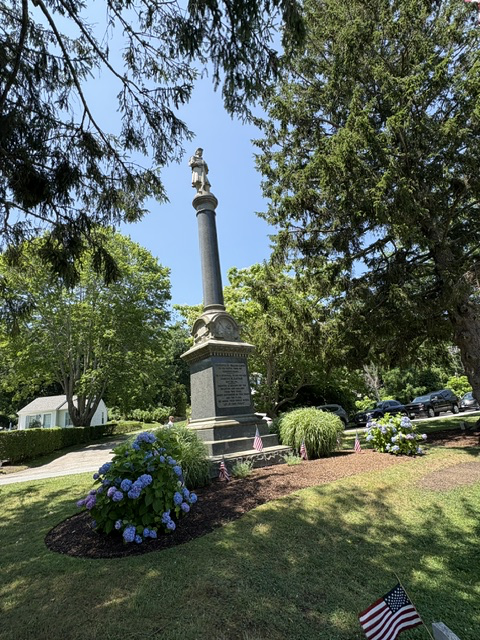
Soldiers’ and Sailors’ Monument
The Soldiers’ and Sailors’ Monument in Sandwich was dedicated on Memorial Day, May 30, 1911, to honor the men of the town who served in the Civil War. Rising approximately thirty feet above what is now known as Eaton Square, the monument is crowned by the figure of a Union soldier. Its story, however, reaches […]

