1922 Ford Model T Howe Pumper
This 1922 Ford Model T Howe Pumper tells the story of how motorized vehicles transformed firefighting in small American communities. Before trucks like this became available, many rural fire departments depended upon hand-operated or horse-drawn equipment. Firefighters often had to transport heavy pumps, ladders, and hoses over unpaved roads while every passing minute allowed a fire to spread.
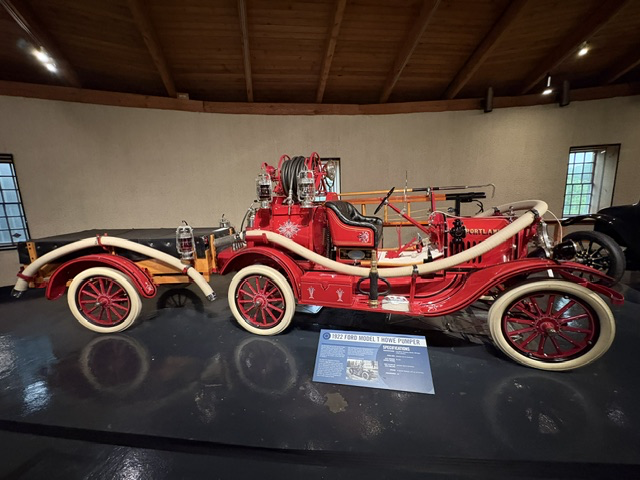
The pumper entered service in New Portland, Maine, in June 1922. With a population of approximately 800 people, New Portland could not justify the cost or size of the large fire engines used in major cities. Manufacturers responded to the needs of communities like this by installing firefighting equipment on affordable automobile chassis. The dependable and widely available Ford Model T provided a practical foundation for a small-town fire truck.
The Howe Fire Apparatus Company equipped the vehicle with a large three-cylinder piston pump capable of moving approximately 250 gallons of water per minute. A suction hose allowed firefighters to draw water from a pond, stream, or well which was an essential capability in communities without a municipal network of fire hydrants. A booster tank carried a limited supply of water that could be used immediately while firefighters connected the pump to a larger source.
New Portland had already experienced the destructive power of fire. On April 28, 1919, a devastating blaze swept through the community, destroying 18 houses and a school. Although the surviving records do not establish a direct connection between that disaster and the purchase of the pumper three years later, the fire must have demonstrated how vulnerable a small community could be when flames spread faster than its available equipment could control them.
The truck represents an important transition in the history of firefighting. Motorized apparatus allowed volunteers to reach a fire more quickly and carry equipment that previously required horses or teams of people. The Model T helped make this transition possible for communities that could never have afforded the larger and more powerful fire engines used in cities.
Today, the pumper is preserved in the automobile collection at Heritage Museums & Gardens in Sandwich. Its survival allows us to see how one of America’s most familiar automobiles was adapted to meet a community’s most urgent needs. More than an antique vehicle, it represents the ingenuity of rural fire departments and the volunteers who depended upon simple, practical equipment to protect their neighbors.
Read More From Nancy
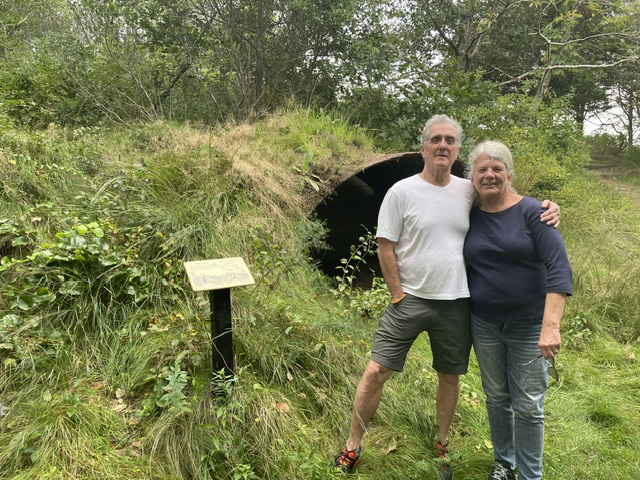
The Ready Rooms
During a hike through the Sagamore Hill area of Sandwich, we came upon this earth-covered entrance hidden among the grass and trees. What appears at first to be a small bunker is one of the Ready Rooms belonging to the former Sagamore Hill Military Reservation, a World War II coastal-defense installation overlooking Cape Cod Bay […]
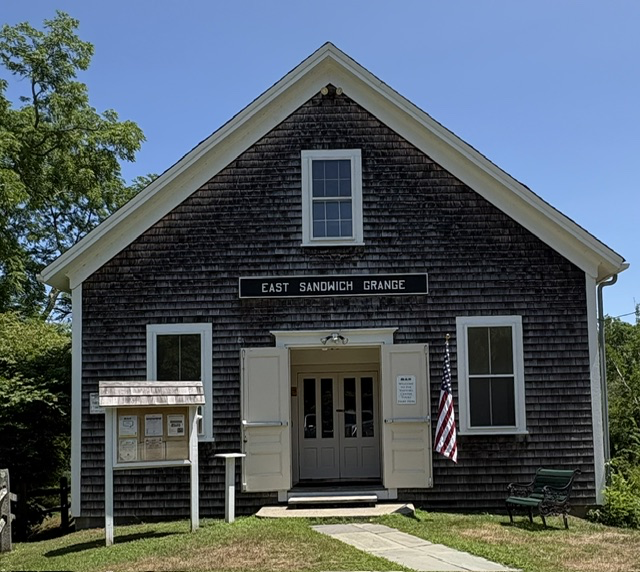
East Sandwich Grange Hall
While visiting the Benjamin Nye Homestead, I also stopped at this simple shingled building nearby. The sign above the entrance identifies it as the East Sandwich Grange. It may not be as old as the 1678 Nye Homestead next door, but it represents another important part of life in this farming community. The East Sandwich […]
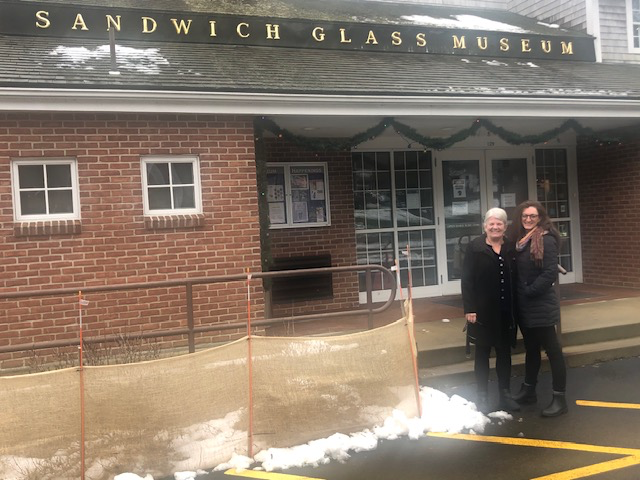
Glass Museum
In December 2020, I was searching for something meaningful to do for my birthday. COVID-19 had brought much of the MetroWest Boston area to a standstill, and nearly everything was closed. After months of restrictions and canceled plans, even a simple day trip felt like a welcome escape. When I learned that the Sandwich Glass […]

