Sugarloaf
Before sugar commonly arrived in bags of loose granules, refined cane sugar was often sold as a hard, solid cone called a sugarloaf. Its distinctive shape came from the molds used during refining, when liquid drained away as the sugar hardened.
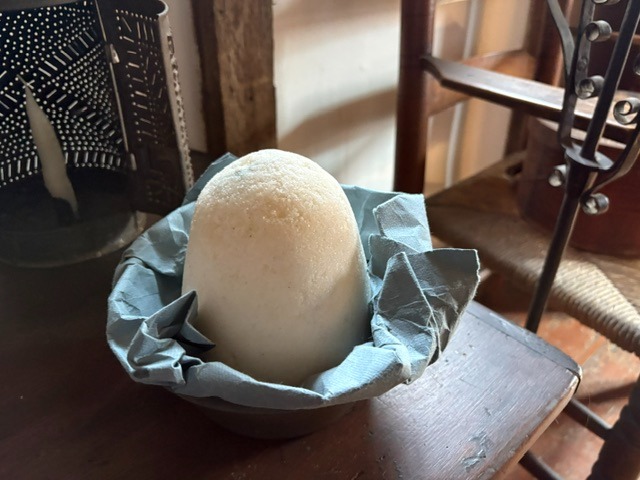
Preparing it for use required effort. Household members broke the loaf into manageable pieces, then used strong metal sugar nippers to cut smaller portions. Pieces could be dissolved in tea or other liquids, while sugar needed for baking could be crushed more finely with a mortar and pestle.
An 1850 household guide described sugar nippers as indispensable, recommending their use after the loaf had first been cracked with a stout knife and a mallet or hammer. Sweetening food involved tools and preparation that are largely absent from kitchens today.
The sugarloaf also connects domestic life with a much wider commercial world. Cane sugar reached households through networks of growers, refiners, merchants, and shipping routes. The familiar act of adding sweetness depended on a product that had traveled through several stages of processing and trade.
Displayed in a historic household setting, the sugarloaf makes an ordinary ingredient look unfamiliar. Its form reveals how much the packaging, preparation, and use of everyday foods have changed.
Read More From Nancy
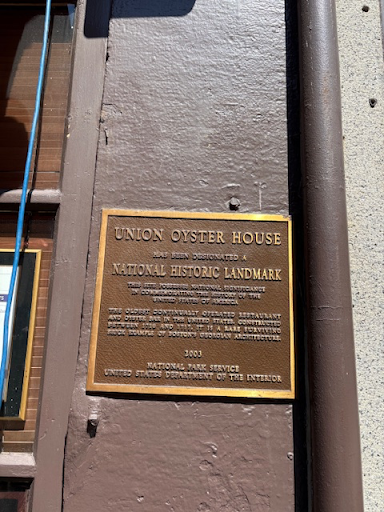
Union Oyster House
Walking along the Freedom Trail in Boston, it is easy to miss the plaque outside the Union Oyster House. But if you pass it by, you are missing not only a good meal, but an extraordinary chapter in American history. The Union Oyster House is the oldest continuously operating restaurant in the United States, serving diners […]
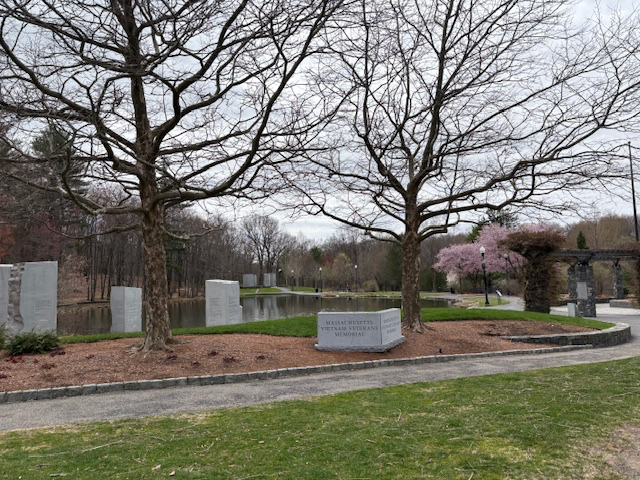
Massachusetts Vietnam Veterans Memorial
Some memorials ask you to stop and reflect. The Massachusetts Vietnam Veterans Memorial in Worcester is one of those places. Unlike many war memorials that focus on statues or monuments, this memorial invites visitors to walk quietly through the landscape. Granite monuments surround a peaceful reflecting pond, each bearing words that tell the story of […]
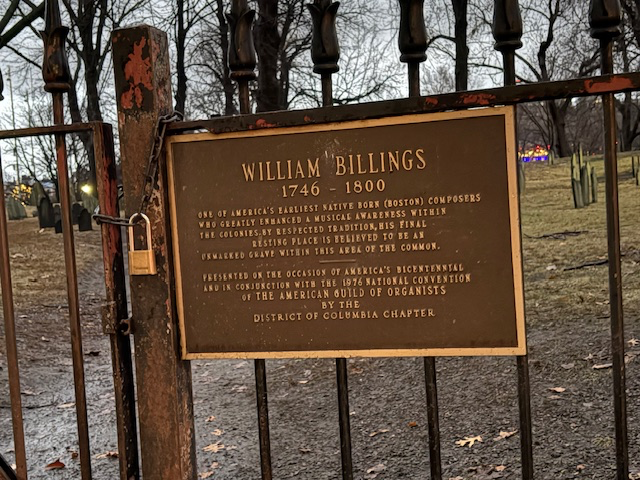
William Billings Plaque
Walking along the Boston Common, there are a number of plaques that quietly mark the lives of people who helped shape the early character of the city. One of them is for Willian Billings, listed as one of America’s earliest native-borncomposers. Billings was born and lived in Boston at a time when the country was just beginning to define its […]

