Sagadi Manor
One of the most striking features of Sagadi Manor in Estonia’s Lahemaa National Park is not the manor house itself, but the way we first see it. Passing through this large arched gateway, the opening frames the pink-and-white manor house across the courtyard almost like a picture. It is a carefully composed entrance, designed to make arriving at the estate an experience.
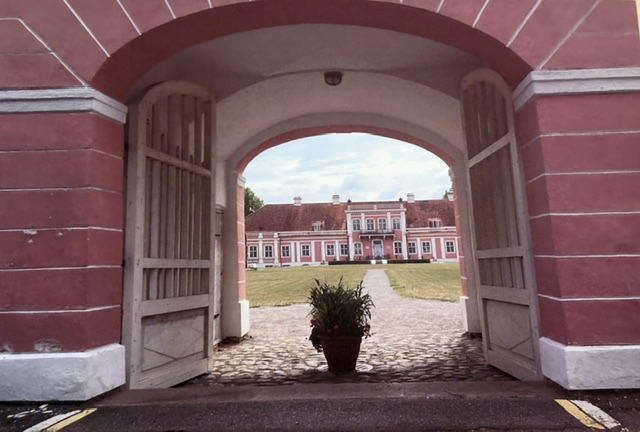
The gateway was more than decorative. On a large Baltic German estate such as Sagadi, entrances helped define the boundary between the surrounding countryside and the organized world of the manor. Passing through the gates brought visitors into a formal courtyard surrounded by the buildings that supported the estate. Directly ahead stood the main house, unmistakably the center of the complex.
The heavy wooden doors remind us that this was also a working estate. Sagadi was not simply a country residence surrounded by pretty grounds. For centuries it was the center of a large agricultural property, with barns, stables, storage buildings, workshops and the many people whose labor sustained it. The gateway would have been used by residents, servants, workers, visitors, horses, wagons and goods moving continually in and out of the estate.
What caught my attention was the view itself. Standing beneath the arch, the old wooden doors remain on either side, the cobblestones continue beneath our feet, and the manor appears perfectly centered in the distance. It creates a connection between where we are standing and where we are being led.
Today the gateway no longer controls access to a private estate. Instead, it invites us into a preserved piece of Estonia’s past. I like this photograph because the archway does exactly what it has done for generations. It provides the first glimpse of Sagadi Manor and draws us into the world beyond its gates.
Read More From Nancy
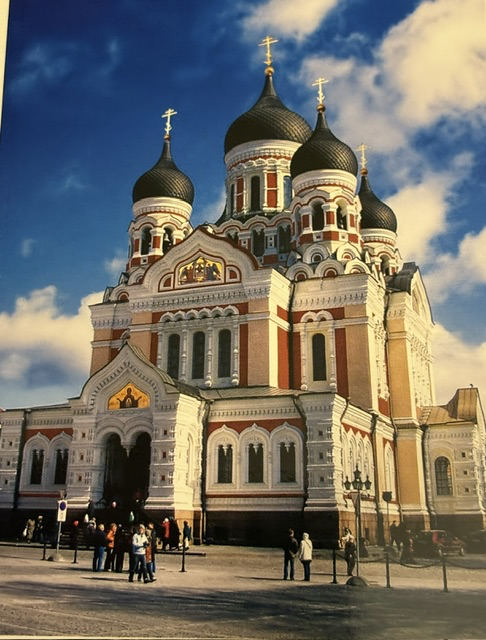
Alexander Nevsky Cathedral
While on a walking tour through Tallinn, Estonia, we passed this remarkable building on Toompea Hill. We did not go inside, but it was impossible not to stop and notice it. Its onion-shaped domes and elaborate Russian Orthodox architecture stand in dramatic contrast to much of Tallinn’s medieval Old Town. This is the Alexander Nevsky […]
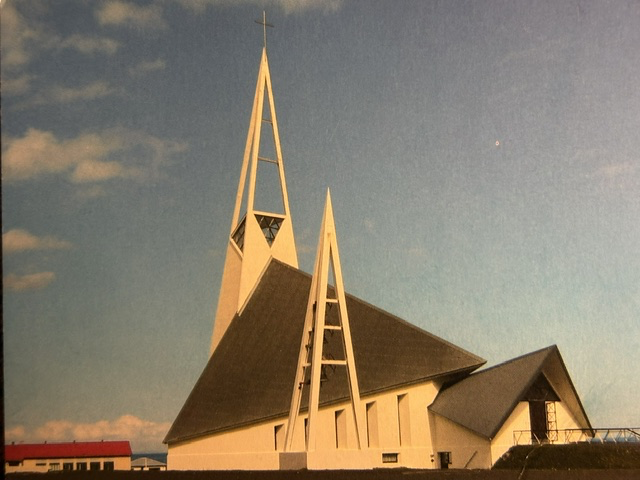
Kasmu Church Käsmu Village, Haljala Parish
One of the highlights of my visit to Estonia was hiring a local guide to take me beyond Tallinn and into the countryside. Traveling through the forests, coastal roads, and small villages of Lahemaa National Park provided an opportunity to experience a different side of Estonia. Along the way, we stopped in the historic fishing village […]
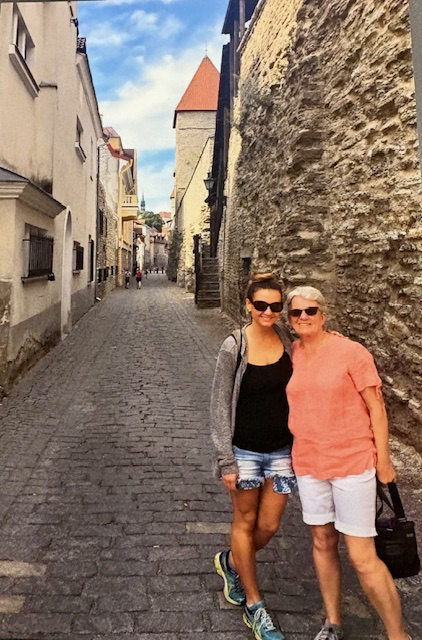
Old Town
If I would have made a list of countries to visit, I would not have had Estonia on that list. But when my daughter, Emily, asked me to travel there with me, I said yes. We stayed right within the walls of Tallinn. I quickly realized how special that decision had been. Walking through the […]

