Alexander Nevsky Cathedral
While on a walking tour through Tallinn, Estonia, we passed this remarkable building on Toompea Hill. We did not go inside, but it was impossible not to stop and notice it. Its onion-shaped domes and elaborate Russian Orthodox architecture stand in dramatic contrast to much of Tallinn’s medieval Old Town.
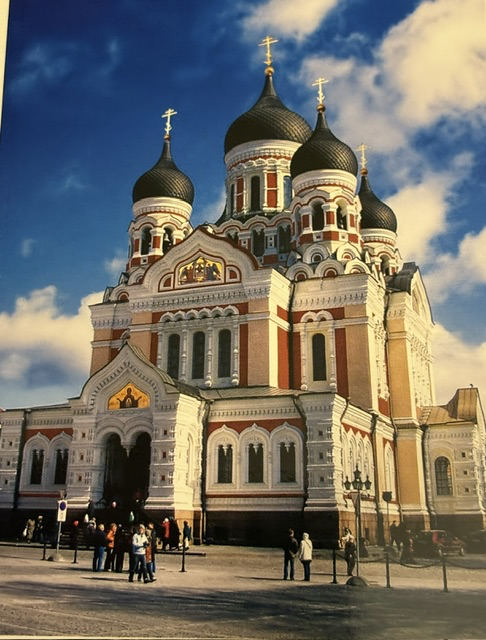
This is the Alexander Nevsky Cathedral, built between 1894 and 1900, when Estonia was still part of the Russian Empire. It was dedicated to Alexander Nevsky, the 13th-century Russian prince who became a saint of the Russian Orthodox Church.
But the location of the cathedral is an important part of its story. It was constructed prominently on Toompea Hill, an ancient center of political power in Estonia. Today, Estonia’s Parliament meets directly across from it. When the cathedral was built, however, many Estonians viewed its imposing presence as a very visible expression of the Russian Empire’s efforts to strengthen Russian influence over the region.
After Estonia became independent in 1918, the cathedral’s symbolism made it controversial. There were even proposals to demolish it during the years between the world wars. It survived, as it later survived the decades when Estonia was incorporated into the Soviet Union. Estonia restored its independence in 1991, and the cathedral remains an active Russian Orthodox church today.
What caught my attention was simply a beautiful and unusual building encountered while walking through Tallinn. But its architecture tells a much more complicated story about Estonia’s relationship with Russia, national identity, occupation and independence.
Read More From Nancy
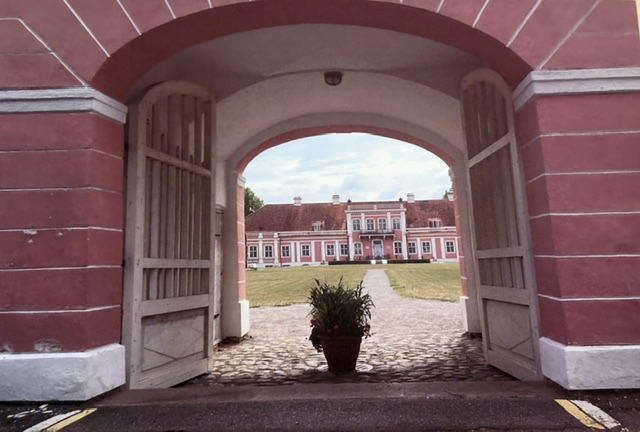
Sagadi Manor
One of the most striking features of Sagadi Manor in Estonia’s Lahemaa National Park is not the manor house itself, but the way we first see it. Passing through this large arched gateway, the opening frames the pink-and-white manor house across the courtyard almost like a picture. It is a carefully composed entrance, designed to […]
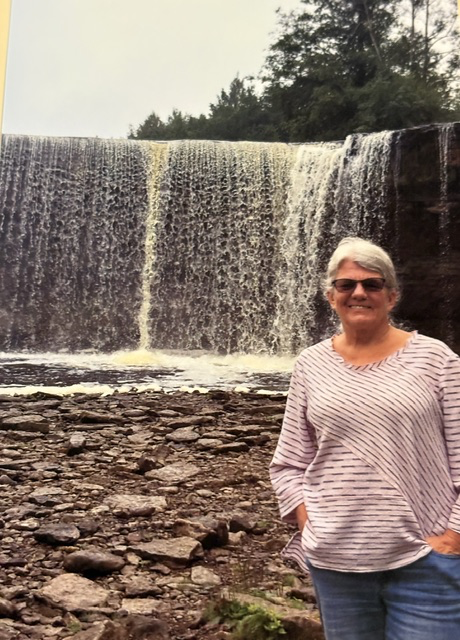
Jagala Waterfall Lahemaa National Park
One of the memorable stops during my journey through the Estonian countryside was Jägala Waterfall, the largest natural waterfall in the country. Although Estonia is known for its forests, medieval cities, and Baltic coastline, it also offers peaceful natural landscapes that are often overlooked by visitors. As my guide drove through the rural countryside toward Lahemaa National […]
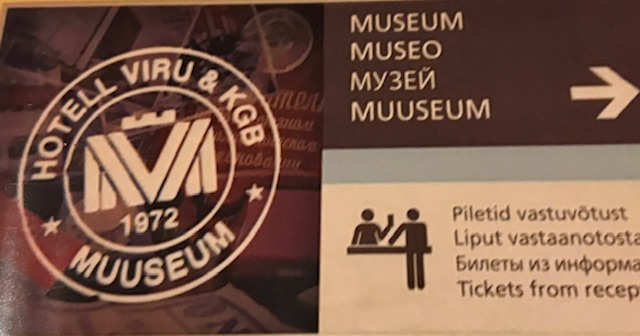
KGB Museum
While traveling in Tallinn, Emily and I visited one of the most fascinating historical sites in the city: the Hotel Viru and KGB Museum. What appears from the outside to be a typical large hotel from the Soviet era holds a remarkable and somewhat chilling story hidden within its upper floors. The hotel opened in 1972, during […]

