Robert Newman at Copp’s Hill Burying Ground
At Copp’s Hill Burying Ground, Robert Newman’s grave brings us close to one of the people who helped send a warning out of Boston on the eve of the American Revolution. As sexton of Christ Church, now known as Old North Church, Newman participated in displaying the two lanterns that signaled British troops were leaving the city by water on April 18, 1775.
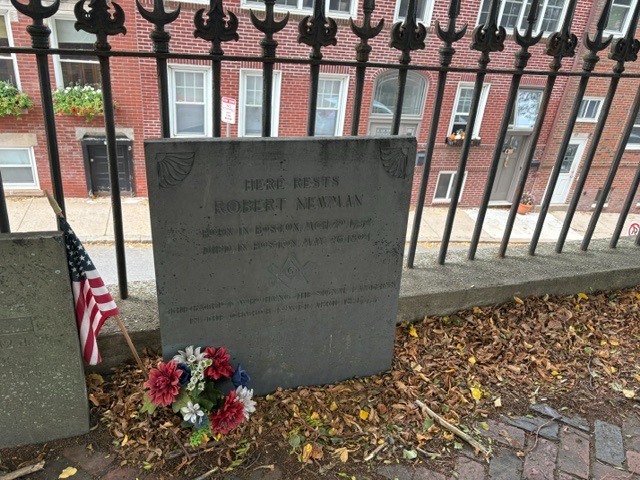
Born in Boston in 1752, Newman became the church’s sexton in 1772. A sexton cared for the church building and supported its daily operation. His position gave him access to the church and familiarity with its interior and practical knowledge that became important when the steeple was chosen as a place to display the warning. He was twenty-three years old when he took part in the signal.
The plan depended on a simple message that could be understood across the river in Charlestown. One lantern would indicate that British soldiers were departing by land through Boston Neck. Two would indicate that they were crossing the Charles River toward Cambridge before marching into the countryside. The lights provided another means of spreading the news if messengers were unable to leave Boston.
Newman worked with John Pulling Jr., a member of the church’s vestry, while Thomas Bernard served as a lookout. That evening, Newman and Pulling climbed the tower and briefly displayed two lanterns near its windows. From the tallest building in Boston, the signal warned those watching in Charlestown of the British movement toward Lexington and Concord. Their task required coordination, secrecy, and a willingness to risk arrest in a city occupied by British troops.
Accounts of Newman’s departure include the tradition that he escaped through a church window. Old North’s history identifies this detail as legend. It also recounts his arrest the following day and his release after he told authorities that he had lent the church keys to Pulling, who had already left Boston. The distinction between the established signal and the stories surrounding his escape is part of understanding how this event has been remembered.
Newman continued serving as sexton after the Revolution. He died in 1804 and was buried at Copp’s Hill, a short distance from the church where he had carried out his part in the warning. His gravesite connects a familiar national story to a neighborhood resident whose access, knowledge, and cooperation helped make the signal possible.
Read More From Nancy
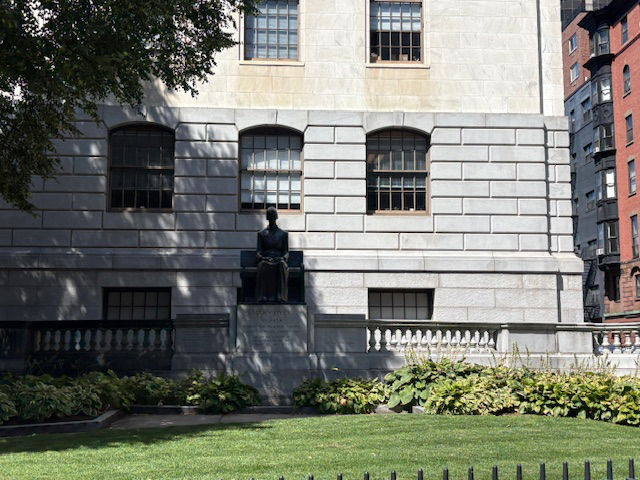
The Courage of Mary Dyer
The ability to sculpt is a remarkable gift. This gift allows an artist to give shape and permanence to something a society deems worth remembering. Our public spaces are filled with statues and memorials, each capturing a story, a value or a life that helped define who we are. The placement of these works also carries meaning for it […]
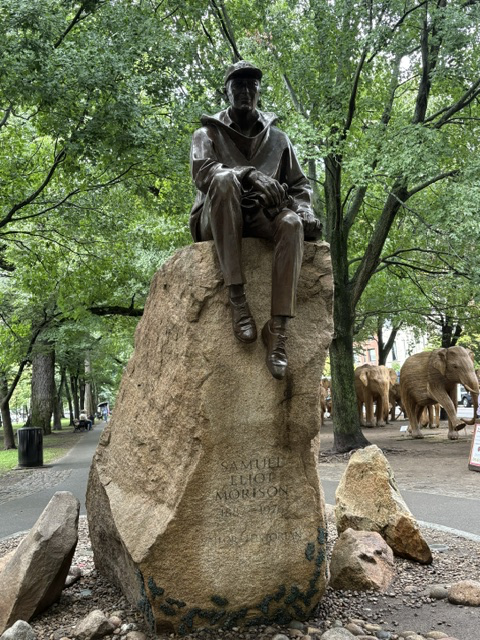
Samuel Eliot Morison Memorial
Walking along the Commonwealth Avenue Mall reveals a series of monuments honoring people connected to Boston and the wider world. Among them is a particularly distinctive sculpture of Samuel Eliot Morison. Rather than placing him formally on his feet or astride a horse, sculptor Penelope Jencks portrayed him as a sailor seated on an enormous […]
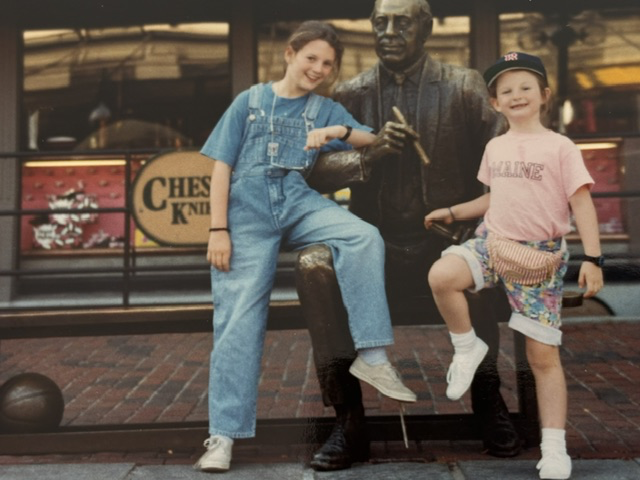
Red Auerbach
This bronze statue honors Arnold “Red” Auerbach, the coach and executive who helped establish the Boston Celtics as one of the most successful franchises in professional sports. Auerbach coached the Celtics from 1950 through 1966, leading the team to nine NBA championships, including an unprecedented eight consecutive titles from 1959 through 1966. Auerbach’s influence extended […]

