Rachel Carson National Wildlife Refuge
During one of our visits to Maine, we stopped at Rachel Carson National Wildlife Refuge in Wells. Its entrance marks a place devoted to protecting a quieter part of the coast: the salt marshes, estuaries, and surrounding habitats that sustain wildlife.
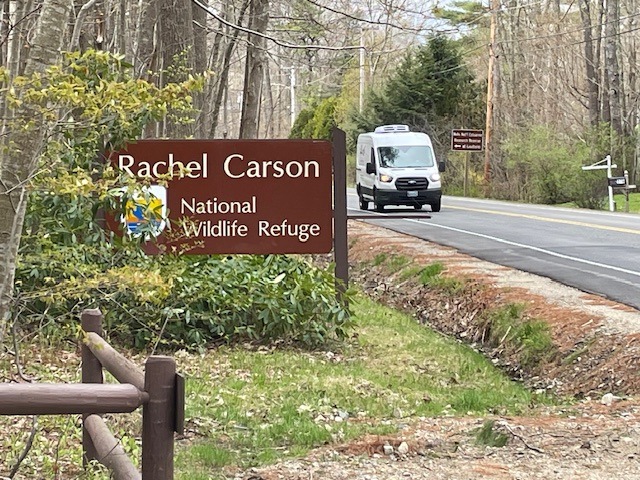
Established in 1966 as the Coastal Maine National Wildlife Refuge, it was created to protect valuable habitat for migratory birds as development expanded along southern Maine’s shoreline. The refuge consists of separate protected areas extending along approximately fifty miles of coast, preserving portions of a landscape that crosses town boundaries.
Salt marshes are central to that mission. Flooded and drained by the tides, they provide feeding grounds, shelter, and breeding habitat for birds and other wildlife. Protecting them also means conserving the connections between tidal waters, coastal vegetation, and neighboring uplands.
The refuge was named for marine biologist and author Rachel Carson in 1969 and formally dedicated in her honor in 1970. Carson had a deep connection to the Maine coast. Her writing helped readers understand the relationships among living things and recognize how human actions could affect entire ecosystems. Her 1962 book, Silent Spring, brought widespread attention to the environmental consequences of pesticide use.
Naming the refuge for Carson connected her work with the protection of an actual coastal landscape. Here, conservation takes the practical form of preserving places where wildlife can continue to feed, nest, and migrate.
Read More From Nancy
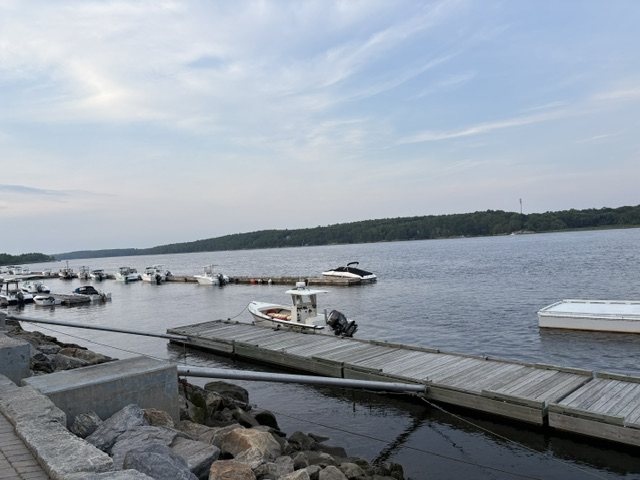
The River That Built Bath
The Kennebec looked quiet when we stopped along Bath’s waterfront. Small boats rested at the docks, and the wooded shore stretched across the water. It was easy to linger over the view. It took a little more imagination to see how much had once happened on this same stretch of river. In the nineteenth century, […]
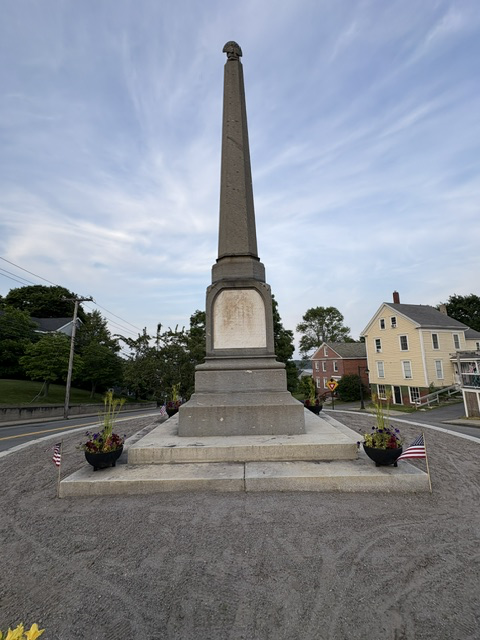
Civil War Soldiers’ Monument
The tall stone monument on Bath’s High Street was raised while the Civil War was still close in memory. Erected between 1867 and 1869, it honored the men from Bath who had died in the conflict. An eagle crowns the shaft; below it, the city’s dedication asks those passing by to remember its sons. The […]
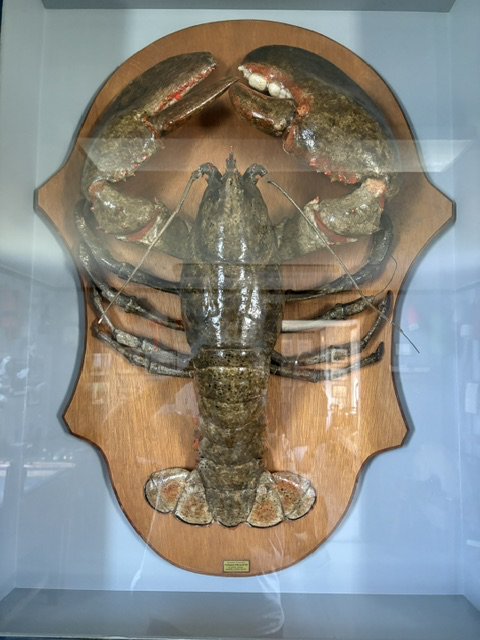
The Giant Lobster at Pemaquid Point
While visiting Pemaquid Point Lighthouse, I expected to learn about shipwrecks, lighthouse keepers, and Maine’s rocky coast. I didn’t expect one of the exhibits that would capture my attention most to be a giant lobster. Displayed inside the Fishermen’s Museum at Pemaquid Point is a mounted lobster weighing twenty-eight pounds. It was caught off the […]

