Old North Bridge Minute Man
Few statues in America are as instantly recognizable as The Minute Man. Standing beside Concord’s Old North Bridge; this bronze figure has become an enduring symbol of the American Revolution and the ordinary citizens who were willing to risk everything in defense of their liberty. More than a monument, it represents the moment when farmers, tradesmen, and neighbors became soldiers, forever changing the course of history.
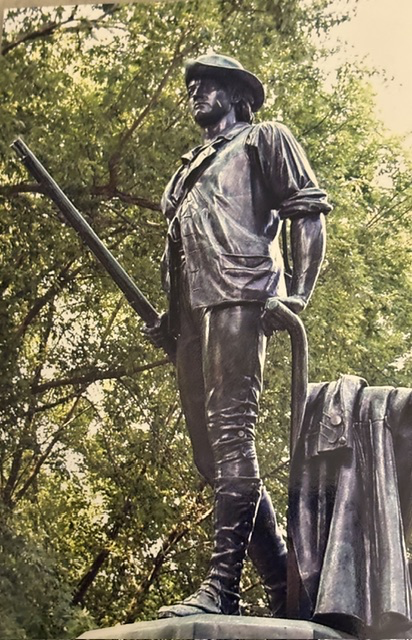
The statue was created by the young sculptor Daniel Chester French, who grew up in Concord after his family moved there in 1867. Encouraged by Ralph Waldo Emerson and other members of Concord’s remarkable literary community, French won the commission to create a monument for the centennial of the Battles of Lexington and Concord. Unveiled on April 19, 1875, exactly one hundred years after the battle, The Minute Man launched French’s career. He would later become one of America’s greatest sculptors, creating the seated Abraham Lincoln in the Lincoln Memorial in Washington, D.C.
Although many people believe the statue depicts a specific individual, it was intended to represent the citizen-soldiers known as the Minutemen. French did study descendants of Captain Isaac Davis of nearby Acton while designing the figure, and Davis is thought to have influenced the statue’s appearance. Davis was the first American officer killed at the North Bridge on April 19, 1775, making his story inseparable from the monument itself. Rather than portraying a military hero in full uniform, French chose to show an ordinary farmer who has left his plow behind, rolled up his sleeves, and taken up a musket. The coat draped over the plow reminds us that only moments earlier he had been working his fields.
The statue itself has an equally remarkable story. Standing seven feet tall, it was cast in bronze using melted Civil War cannons donated by Congress and mounted on a granite pedestal near the spot where the colonial militia first exchanged fire with British regulars at the North Bridge. Inscribed on the pedestal are the opening lines of Ralph Waldo Emerson’s “Concord Hymn”:
“By the rude bridge that arched the flood,
Their flag to April’s breeze unfurled,
Here once the embattled farmers stood,
And fired the shot heard round the world.”
Over the past 150 years, The Minute Man has become far more than a local monument. It serves as the official emblem of the United States National Guard, appeared on the reverse of the Massachusetts state quarter, and has been featured on U.S. savings bonds and patriotic posters. Its image has come to symbolize not only the beginning of the American Revolution but also the enduring ideal that ordinary citizens can answer extraordinary calls to service.
Read More
Read More From Nancy
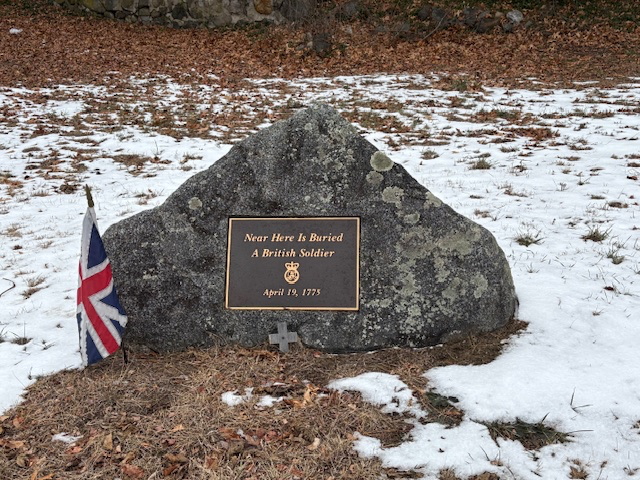
British Soldier Memorial
Among the historic roads of Concord, where so much of the opening day of the American Revolution unfolded, there is this small, easily overlooked stone. It reads: “Near Here is Buried A British Soldier – April 19, 1775” This marker points to one of the most human and often forgotten aspects of the Battles of Lexington […]
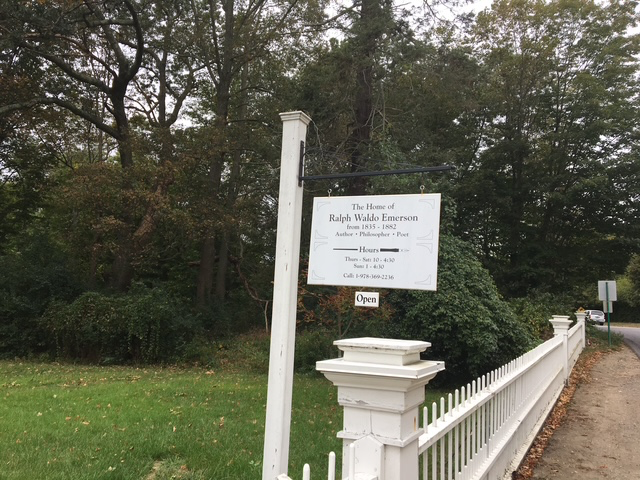
Ralph Waldo Emerson’s House
When you step inside Ralph Waldo Emerson’s house in Concord, MA, you can feel the presence of a man whose ideas helped shape American thought. One of the objects in the entry hall of his home is his walking cane. This is the same cane he carried on his daily walks that inspired so many of […]
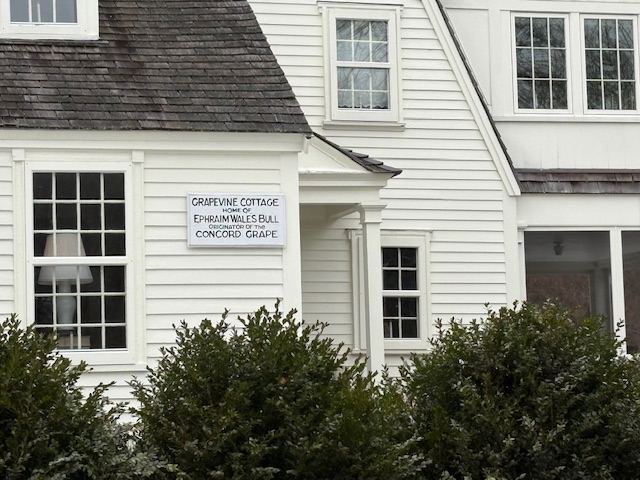
Grapevine Cottage
I grew up enjoying grape jelly on my toast. Like many children, I never thought about where the familiar flavor came from. It wasn’t until much later that I learned the grape behind the jelly: the Concord grape, originated from vines grown by a man named Ephraim Wales Bull in Concord. While exploring Concord, this […]

