Moores Creek National Battlefield
One of the pleasures of visiting our National Parks is discovering places that most Americans have never heard of yetplayed an important role in the nation’s history. Moores Creek National Battlefield in southeastern North Carolina is one of those places. At first glance, it is simply a peaceful stream winding through a forest. It is difficult to imagine that this quiet landscape witnessed one of the first significant Patriot victories of the American Revolution.
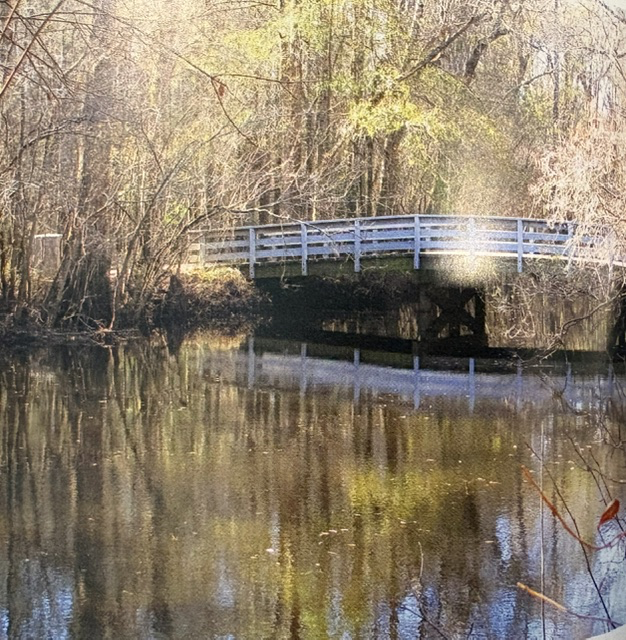
The focal point of the park is the bridge crossing Moores Creek. On February 27, 1776, it became the center of a carefully prepared Patriot defense.
Expecting Loyalist forces to cross at this point, Patriot militia removed the bridge planks and coated the remaining wooden stringers with grease. As Scottish Highland Loyalists charged across the narrow crossing, they suddenly found themselves exposed to cannon and musket fire from nearly one thousand Patriot defenders waiting on the opposite bank. What had been expected to be a straightforward advance quickly turned into a disastrous defeat. Within a short time, the Loyalist force surrendered.
The importance of the battle reached far beyond the battlefield itself. The Patriot victory effectively ended organized Loyalist resistance in North Carolina during the early years of the Revolution and discouraged British efforts to regain control of the colony. Just a few months later, North Carolina became the first colony to authorize its delegates to vote for independence through the Halifax Resolves, an important step on the road to the Declaration of Independence.
What struck me most during our visit was how ordinary the setting appears today. There are no towering fortifications or dramatic mountain landscapes. Instead, the park preserves a creek, a bridge, and the surrounding woodland. Without the work of the National Park Service, it would be easy to drive past this place without ever realizing its significance.
That is one of the reasons I enjoy visiting these historic parks. They remind me that history often unfolds in places that seem unremarkable until we understand the events that occurred there. A narrow bridge over a small North Carolina creek became the setting for a battle that helped secure an entire colony for the Patriot cause.
Read More From Nancy
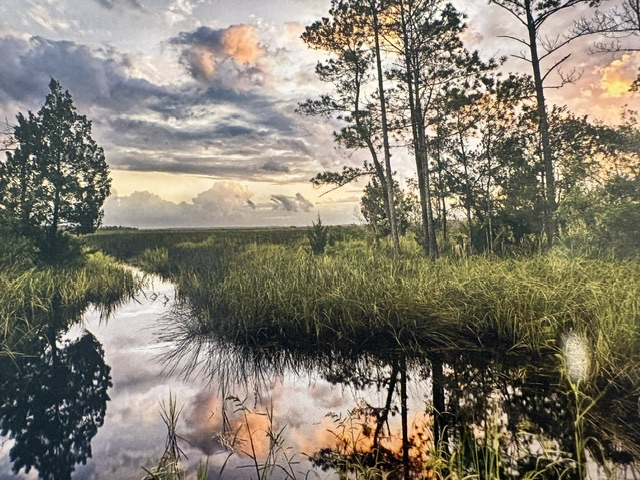
Timucuan Ecological and Historic Preserve
The National Park Service protects places where history unfolded over thousands of years as well as places where a single dramatic event occurred. Timucuan Ecological and Historic Preserve, near Jacksonville, Florida, is one of those places. Established in 1988, the preserve encompasses more than 46,000 acres of salt marshes, tidal creeks, rivers, hardwood hammocks, and […]
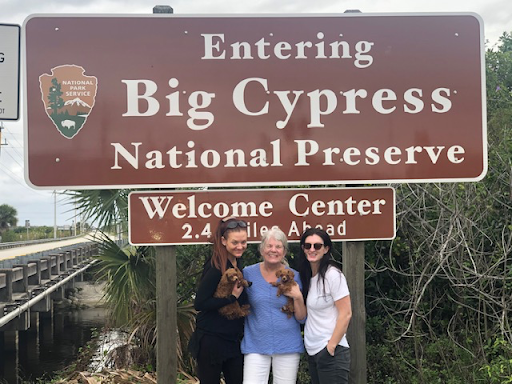
Big Cypress National Preserve
Big Cypress is not exactly a national park, but a national preserve. A national preserve allows certain traditional uses to continue while still protecting the land. When Congress established Big Cypress in 1974, it became one of the very first two national preserves in the country, Big Cypress protects nearly 729,000 acres of land, making […]
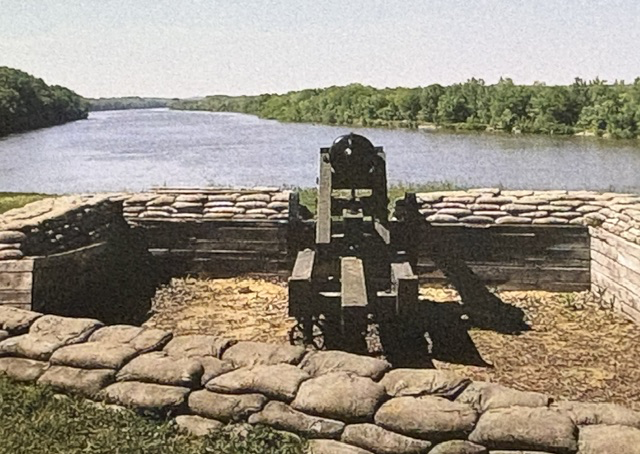
Fort Donelson National Battlefield
Fort Donelson National Battlefield in Dover, Tennessee, preserves the site of one of the most important Union victories of the Civil War. Established as a National Military Park in 1928, it commemorates the battle fought in February 1862, when Union forces under Brigadier General Ulysses S. Grant captured Fort Donelson and opened the Cumberland and […]

