Mary Moody Emerson
Mary Moody Emerson was born in Concord on August 23, 1774, in the house later known as the Old Manse. She was the daughter of the Reverend William Emerson, Concord’s minister, and Phebe Bliss Emerson. Her father supported the cause of American independence and served as a chaplain with the Continental Army. He died from illness in 1776, leaving his family in difficult financial circumstances when Mary was not yet two years old.
Mary was sent to live in Malden with her grandmother and an aunt. Her childhood offered little opportunity for formal education, but she became a determined and largely self-taught reader. She studied literature, philosophy, history and theology whenever books became available to her. The limitations placed upon her education did not prevent her from developing an independent and deeply questioning mind.
Throughout her life, Mary recorded her ideas in letters and in a series of handwritten journals she called her “Almanacks.” She filled thousands of pages with observations about religion, nature, imagination, politics and the direction of her own life. Her writing was intensely personal, but it also addressed many of the philosophical questions being considered by the ministers, writers and reformers of nineteenth-century New England.
Mary never married and never established a conventional household of her own. She frequently moved among the homes of relatives, helping during illnesses, caring for children and contributing to the intellectual life of the family. She also spent periods at Elm Vale, a farm near Waterford, Maine, where the surrounding forests and lakes provided solitude for reading, writing and reflection.
Among the children Mary influenced were her nephews Ralph Waldo Emerson and his brothers. She encouraged them to read, observe nature, keep journals and think beyond the boundaries of their formal education. Ralph Waldo Emerson repeatedly borrowed her Almanacks, copied passages from them and incorporated some of her language and ideas into his own developing philosophy. He referred to her as one of his earliest and most important teachers.
Her influence extended beyond particular passages or phrases. Mary’s belief in personal spiritual experience, her attention to nature and her insistence upon independent thought anticipated ideas that would later become central to New England Transcendentalism. Although her nephew became one of America’s best-known writers, many of the ideas associated with his work had already been considered in the private writings and conversations of his aunt.
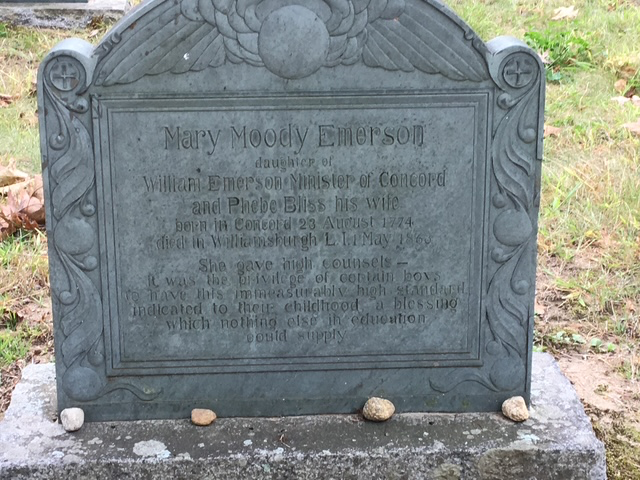
Mary died on May 1, 1863, in Williamsburg, then part of Long Island and now Brooklyn, New York. She was returned to Concord and buried in Sleepy Hollow Cemetery. Her memorial describes how “she gave high counsel” and recognizes the influence she exercised over the boys whose childhoods she helped shape, calling it “a blessing which nothing else in education could supply.”
That inscription preserves an important distinction. Mary Moody Emerson did not possess an academic position, publish a major body of work or receive the public recognition granted to the men she influenced. Her education was largely created through her own persistence, and most of her writing remained within the family. Yet her ideas traveled through her letters, journals and conversations into the intellectual life of Concord and the work of Ralph Waldo Emerson. Her grave remembers a woman whose voice was often private, but whose influence reached far beyond the circumstances of her life.
Read More From Nancy
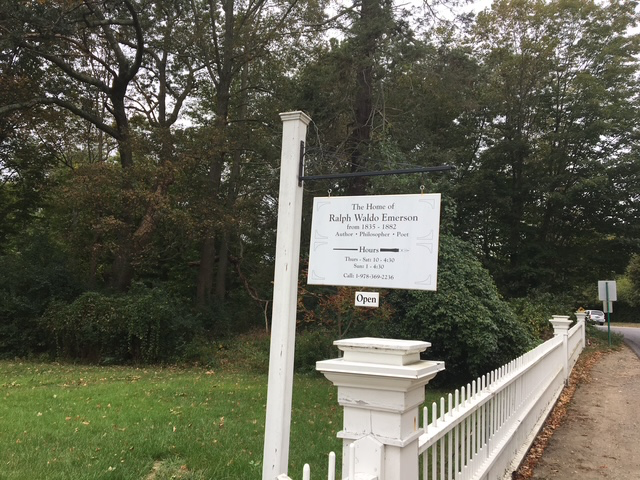
Ralph Waldo Emerson’s House
When you step inside Ralph Waldo Emerson’s house in Concord, MA, you can feel the presence of a man whose ideas helped shape American thought. One of the objects in the entry hall of his home is his walking cane. This is the same cane he carried on his daily walks that inspired so many of […]
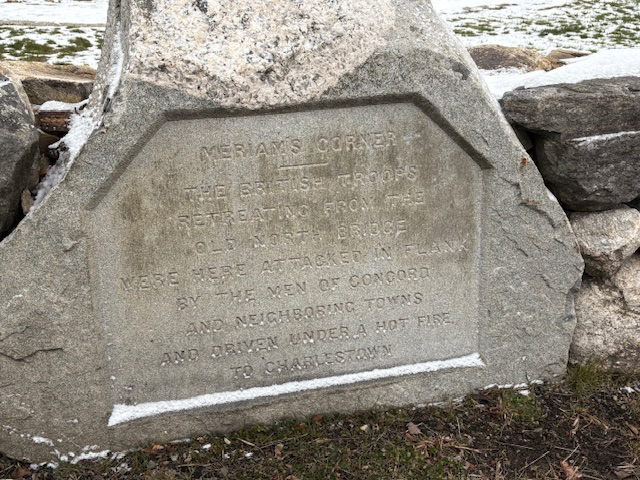
Meriam’s Corner
Meriam’s Corner is an important Revolutionary War sites in Concord, located near the Nathan Meriam House along Lexington Road within the Minute Man National Historical Park. On April 19, 1775, after the British regulars had searched Concord and begun their march back toward Boston, they passed this junction near the Meriam family homestead. It was here that […]
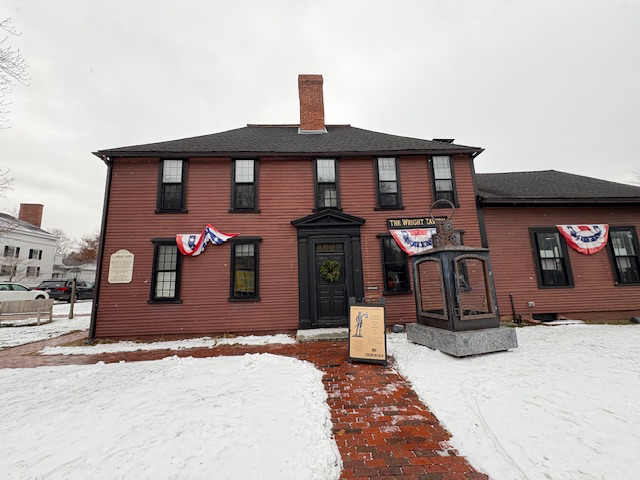
The Wright Tavern
Standing in the center of Concord, Massachusetts, the Wright Tavern has witnessed some of the most important moments in American history. Built in 1747 by Amos Wright, the tavern quickly became a gathering place where travelers, townspeople, and political leaders exchanged news and ideas. In colonial New England, taverns served not only as inns but […]

