Marconi-RCA Wireless Museum
Long before messages could be sent instantly by telephone, satellite or the internet, Chatham served as an important link between ships at sea and the rest of the world. The Marconi-RCA Wireless Museum preserves the story of the people and technology that made those connections possible.
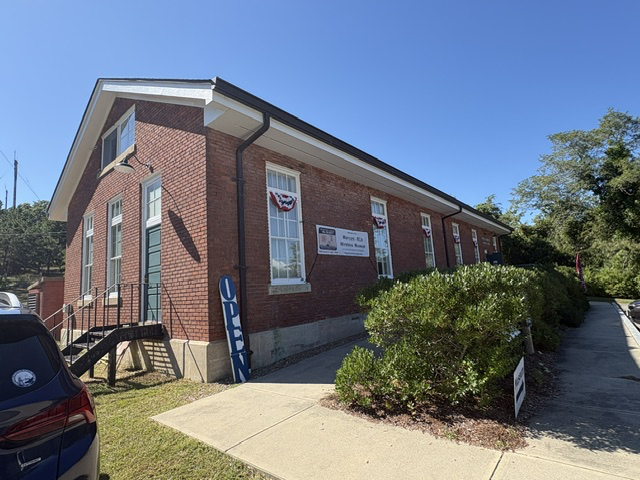
Italian inventor Guglielmo Marconi helped transform communication through his development of long-distance wireless telegraphy. In 1914, the American Marconi Company began constructing a major wireless station in Massachusetts. The receiving station was built in Chatham, while its powerful transmitting station was located across Buzzards Bay in Marion. Together, they were intended to provide commercial wireless service between the United States and Norway.
The beginning of World War I interrupted those plans. Equipment expected from England did not arrive, and the unfinished station remained largely inactive. Following the war, the United States government wanted American companies to control the country’s rapidly developing communications network. In 1919, the Radio Corporation of America, better known as RCA, was formed and acquired Marconi’s American operations.
RCA opened the Massachusetts station in 1920, initially communicating with Norway and Germany. When the company later transferred its transatlantic service to Long Island, the future of the Chatham station became uncertain. RCA found a new purpose for the facility in April 1921 when it converted the station to maritime communication.
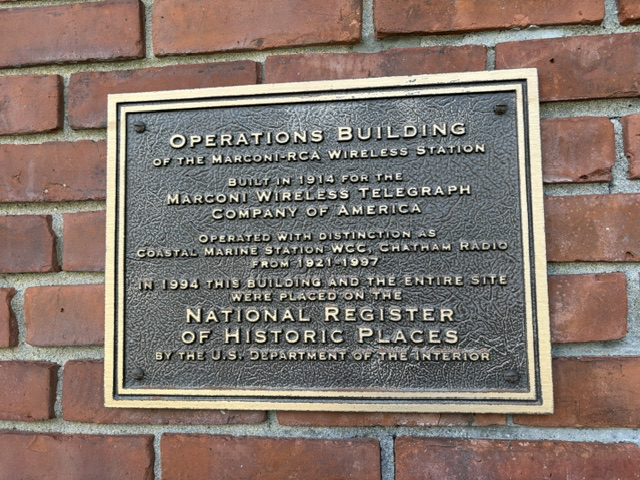
Using the call letters WCC, Chatham Radio allowed its operators to exchange messages with ships throughout the world. A passenger aboard an ocean liner, a captain reporting the vessel’s position or a crew member sending news to family at home could have a message transmitted through Chatham. The station also provided ships with weather reports, news and other essential information. At its height, WCC became the largest and busiest coastal radio station in the United States and was promoted as “The World’s Greatest Coastal Station.”
Communication depended upon skilled radio operators who could rapidly send and receive Morse code. Messages arriving through a series of dots and dashes were typed, recorded and forwarded to their destinations. The museum’s equipment, radio controls, message forms and interactive exhibits help explain how these operators connected people separated by thousands of miles of ocean.
Chatham Radio also played a secret military role during World War II. Beginning in 1942, U.S. Navy personnel stationed there monitored radio transmissions from German U-boats operating in the Atlantic. The coded messages were intercepted in Chatham and relayed to Washington, D.C., where they could be studied and decrypted. The station’s location and advanced receiving equipment made it an important part of the wartime communications and intelligence network.
Following the war, WCC returned to commercial maritime service. For much of the 20th century, its signals reached merchant ships, passenger liners and other vessels traveling across the world’s oceans. Among those connected through Chatham were business leaders, members of royalty, celebrities, immigrants and ordinary sailors trying to remain in contact with those on land.
Advances in satellite and digital communication eventually made traditional ship-to-shore radiotelegraphy obsolete. Chatham Radio continued operating until 1997, ending more than 75 years of maritime service under the WCC call sign. The former receiving-station campus contains ten original buildings on 11.3 acres and is preserved by the Town of Chatham as the Marconi-RCA National Register Historic District. The original Operations Building now houses the Marconi-RCA Wireless Museum, while the surrounding property includes remnants of the station’s extensive antenna system.
The museum preserves a chapter of Chatham’s history that extended far beyond Cape Cod. From this site, radio operators maintained an invisible connection between land and sea, linking Chatham with ships and people throughout the world.
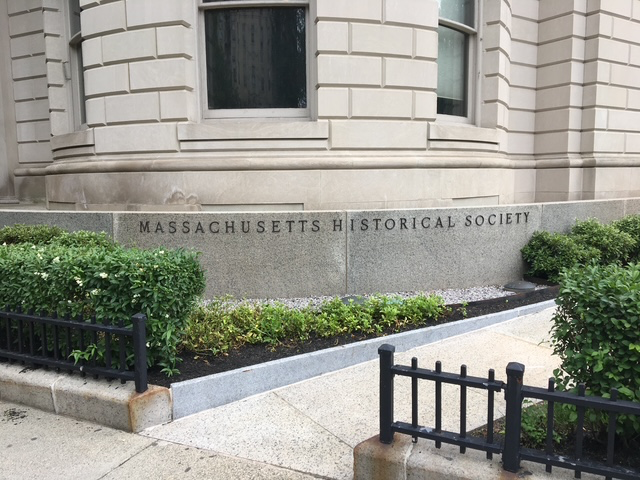
Read More From Nancy
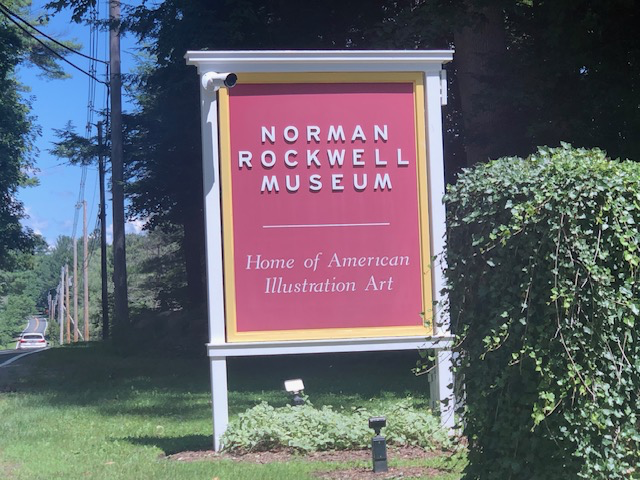
Norman Rockwell Museum
I love returning to the Norman Rockwell Museum in Stockbridge. The museum holds the world’s largest collection of Rockwell’s work, along with changing exhibitions that examine American illustration and the artists who used pictures to tell stories. Because the special exhibitions change, each visit offers something different, even when the familiar paintings remain the reason […]
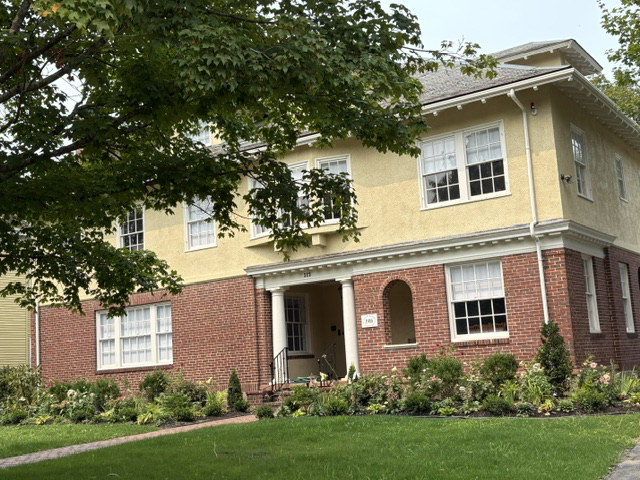
Wellesley Historical Society
Standing at 323 Washington Street in Wellesley Hills, the Stanwood House has been part of this neighborhood for more than a century. Today it is the home of the Wellesley Historical Society and the Wellesley History & Exhibit Center, but the building began as both the family home and medical office of one of Wellesley’s […]
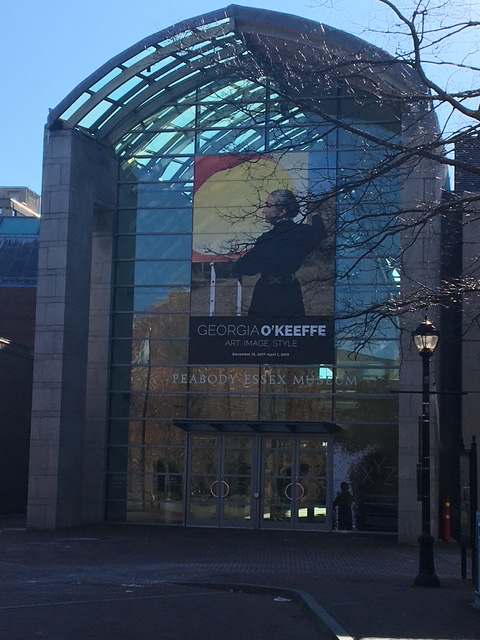
The Peabody Essex Museum
For many years before COVID, the Peabody Essex Museum in Salem was one of our favorite local museums. We were members and visited regularly, not simply to see the permanent collections but especially for the major exhibitions that came through the museum. The exhibits were always thoughtfully put together, and our membership gave us a […]

