Learning to See Your Baby Differently
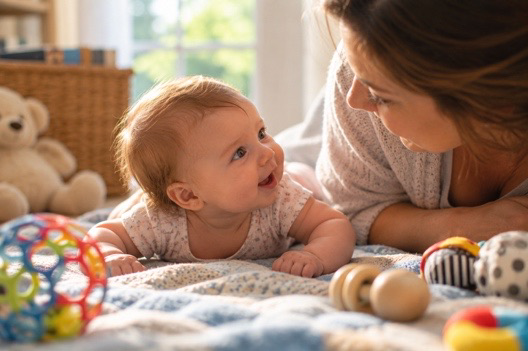
One of the things we discovered while raising our own daughters was how much there was to learn simply by watching them. Our education gave us a foundation for understanding development, but being their parents gave us daily opportunities to see it unfold.
As parents, we naturally focus on whether our children are comfortable, fed, rested, and content. Those needs fill much of the day, especially during the early months. Within those same moments, we can also become curious about how our babies move, respond, and interact.
Does your baby turn toward your voice? Do they seem more comfortable looking in one direction? How do they respond during awake, supervised tummy time? As they grow, are their movements becoming more coordinated? Do they follow your face, reach toward you, or begin exploring with their hands?
What you notice will change with your baby’s age. The purpose of paying attention, and spending quality time with your child is to become familiar with how they participate in the world, will tailoring your expectations to them as individuals.
With our daughters, we learned that watching often meant giving them time. A pause before picking up a toy or responding to a sound allowed us to notice what drew their attention and how they approached something new. It also gave them room to make their own attempts.
The questions we ask are not intended to make parents anxious. They are invitations to become more observant. You do not need to turn playtime into an examination or analyze every movement. Curiosity can be part of the ordinary pleasure of getting to know your baby.
Your baby is communicating long before they can speak. Sometimes that communication comes through a smile or a sound. Other times, it comes through movement, posture, feeding, or how easily they settle. Through our work with families, we have continued to appreciate how much parents learn through these everyday interactions.
The more familiar you become with your child’s individual patterns, the better prepared you are to recognize changes and ask useful questions. “I’ve noticed something different” is a meaningful place to begin a conversation. Learning to see your baby this way can deepen both your understanding of their development and your connection with them.
As parents and healthcare practitioners, we hope to share the insights and wisdom we’ve gained exploring the touchstones and turning points that shaped our lives.
Read More From Nancy
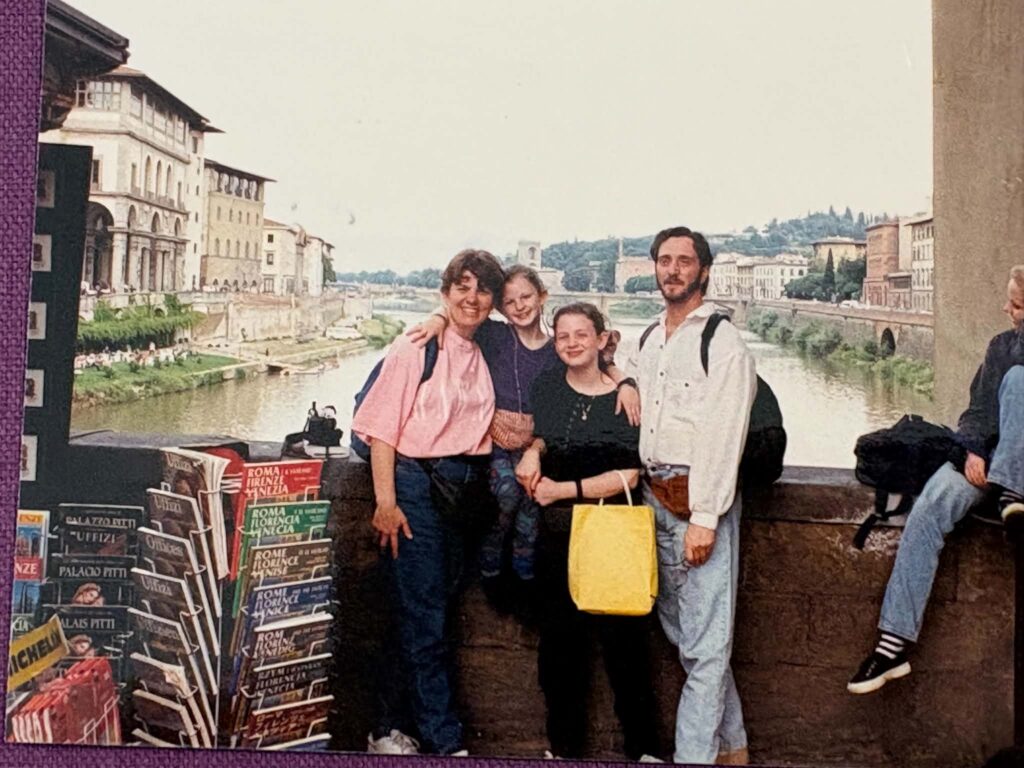
Every Journey Shapes a Child
Looking at this photograph of our family in Florence brings back so many wonderful memories. Like so many of our travels, this trip wasn’t simply about seeing famous places. t was about experiencing the world together. We explored museums, walked ancient streets, crossed historic bridges, discovered new cultures, and shared countless conversations along the way. […]
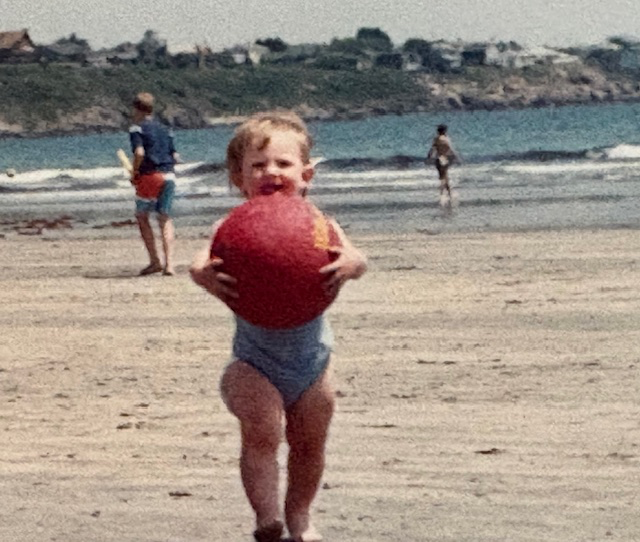
Brain Grows by Repetition
One important principle I have come to understand, and one that sits at the heart of It’s All in the Head, is that the brain develops through use. The brain does not simply grow with time it grows through experience. Each level of brain development is built upon the successful repetition of the level below it. […]
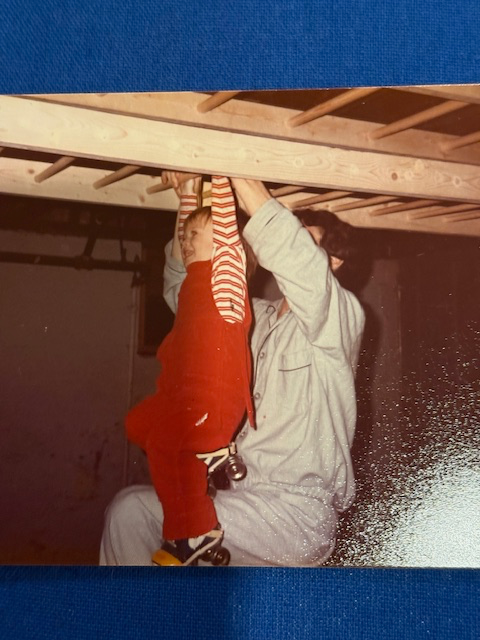
The Reach and the Rhythm: How Movement Builds the Growing Brain
This is a photo of our firstborn daughter, Emily, learning to brachiate, those tiny hands reaching, grasping, and swinging across a simple setup we built in our home. I still remember the look on her face the first time she figured out the rhythm, reach, grip, shift, breathe. It was a small victory that felt […]

