The Reach and the Rhythm: How Movement Builds the Growing Brain
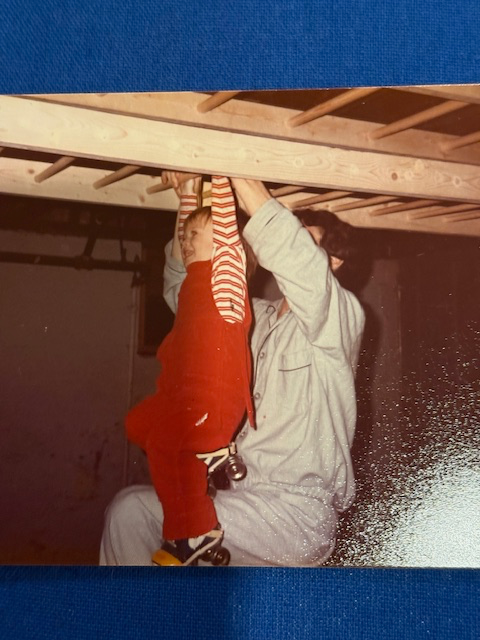
This is a photo of our firstborn daughter, Emily, learning to brachiate, those tiny hands reaching, grasping, and swinging across a simple setup we built in our home. I still remember the look on her face the first time she figured out the rhythm, reach, grip, shift, breathe. It was a small victory that felt enormous.
As parents, we get to shape spaces that invite movement. When babies have the freedom to explore, rolling, crawling, pulling up, hanging, they’re not just building muscle; they’re wiring their brains. Cross-patterning activities like brachiation help organize the nervous system so the brain and body communicate with increasing precision and ease. We saw it in Emily: better coordination, steadier posture, and a growing confidence that spilled into everything else she did. Our job was simply to provide the opportunity, keep it safe, and celebrate each little step along the way.



Read More From Nancy
Flexibility in Parenting
Becoming as prepared as possible for pregnancy and parenthood is something many of us strive for. Gaining knowledge, exploring different options, and understanding what’s available is an important first step. It helps build confidence and provides a foundation for decision-making as your child grows. But one of the most essential qualities in parenting is flexibility. No matter how much […]

Beyond the Early Milestones
We focus a great deal of attention on the developmental milestones of the first six years of life. We watch for the first smile, first steps, first words and the growing ability to play, communicate and learn. But what do we do to support development as our children grow older? Once the early foundations have […]
What We Chose to Give Them
The brain grows through stimulation. Whether that stimulation comes from chaos or from an organized and enriched environment, the developing brain responds and adapts to what surrounds it. We cannot control everything our children will encounter, nor can we determine exactly how they will interpret those experiences. But as parents, we do have some control […]

