Joseph Howe Monument
The Joseph Howe monument honors a Halifax-born journalist and political reformer whose work helped shape Canadian public life. Created by sculptor Louis-Philippe Hébert and erected in 1904, the bronze figure portrays Howe standing with one arm extended, recalling his reputation as a persuasive public speaker. His name is carved into the tall stone pedestal beneath him.
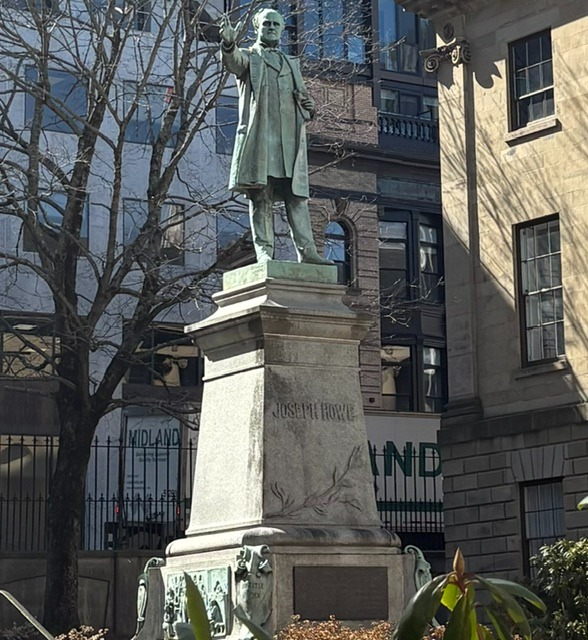
Howe’s most celebrated defense of public expression came in 1835. As publisher of the Novascotian, he faced a criminal libel charge after publishing accusations of corruption against Halifax officials. He defended himself before a jury and won an acquittal. The case became an important milestone in the history of freedom of the press in Canada, demonstrating the power of challenging public authorities through argument and published criticism.
Elected to Nova Scotia’s Assembly in 1836, Howe became a leading advocate for responsible government. Under this system, the governing executive had to maintain the confidence of elected representatives, making it accountable through the legislature. His long campaign helped bring about responsible government in Nova Scotia in 1848. James Boyle Uniacke led the new administration, while Howe served as provincial secretary.
Howe later served as premier of Nova Scotia, a federal cabinet minister, and briefly as lieutenant governor before his death in 1873. His career carried him from newspaper publishing into some of the highest offices in public life. The monument’s extended arm recalls the skill that connected those roles: his ability to turn an argument into a public cause. It commemorates a man whose influence rested on both the written word and the spoken defense of political reform.
Read More

Read More From Nancy
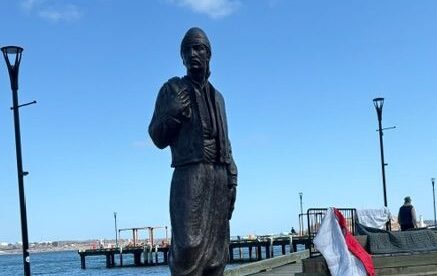
The Lebanese Emigrant Statue
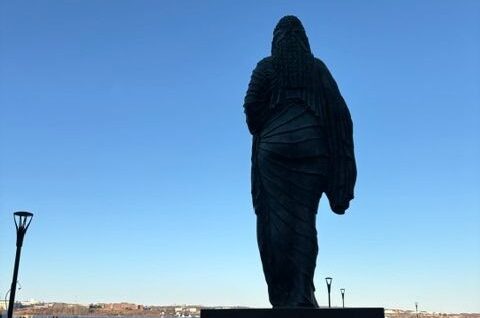
On Halifax’s waterfront, a bronze figure honours the Lebanese emigrants who crossed the ocean to establish new lives in Nova Scotia. Installed in September 2018, the Lebanese Emigrant Statue recognizes their pioneering spirit and the contributions of generations of Lebanese Canadians to the province’s communities, businesses and professions. Lebanese migration to Nova Scotia began in […]
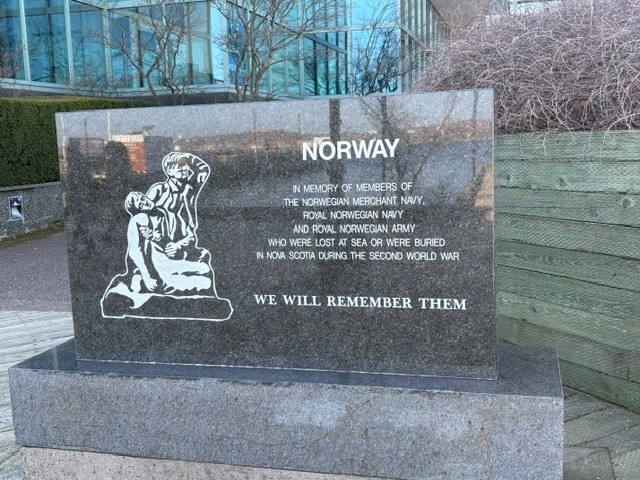
Norwegian Memorial
On Halifax’s waterfront, the Norwegian Memorial honours members of Norway’s Merchant Navy, Royal Navy and Royal Army who were lost at sea or buried in Nova Scotia during the Second World War. Unveiled on November 11, 1998, the monument commemorates a wartime connection between two countries separated by the Atlantic. Its stone, larvikite, was brought […]
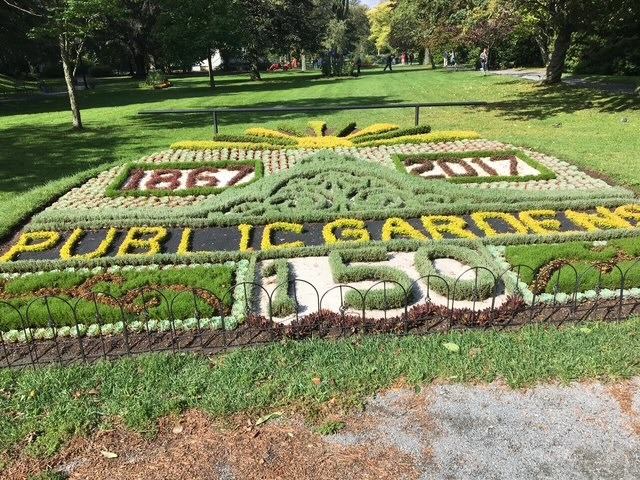
Halifax Public Gardens
The Halifax Public Gardens preserve a rare example of a Victorian public garden in the heart of a modern city. Across approximately sixteen acres, winding gravel paths connect carefully maintained lawns, ornamental flower beds, mature trees, and water features. The landscape was designed for leisurely walking and close observation, offering opportunities to appreciate both individual […]

