Historic Street Markers
Sometimes the smallest details reveal the most about a community.
As I explored Hopedale, one of the features that caught my attention was this beautifully crafted bronze street marker. Mounted on a granite base and topped with a directional sign pointing travelers toward Upton, four and a half miles away, it reflects a time when even something as ordinary as a street sign was designed with permanence, craftsmanship, and civic pride.
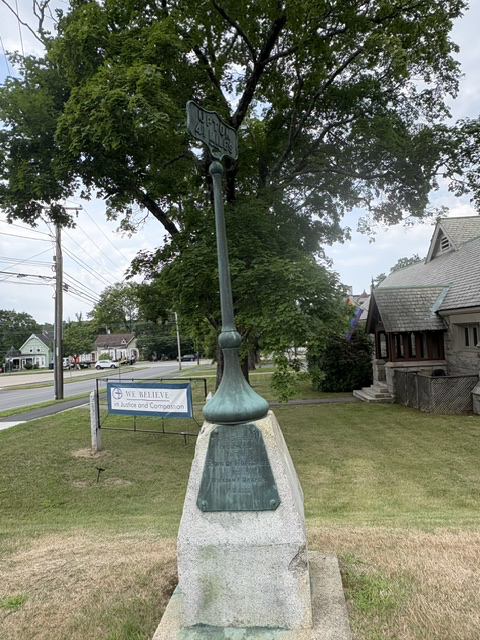
The inscription on the base tells an important story:
“This Street Presented to the Town of Hopedale by William Draper, 1887.”
Those few words reveal much about the character of Hopedale. During the late nineteenth century, the Draper family was transforming the town into one of the nation’s leading centers of textile machinery manufacturing. Yet their vision extended well beyond the factory gates. They believed that a successful community should be attractive, well planned, and thoughtfully designed. Their philanthropy touched nearly every aspect of town life, from churches, schools, and public buildings to parks, libraries, and even the streets people walked every dayO
Rather than installing simple wooden signposts, William Draper commissioned elegant bronze markers that reflected the quality and permanence he wanted associated with Hopedale. More than functional signs, they became part of the town’s identity. The directional information at the top reminded travelers that Hopedale was connected to the surrounding towns, while the substantial granite base ensured these markers would serve generations to come.
What I appreciate most is that someone believed a street sign deserved this level of care. It would have been easy to erect a plain post with a painted board. Instead, Hopedale received a monument to everyday life. One that quietly demonstrated that beauty and craftsmanship belonged not only in important public buildings but in the smallest details of the community as well.
This street marker speaks to an era when civic pride was expressed through lasting craftsmanship and thoughtful design. More than 135 years later, it continues to do exactly what William Draper intended: guide visitors, welcome travelers, and remind us that the character of a town is often revealed in the details that others might overlook.
Read More From Nancy
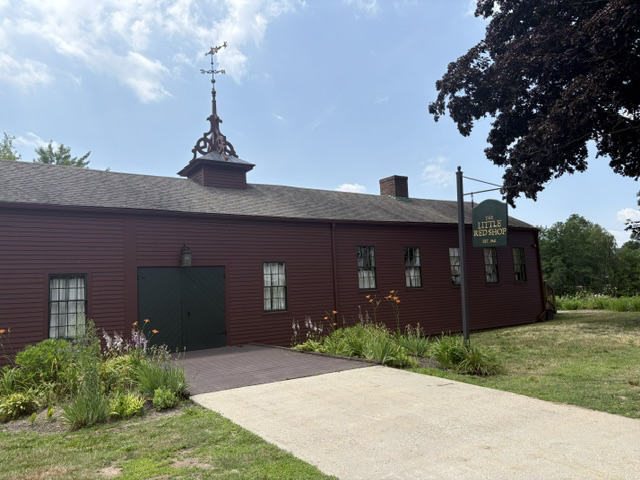
The Little Red Shop
Every great enterprise must begin somewhere. In Hopedale, one of America’s most successful industrial companies began in a simple wooden workshop known as the Little Red Shop. Built in 1841, this unassuming building became the first permanent home of the Draper business. At the time, Hopedale was still a young utopian community founded by Reverend […]
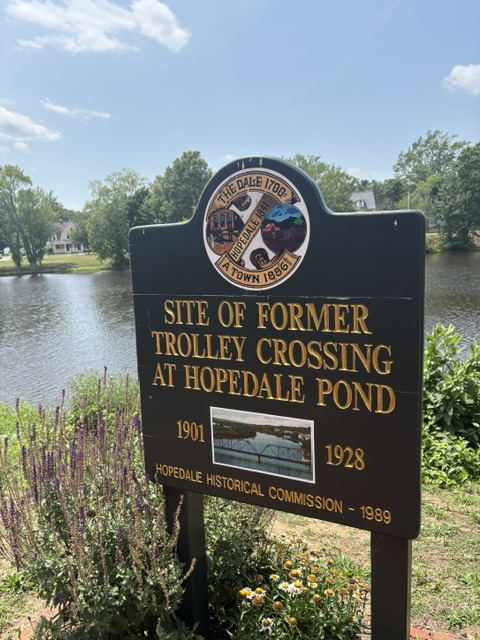
Trolley Bridge
One of the things I enjoy most when exploring a town is discovering the pieces of everyday history that have quietly disappeared. They are often overlooked because they were once so common. The Hopedale Trolley Bridge is one of those stories. Standing along the shores of Hopedale Pond today, it is difficult to imagine that […]
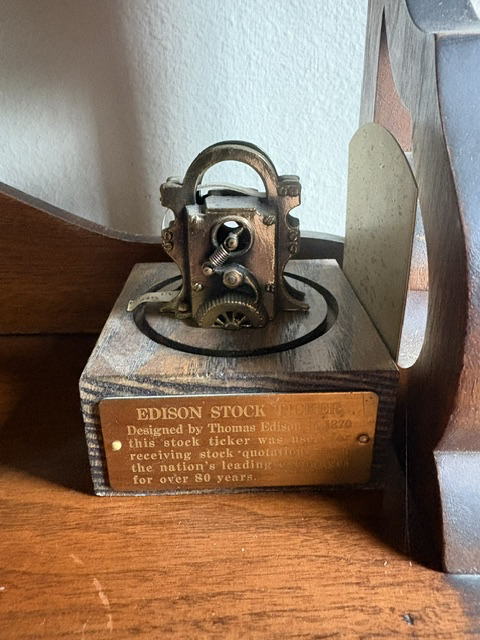
Edison Stock Ticker
Among the historical objects preserved at the Bancroft Memorial Library is an Edison stock ticker, a reminder of the period when electricity and telegraphy began transforming the speed at which information traveled. Before machines like this became available, brokerage firms depended upon messengers to carry the latest prices from the trading floor. By the time […]

