Trolley Bridge
One of the things I enjoy most when exploring a town is discovering the pieces of everyday history that have quietly disappeared. They are often overlooked because they were once so common. The Hopedale Trolley Bridge is one of those stories.
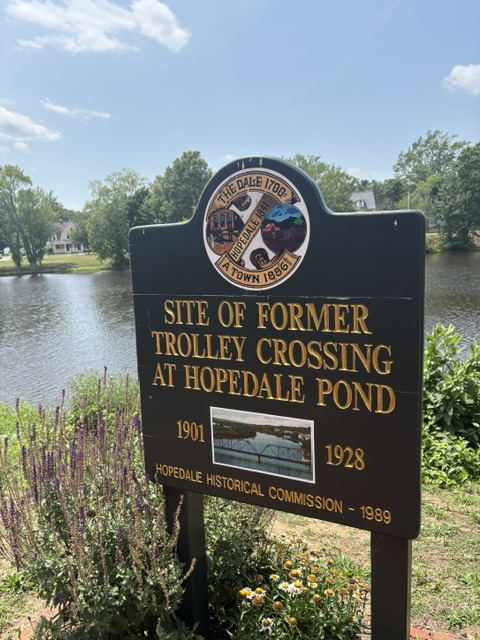
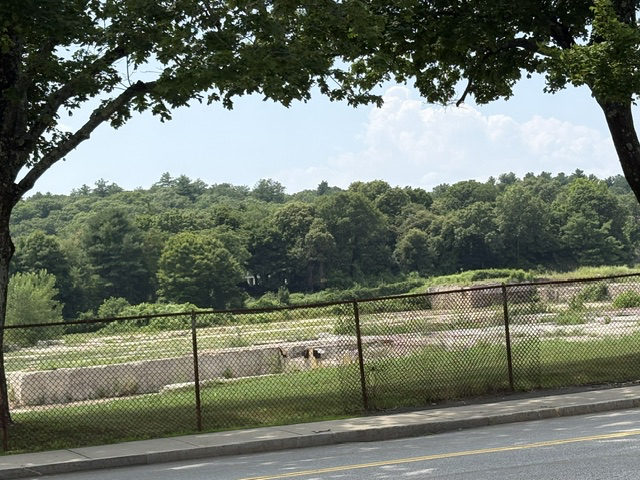
Standing along the shores of Hopedale Pond today, it is difficult to imagine that electric trolley cars once crossed the water, carrying workers, shoppers, and visitors through the center of town. Yet from 1901 until 1928, this bridge was an important link in a transportation network that connected Hopedale with Milford, Upton, Mendon, Holliston, Framingham, and communities beyond.
The bridge was part of the Milford, Uxbridge & Street Railway Company’s expanding electric trolley system. Built atop the stone abutments behind the marker, the 300-foot steel bridge was constructed by the American Bridge Company and represented the latest transportation technology of its day. At a time when automobiles were still relatively uncommon, electric trolleys made travel faster, more affordable, and more dependable than ever before.
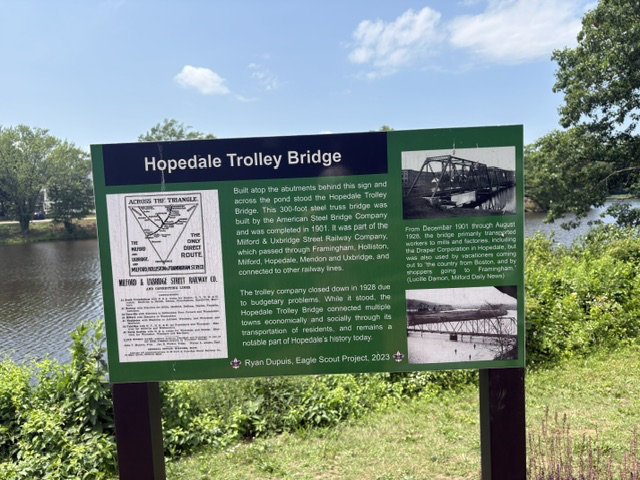
For Hopedale, the trolley was far more than a convenience. It connected residents to neighboring towns, allowed workers to travel more easily, supported local businesses, and strengthened the town’s growing economy. It also brought visitors into Hopedale, making this small industrial community more accessible than ever before.
Looking at the historic photographs, it is remarkable to think of trolley cars gliding across the pond where today there is only open water. The bridge must have been a familiar sight for nearly three decades, carrying thousands of passengers who likely gave little thought to the engineering that made their journey possible. Like so much of everyday infrastructure, it was appreciated most after it was gone.
By 1928, however, the rapid growth of the automobile and improvements to the road system changed the way Americans traveled. Maintaining trolley systems became increasingly expensive, and many electric railway lines across New England were abandoned. The Hopedale Trolley Bridge was dismantled, ending an important chapter in the town’s transportation history.
I am grateful that the Hopedale Historical Commission chose to preserve this piece of the town’s history. Without these signs, I would never know that a trolley once crossed this quiet pond. It is another reminder that history is often hidden in plain sight, waiting for someone to pause, read a marker, and imagine what once was.
Read More From Nancy
The Harrison Block
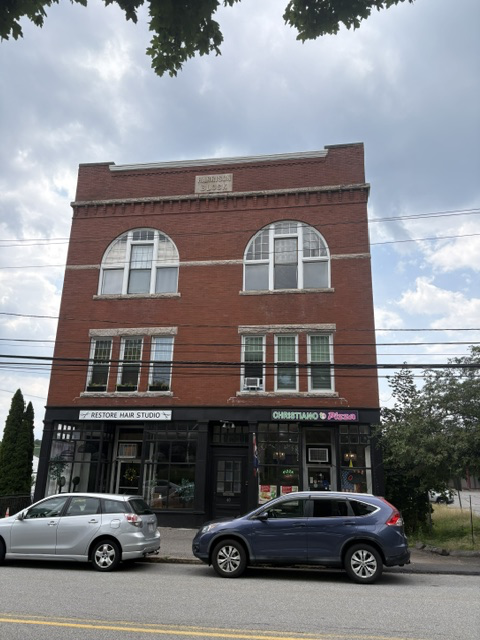
As I walked along Hopedale Street, this handsome brick building immediately caught my attention. While much of Hopedale’s story is told through its churches, library, parks, and former mill complex, this building reminds us that every thriving community also depends on places where everyday life unfolds. Built in 1889 by General William Franklin Draper, the […]
A Measure of Character
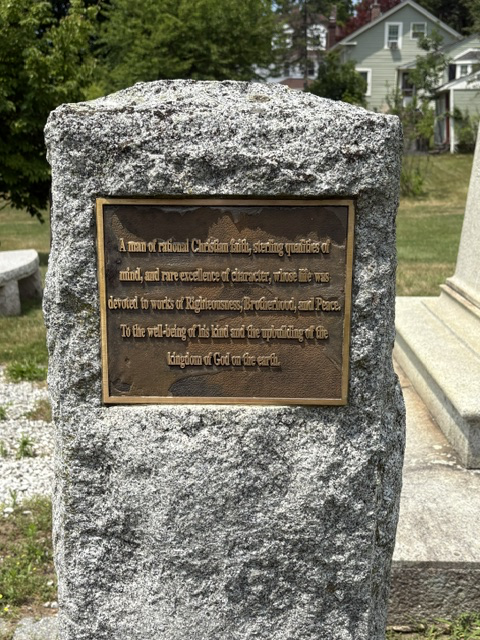
Perhaps the most touching inscription on the monument says very little about Ballou’s achievements. Instead, it speaks about the man himself. It remembers him as “a man of rational Christian faith, sterling qualities of mind, and rare excellence of character, whose life was devoted to works of righteousness, brotherhood, and peace.“ Those words were chosen […]
Ballou’s Mission
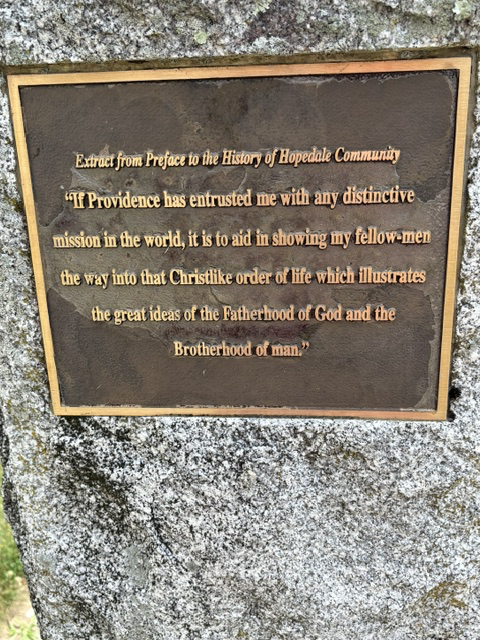
One of the most meaningful inscriptions on the monument comes from Ballou’s own writings. “If Providence has entrusted me with any distinctive mission in the world, it is to aid in showing my fellowmen the way into that Christlike order of life which illustrates the great ideas of the Fatherhood of God and the Brotherhood […]

