The Salt Storehouses
Standing along the Trave River near Lübeck’s Holsten Gate, the six buildings known as the Salzspeicher, or Salt Storehouses, preserve the story of a commodity that helped make this northern German city wealthy and powerful. Their rows of windows, steep red roofs, and distinctive stepped gables reflect in the water, creating one of Lübeck’s most recognizable scenes.
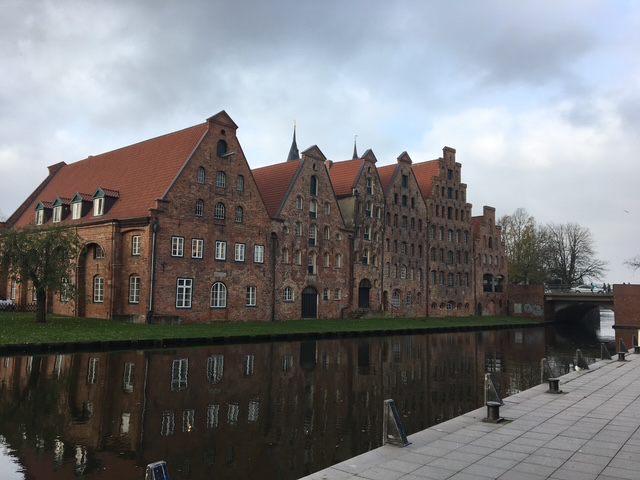
The warehouses were constructed between 1579 and 1745, although Lübeck’s salt trade began centuries earlier. Salt mined near Lüneburg was transported north along the Old Salt Route and later carried by boat through the Stecknitz Canal, completed in 1398. Upon reaching Lübeck, it was stored in these warehouses before being loaded onto ships bound for ports throughout the Baltic region.
Before refrigeration, salt was essential for preserving food. It was especially valuable to the Scandinavian herring fisheries, where large quantities were needed to cure the catch so that it could be transported and sold throughout Europe. Lübeck’s merchants occupied a profitable position between the salt producers of northern Germany and the fishing communities of the Baltic. Sometimes called “white gold”, salt helped build the prosperity that made Lübeck one of the leading cities of the Hanseatic League.
The location of the warehouses beside the river was practical. Barges could deliver their cargo directly to the storehouses, and merchant vessels could then carry the salt toward Scandinavia. Their size and sturdy brick construction reveal the enormous scale and value of the trade they once supported. In later years, the buildings were adapted to store other goods as Lübeck’s economy changed.
When we stopped beside the Trave, the quiet water and handsome buildings offered little indication of the busy commercial activity that once filled this waterfront. Barges, barrels, sailors, and merchants have disappeared, but the Salt Storehouses remain. They are a reminder that the growth of great cities was often shaped by ordinary necessities—and that something as simple as salt could support an international network of trade and help build the power of a city.
Read More From Nancy
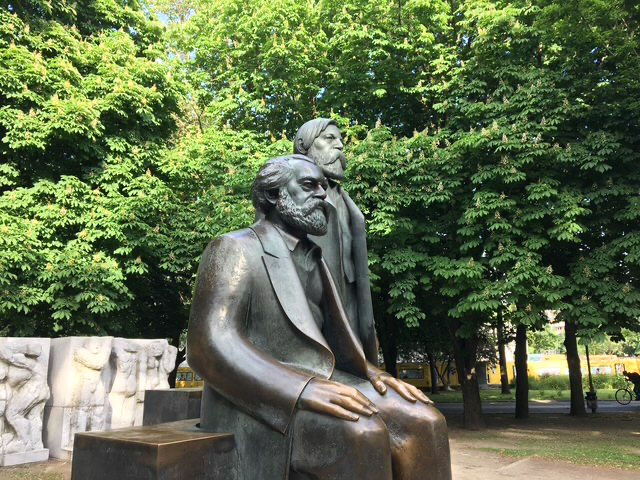
Marx-Engels Forum
In a quiet green space in Berlin, we came upon the Marx-Engels Forum. There is no grand staircase, or towering pedestal. The monument is at ground level, integrated into the park. Karl Max is seated and beside him stands Freidrich Engles. One seated, one standing. One reflective, one present. To understand why they are here, […]
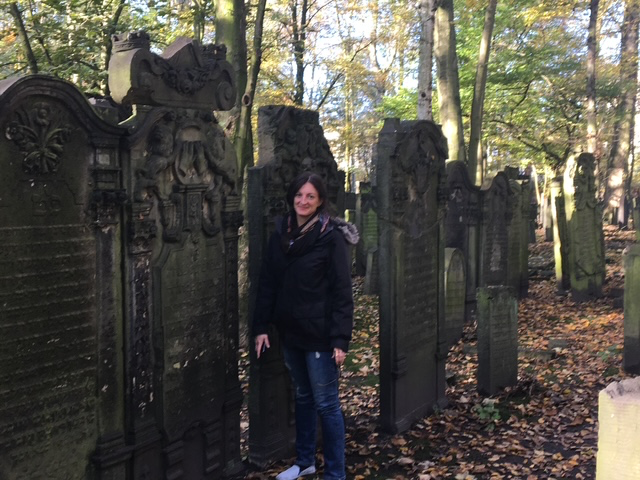
Jewish Cemetery of Altona
One of the most memorable stops on Erin’s and my Jewish heritage tour of Hamburg was a visit to the historic Jewish Cemetery of Altona. It is not a place that most visitors ever see. Access is carefully controlled to protect this remarkable site, and through the special arrangements of our guide, we were able […]
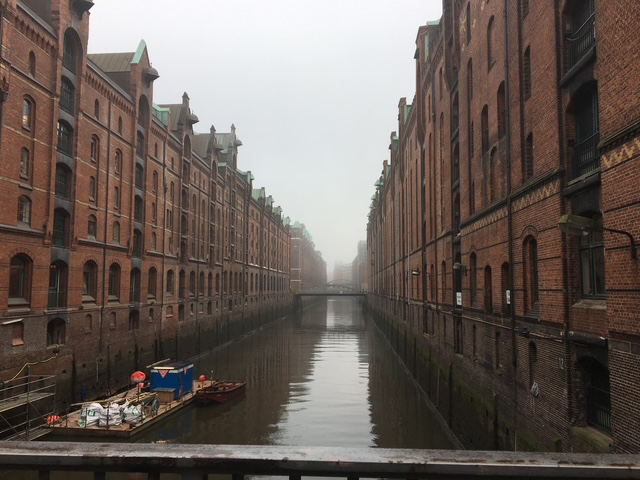
The Speicherstadt
When I first stood on this bridge, my eyes were drawn down the long, quiet canal framed by rows of towering brick buildings. The water was perfectly still, reflecting the warehouses that seemed to stretch endlessly into the distance. Even on a misty day, there was something captivating about the scene. It felt less like […]

