Hackesche Höfe
Behind the street façades near Hackescher Markt, eight interconnected courtyards reveal another side of Berlin’s urban history. Opened in 1906, the Hackesche Höfe brought residences, businesses, workshops, and entertainment spaces together within a single complex. Passages between the courtyards connected activities that a view from the street could easily conceal.
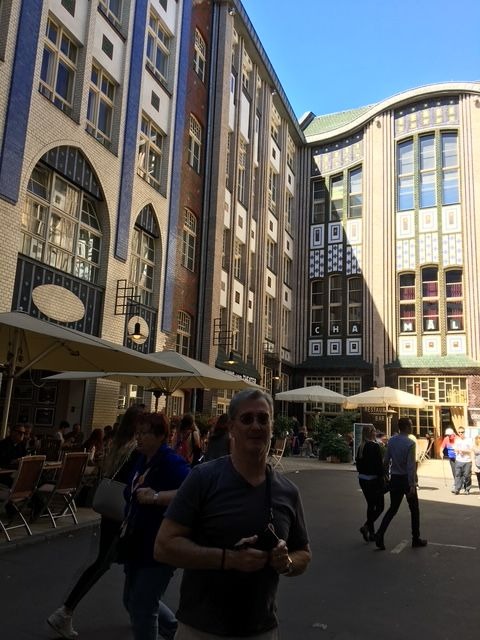
Architect Kurt Berndt developed the complex, while August Endell designed the distinctive façades of the first courtyard. Endell’s work transformed a commercial courtyard into an expressive architectural setting, using colored surfaces, geometric patterns, and contrasting window shapes.
The first courtyard illustrates the possibilities of Jugendstil, the German expression of Art Nouveau. Its decoration extends across the buildings, making their walls part of a coordinated composition. Curving rooflines and carefully arranged ornament give an enclosed working environment an unusually theatrical character.
Beyond this entrance courtyard, the interconnected spaces accommodated the practical demands of a growing city. Their arrangement allowed different uses to coexist within a densely developed block, combining places to earn a living with places to live and gather.
The complex survived the Second World War with partial damage, but its condition deteriorated during the decades of Germany’s division. Restoration after reunification renewed the buildings and their decorative surfaces, allowing the courtyards to support another generation of commercial and cultural activity.
Hackesche Höfe preserves an approach to city life organized around shared interior spaces. Its significance lies both in Endell’s architectural imagination and in the larger arrangement behind it: a network of courtyards that made room for work, housing, and public enjoyment within the same urban block.
Read More From Nancy
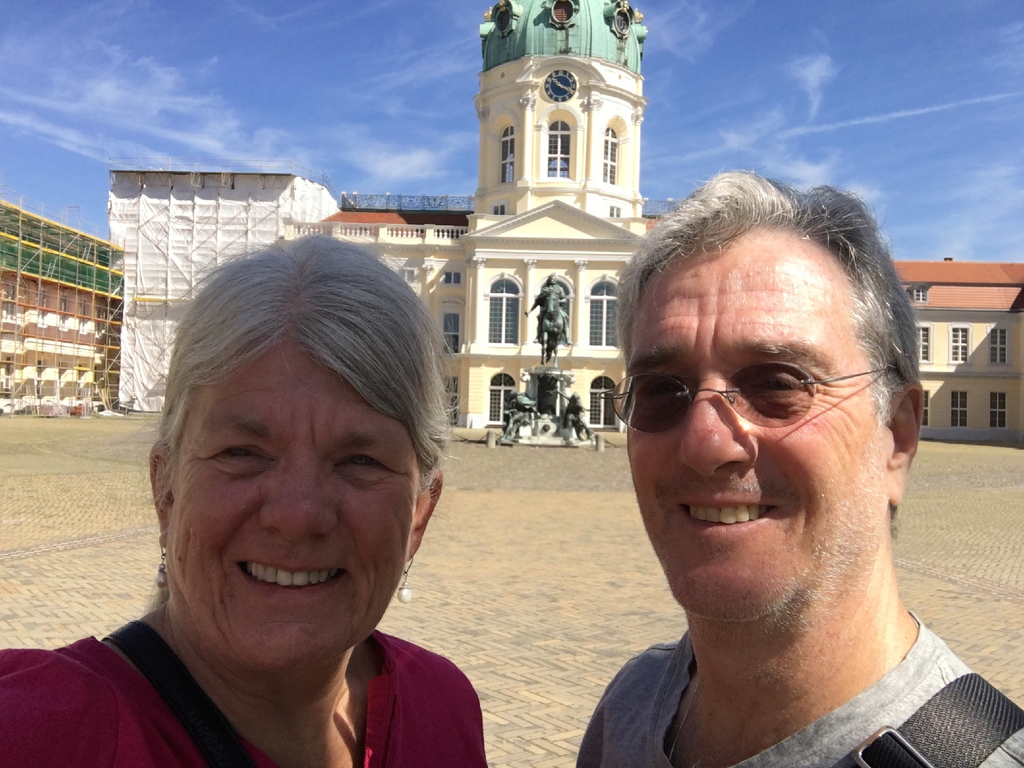
Charlottenburg Palace
While exploring Berlin, we visited Charlottenburg Palace, a place that opened another window into the city’s long history. Berlin is so often associated with the dramatic events of the 20th century that it can be easy to forget that for centuries it was also a royal capital. Charlottenburg takes us back into that earlier world […]
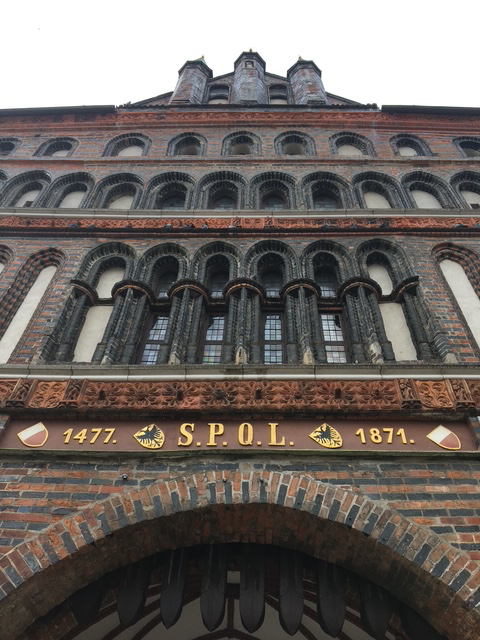
S.P.Q.L. – The Senate and People of Lübeck
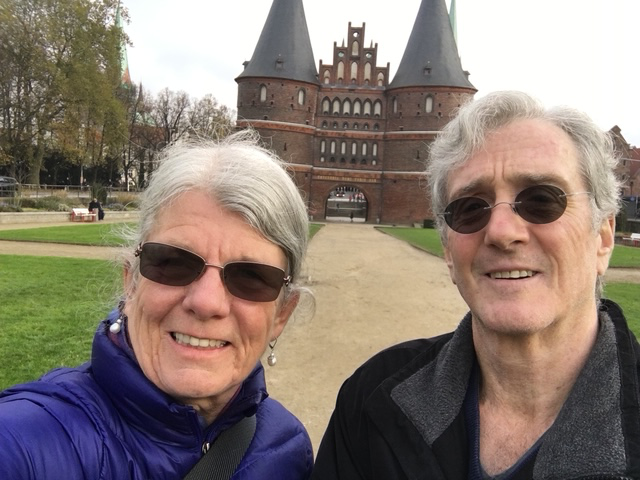
While standing beneath the Holstentor in Lübeck, one detail caught my attention. Above the entrance are the letters S.P.Q.L., an inscription modeled after the famous Roman initials S.P.Q.R., meaning “The Senate and People of Rome.” In Lübeck, the letters stand for Senatus Populusque Lubecensis—”The Senate and People of Lübeck.” The inscription reflects the city’s pride in its long […]
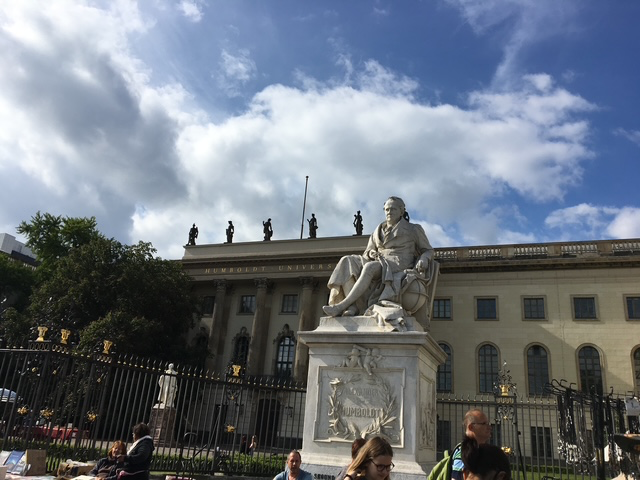
Alexander von Humboldt
While walking along Unter den Linden in Berlin, we came across this imposing statue in front of Humboldt University. It honors Alexander von Humboldt, one of the great scientists, explorers and thinkers of the 19th century. His name was familiar to me, but seeing his monument in front of the university that bears the Humboldt […]

