Fort Howe
From its position high above Saint John, Fort Howe once guarded the entrance to the Saint John River and the harbor below. The location offered British soldiers an expansive view of approaching ships and made the ridge a natural place from which to defend the settlement.
The fort was constructed in 1777 during the American Revolution. American privateers operating from Machias, in what is now Maine, had repeatedly raided the area, attacking settlements and disrupting British shipping. An earlier defensive post, Fort Frederick, stood on lower ground across the river but had been captured, looted, and burned.
Major Gilfred Studholme arrived with approximately fifty soldiers and orders to repair Fort Frederick or construct a new fort. Recognizing the advantage of the higher ridge, he chose this location. The fort was named for General Sir William Howe, then commander-in-chief of British forces in North America. Its defenses eventually included blockhouses, barracks, a palisade, and cannons overlooking the river and harbor.
When Loyalist refugees arrived following the American Revolution, Fort Howe provided military protection for the new settlements of Parr Town and Carleton. Its cannons fired a seventeen-gun salute in November 1784 to welcome Thomas Carleton, the first governor of the newly created Province of New Brunswick. The following year, the two settlements were joined to form the City of Saint John.
Fort Howe remained part of Saint John’s defenses through the War of 1812, when renewed conflict with the United States again made the harbor strategically important. A fire destroyed the fort in 1819, and much of the property was sold several years later. Little of the original fortification remains above ground.
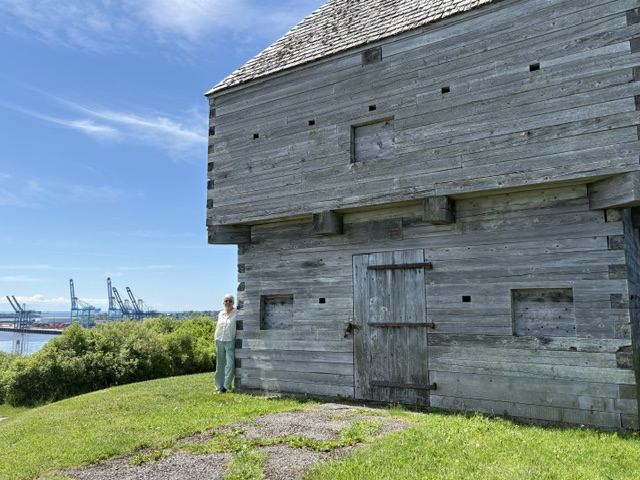
The wooden blockhouse standing on the hill today is a full-size reconstruction erected in 1967 during Canada’s centennial. It represents one of the blockhouses that once formed part of the fort rather than an original surviving structure. Fort Howe was designated a National Historic Site of Canada in 1966.
Standing beside the reconstructed blockhouse, with the modern port visible below, makes the reason for Fort Howe’s location immediately clear. The view that allows visitors to watch ships entering Saint John today once enabled British soldiers to search the same waters for approaching privateers.
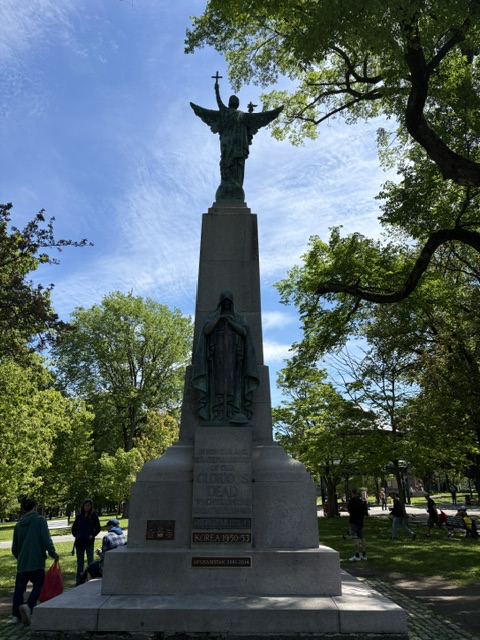
Read More From Nancy
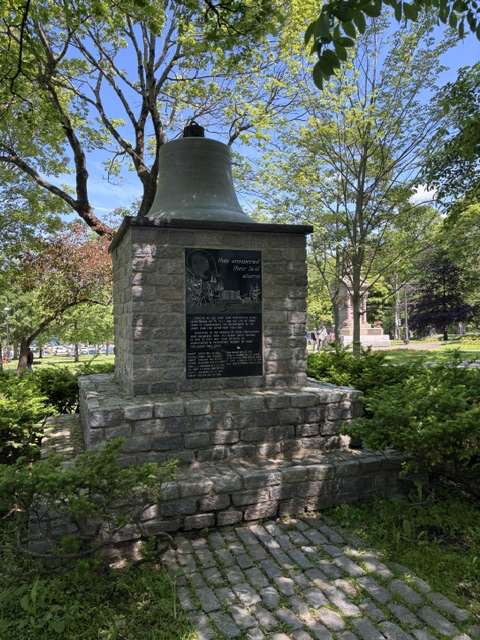
Last Alarm Bell Monument
A large bronze bell stands silently in King’s Square as a memorial to Saint John firefighters who died while serving their community. Known as the Last Alarm Bell Monument, it was erected in 1986 to commemorate the two-hundredth anniversary of the Saint John Fire Department. The department was established in 1786, only one year after […]
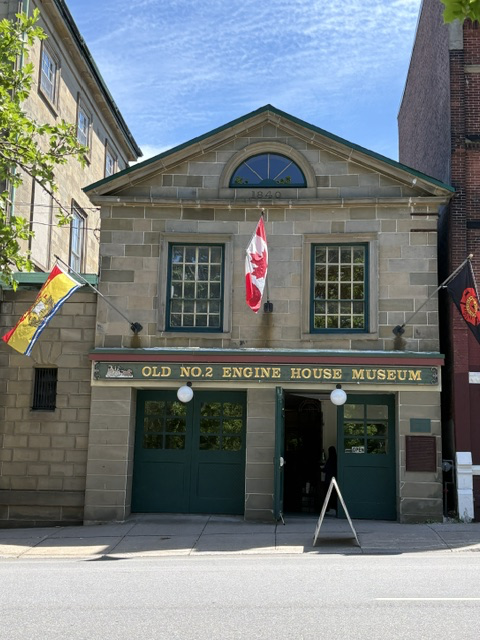
Engine House Museum
Before fire engines had motors, alarms were transmitted electronically, or firefighters were employed by the city, Saint John relied upon volunteer companies to respond when flames threatened the community. One of those companies operated from the No. 2 Engine House at 24 Sydney Street, where volunteers once pulled a hand-operated fire engine through the wide […]
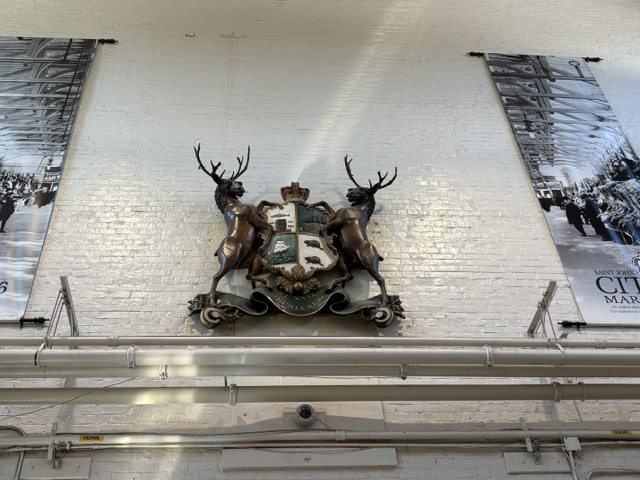
Saint John Coat of Arms
Mounted high upon the wall inside the Saint John City Market is the city’s historic coat of arms. Surrounded by two antlered moose and topped by a crown, the emblem brings together symbols representing the natural resources, maritime industries, and British institutions that shaped Saint John. The shield is divided into sections containing images associated […]

