M42 Jump Jacket
While visiting the American Heritage Museum in Hudson, one exhibit drew my attention because it represented more than a uniform. It represented the courage of the young men who volunteered for one of the most dangerous assignments of World War II.
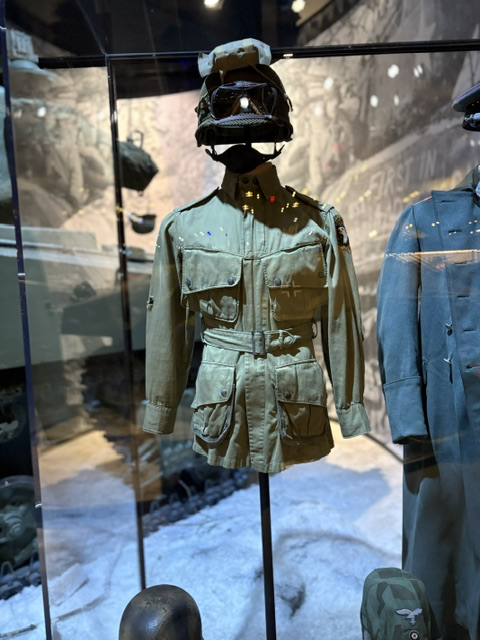
Displayed behind glass is an M42 jump jacket worn by Private Duane Tedrick of Company “D,” 506th Parachute Infantry Regiment, 101st Airborne Division. The museum is dedicated to preserving the human stories behind America’s military history, and artifacts like this help bring those stories to life.
The M42 jump jacket was designed specifically for America’s paratroopers. Lightweight but reinforced with large cargo pockets, it was intended to withstand the rigors of parachuting into combat while carrying ammunition, rations, medical supplies, and other essential equipment. It became one of the defining symbols of the airborne forces.
Private Tedrick wore this jacket when he jumped from a C-47 transport aircraft into German-occupied France during the early hours of June 6, 1944. Hours before Allied troops landed on the beaches of Normandy, the 101st Airborne was dropped behind enemy lines with the mission of securing bridges, disrupting German communications, and preventing reinforcements from reaching the invasion beaches. Their actions played a critical role in the success of D-Day.
Standing before this jacket, I found myself thinking less about the fabric and more about the young man who wore it. Like thousands of others, he climbed into an aircraft knowing he would soon be dropping into enemy territory with no certainty of what awaited him below. The jacket represents far more than military equipment. It represents courage, sacrifice, and a commitment to something greater than oneself.
One of the reasons I enjoy visiting museums like this is that they remind us history is ultimately about people. We often remember D-Day through maps, battle plans, and military strategy. Artifacts like this jacket bring us back to the individual soldier, helping us appreciate the bravery and sacrifice of those who changed the course of history.


Read More From Nancy
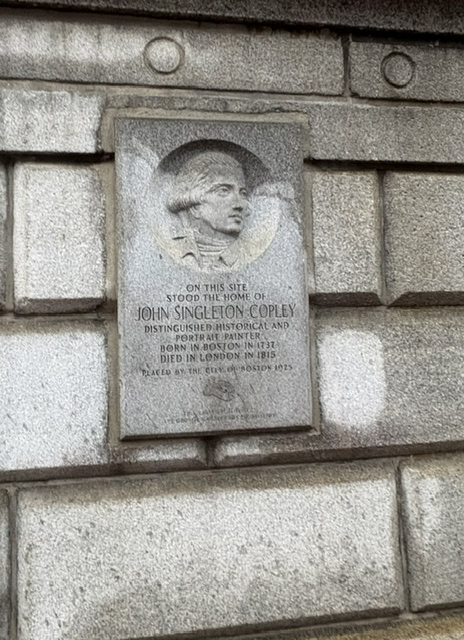
John Singleton Copley
Walking through Boston, I came across this plaque marking the site where the home of John Singleton Copley once stood. The house itself is gone, but the plaque preserves the connection between this location and one of the most important artists of colonial America. Copley was born in Boston in 1738, although the plaque gives […]

Vault Alarm
Looking up, above the street level to the second floor of the Citizens Bank in Natick, I noticed a small metal box mounted on the exterior wall. It reads: Vault Alarm This is a relic from a time when security was mechanical. In the late 19th and early 20th centuries, banks were designed to safeguard […]
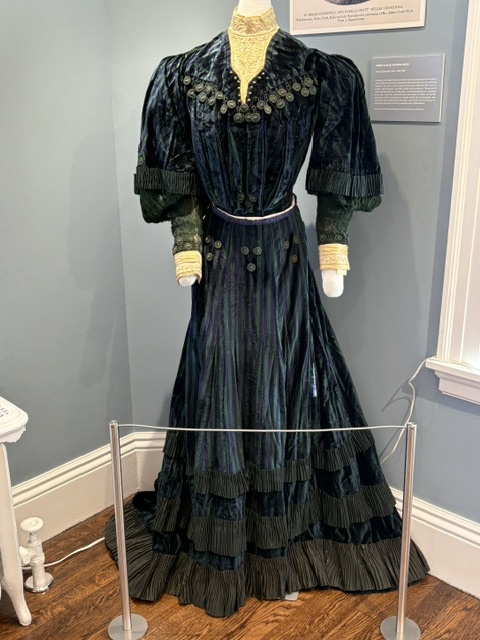
A Dress from Paris
One of the exhibits that caught my attention at the Wellesley Historical Society was this elegant green and blue striped dress, a reminder that fashion can tell us as much about history as letters, photographs, or documents. Created by the House of Doeuillet in Paris between 1905 and 1906, the dress was worn by a […]

