Dunluce Castle
During our travels through Northern Ireland, we visited Dunluce Castle, one of the most dramatically situated castles along the Causeway Coast. Its ruins stand on a rocky headland high above the Atlantic Ocean, separated from the mainland by a deep chasm. Reaching the castle requires crossing a bridge suspended between the cliffs, making the approach almost as memorable as the ruins themselves.
The present bridge is modern, but it follows the route by which generations of residents, soldiers, servants, and visitors entered the castle. In earlier centuries, the narrow crossing could be defended or withdrawn, allowing the isolated promontory to become a natural fortress. Steep cliffs and the sea protected Dunluce on nearly every side.
There is evidence of settlement in this area dating back to the first millennium, although most of the ruins visible today belong to the sixteenth and seventeenth centuries. The castle was initially associated with the MacQuillan family, powerful lords who controlled an area of northern County Antrim known as the Route.
During the sixteenth century, the MacDonnells of Antrim took possession of Dunluce. The struggle for the castle reflected the larger competition among Gaelic families, Scottish settlers, and the English Crown for control of Ulster. Sorley Boy MacDonnell, one of the most influential members of the family, made Dunluce an important center of MacDonnell power.
The MacDonnells had strong connections to the western islands and Highlands of Scotland. Dunluce’s location overlooking the North Channel placed it within a maritime world in which the sea connected communities rather than separating them. People, supplies, soldiers, and information moved between the coasts of Ireland and Scotland.
One of the most remarkable chapters in the castle’s history followed the wreck of La Girona, a ship from the Spanish Armada. In October 1588, the vessel sank near Lacada Point, close to the Giant’s Causeway, with the loss of approximately 1,300 lives. The MacDonnells recovered cannons and other valuable materials from the wreck, and some accounts suggest that the proceeds helped finance improvements at Dunluce.
During the early seventeenth century, Randal MacDonnell and his wife, Alice O’Neill, transformed the fortress into a more comfortable residence. New domestic buildings were added within the medieval walls, including living quarters, kitchens, fireplaces, and large windows. The castle was no longer intended only for defense; it was becoming a noble household designed to reflect the family’s wealth and status.
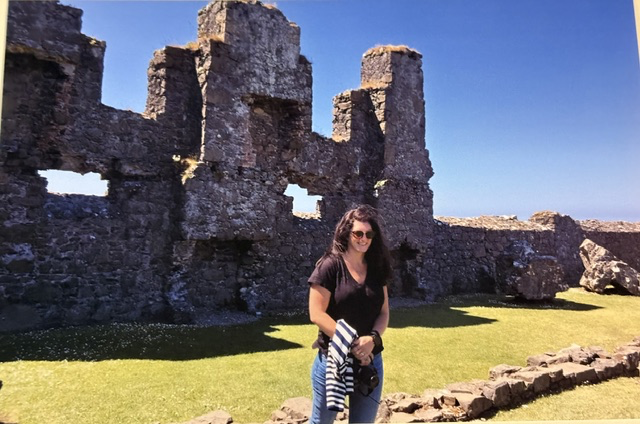
The remains within the courtyard reveal this combination of fortress and home. Walls that once enclosed private chambers, storerooms, kitchens, and great rooms now stand open to the sky. Fireplaces remain suspended within roofless walls, while empty window openings look across the courtyard and toward the sea. These details make it possible to imagine the castle as a busy residence rather than the silent ruin it is today.
A settlement also developed outside the castle walls. Archaeological investigations have uncovered evidence of a planned town established by the MacDonnells during the early seventeenth century. Known as Dunluce Town, it included houses and paved streets and represented an effort to create a prosperous community beside the family stronghold. The town declined after the upheavals of the 1641 rebellion and eventually disappeared from view.
Dunluce is also associated with a famous story claiming that part of the kitchen collapsed into the sea during a violent storm, taking several servants with it. According to the legend, the lady of the castle refused to remain there afterward. Although the tale has become part of Dunluce’s history, archaeological evidence does not confirm that the kitchen fell into the ocean. The surviving kitchen remains within the castle, and the story may have developed later to explain the dramatic gaps in the ruins.
Political conflict, financial difficulties, and the changing needs of the MacDonnell family gradually led to the castle’s abandonment during the seventeenth century. The family established its principal residence elsewhere, and Dunluce was left exposed to the Atlantic weather. Stone was removed for other buildings, roofs disappeared, and portions of the headland were gradually damaged by erosion.
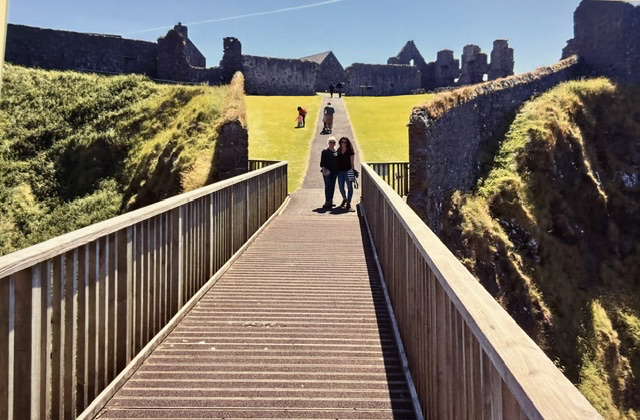
Crossing the bridge brought us directly into this layered history. On one side was the secure mainland; on the other were the remains of a world shaped by clan rivalries, royal ambitions, maritime connections, shipwreck, and survival. Once across, the green courtyard and roofless rooms felt almost peaceful, despite the centuries of conflict they had witnessed.
Dunluce Castle remains powerful because of the relationship between the ruins and the landscape. The castle cannot be separated from the cliffs, the narrow crossing, or the Atlantic stretching beyond its walls. Together, they reveal why this location was chosen, how it was defended, and why its story continues to capture the imagination long after its residents departed.

Read More From Nancy
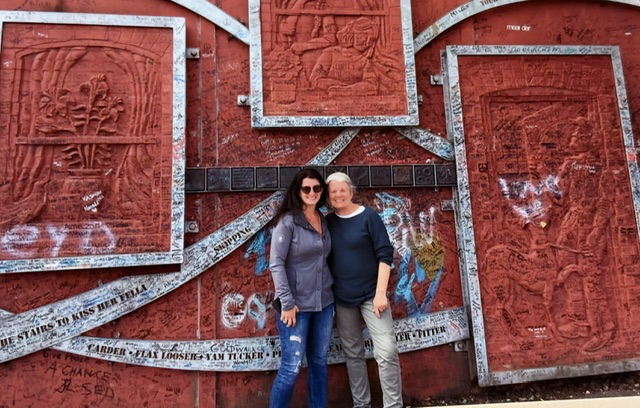
The Peace Wall
One of the places Erin and I visited in Belfast was the Peace Wall, a landmark that tells the story of Northern Ireland’s long journey from conflict toward peace. It is one thing to read about the decades of conflict known as The Troubles, but quite another to stand before a wall that still divides neighborhoods and […]
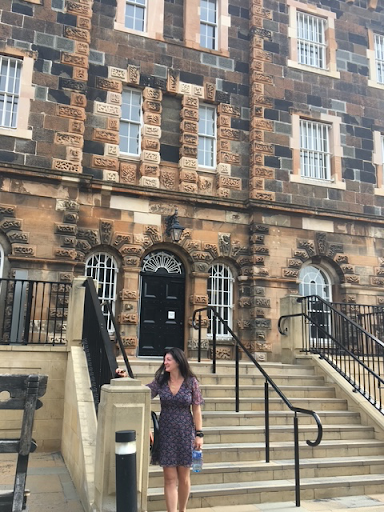
Crumlin Road Gaol
During our visit to Northern Ireland, Erin and I spent time exploring Belfast, a capital city layered with history. One of the most powerful places we visited was Crumlin Road Gaol. Opened in 1846, Crumlin Road Gaol operated for more than 150 years and housed prisoners during the turbulent chapters of Irish history including the Irish War of […]
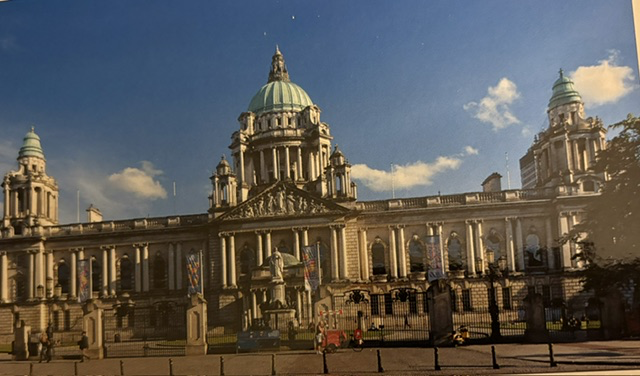
Town Hall
Standing in the center of Belfast is this enormous Baroque Revival building, crowned by its great green copper dome. Belfast City Hall seems almost oversized for a municipal building, but its scale tells an important story about what was happening in Belfast when it was created. Belfast had expanded dramatically during the nineteenth century. Linen […]

