Bobby Sands Mural
While exploring Belfast, I photographed this mural of Bobby Sands on the Falls Road. One of the things that struck me about Belfast was how much of its history is written directly on its walls. The murals are not simply public art. They reflect the political divisions, losses, loyalties and memories of communities that lived through the Troubles.
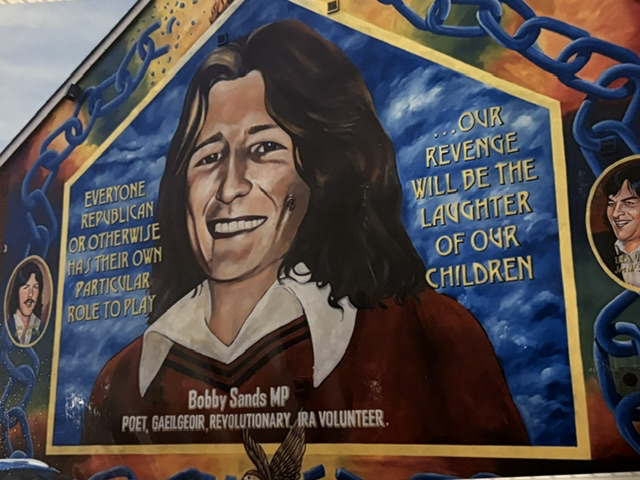
Bobby Sands became one of the most recognizable figures associated with that period. A member of the Provisional Irish Republican Army, he was imprisoned in the Maze Prison for firearms possession following an IRA operation. There, he and other republican prisoners became involved in protests over their treatment and status. They wanted to be regarded as political prisoners rather than ordinary criminals.
In 1981, Sands began a hunger strike as part of a campaign for five demands concerning prison clothing, work, association with other prisoners, visits and correspondence, and restoration of remission lost through the protests. The British government under Prime Minister Margaret Thatcher refused to grant the prisoners political status.
Then something extraordinary happened. While Sands was still in prison and already on hunger strike, a vacancy occurred in the British Parliament. He was nominated in the resulting by-election and, on April 9, 1981, was elected MP for Fermanagh and South Tyrone with more than 30,000 votes. His election brought international attention to both the hunger strike and the conflict in Northern Ireland.
Sands never took his seat in Parliament. On May 5, 1981, after 66 days without food, he died in the Maze Prison at the age of 27. Nine other republican prisoners died during the hunger strike before it ended in October. Their deaths intensified political tensions and became an important turning point in the republican movement, contributing to an increased emphasis on electoral politics alongside its armed campaign.
The mural I photographed stands on the Falls Road; an area closely associated with Belfast’s nationalist and republican community. It depicts Sands smiling rather than as a prisoner, surrounded by republican imagery and quotations associated with him. The words across the mural help explain why these paintings matter. They are not neutral historical markers. They show us how one community has chosen to remember its own history and its dead.
That distinction is important. To supporters of Irish republicanism, Sands became a martyr and symbol of resistance. To others, he remained a member of the Provisional IRA, an organization responsible for violence and deaths during the Troubles. Understanding Belfast means recognizing that both the events themselves and the way they are remembered remain complicated and contested.
In Belfast, even the walls can become historical documents. This one led me into the story of Bobby Sands, the 1981 hunger strike, and a period of Northern Ireland’s history that cannot be understood simply by looking at who won or lost. It has to be understood through the people and communities who experienced it and through the very different ways they continue to remember it.
Read More From Nancy
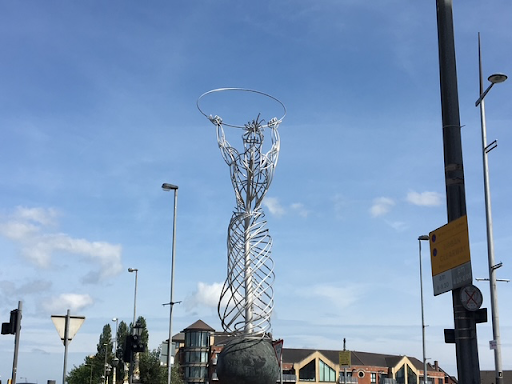
Beacon of Hope / Thanksgiving Square
On our trip to Belfast, Erin and I visited Thanksgiving Square, a meaningful space along the River Lagan. Thanksgiving Square is a recent addition to the city, developed in the early 2000s as part of Belfast’s broader waterfront regeneration. This was a time when the city was actively reshaping itself following The Trouble, moving away from decades of […]
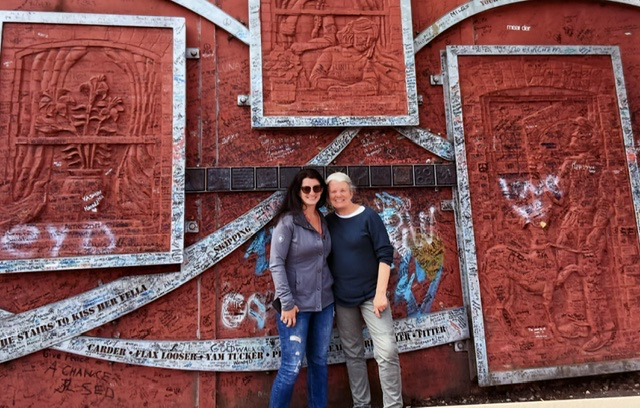
The Peace Wall
One of the places Erin and I visited in Belfast was the Peace Wall, a landmark that tells the story of Northern Ireland’s long journey from conflict toward peace. It is one thing to read about the decades of conflict known as The Troubles, but quite another to stand before a wall that still divides neighborhoods and […]
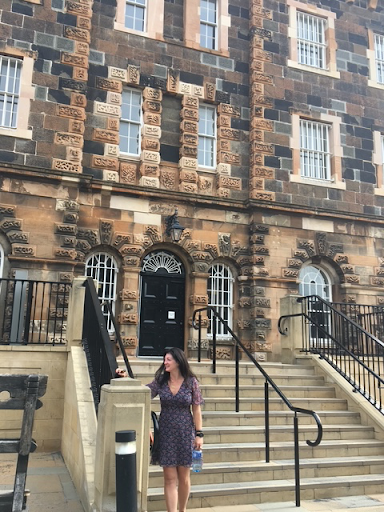
Crumlin Road Gaol
During our visit to Northern Ireland, Erin and I spent time exploring Belfast, a capital city layered with history. One of the most powerful places we visited was Crumlin Road Gaol. Opened in 1846, Crumlin Road Gaol operated for more than 150 years and housed prisoners during the turbulent chapters of Irish history including the Irish War of […]

