Woodstock, CT
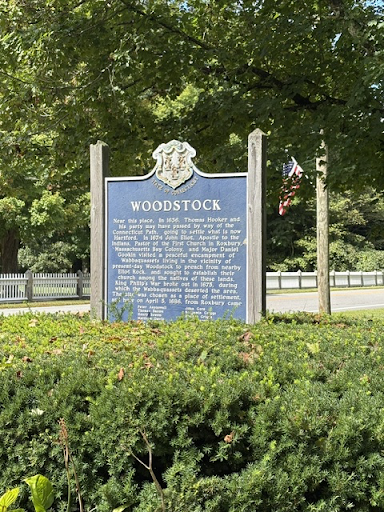
Located in the northeastern corner of Connecticut near the Massachusetts border, Woodstock is a rural town characterized by rolling farmland, wooded hills, stone walls, ponds, and small villages spread across one of the largest land areas of any Connecticut community. Long before English settlement, the region was known as Wabaquasset and was an important center for the Nipmuc people. In 1686, thirteen settlers from Roxbury, Massachusetts, established a community here that they called New Roxbury. The name was changed to Woodstock in 1690, although the town remained part of Massachusetts until a boundary settlement placed it within Connecticut in 1749. Agriculture shaped its early development, while streams and rivers later powered gristmills, sawmills, textile mills, and other small industries serving the surrounding countryside.
Woodstock remained largely agricultural even as its villages developed churches, schools, stores, taverns, workshops, and civic institutions. During the nineteenth century, the town also became a summer destination for wealthy families seeking the beauty of the Connecticut countryside. Among them was Woodstock native Henry Chandler Bowen, who built Roseland Cottage and helped transform Woodstock Hill through his support of Woodstock Academy, the town common, and elaborate Fourth of July celebrations attended by prominent national figures.
Today, Woodstock retains much of its rural landscape and historic character. The Woodstock Hill Historic District includes the common, First Congregational Church, Woodstock Academy, Palmer Memorial Hall, the old burying ground, and homes representing several periods of the town’s development. Together with Roseland Cottage, working farms, historic roads, and other preserved village centers, these places make Woodstock one of Connecticut’s most distinctive rural communities
Recent Posts
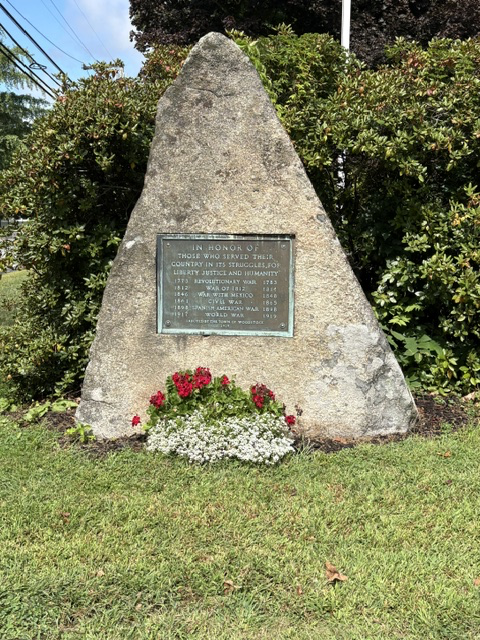
Woodstock War Memorial
Erected by the Town of Woodstock in 1919, this memorial honors local residents who served their country during six conflicts extending from the American Revolution through the First World War. Its inscription dedicates the monument to those who served in the nation’s struggles for “liberty, justice and humanity.” The memorial begins with the Revolutionary War […]
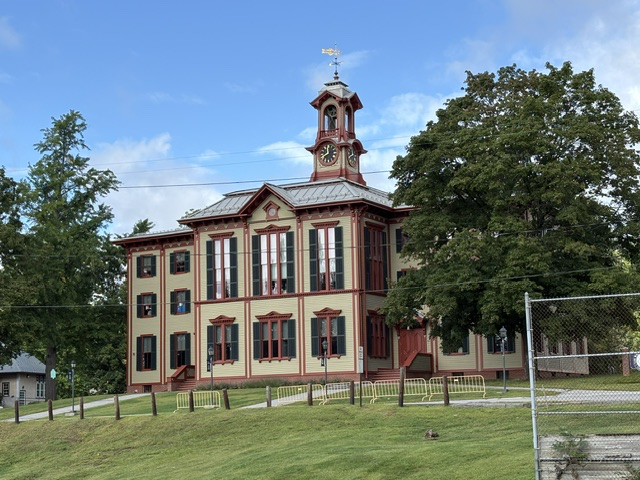
The Woodstock Academy Classroom Building
Standing prominently above Woodstock Green, the historic Woodstock Academy Classroom Building was completed in 1873. It replaced an earlier academy building that had served the school founded by James and John McClellan in 1801 and chartered by the Connecticut legislature the following year. The new building was made possible in large part through the efforts […]
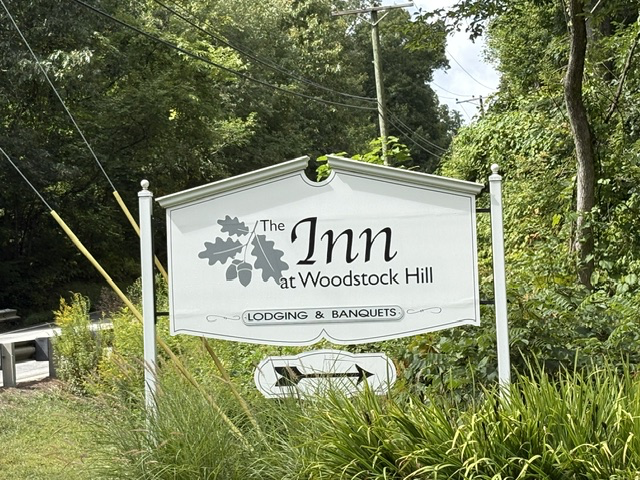
The Matthew Bowen Homestead / The Inn at Woodstock Hill
The house now known as the Inn at Woodstock Hill was constructed in 1816 by William Bowen and later became known as the Matthew Bowen Homestead. Located on Plaine Hill Road, it was part of a working farm owned by generations of the Bowen family, one of Woodstock’s most prominent early families. The original house […]
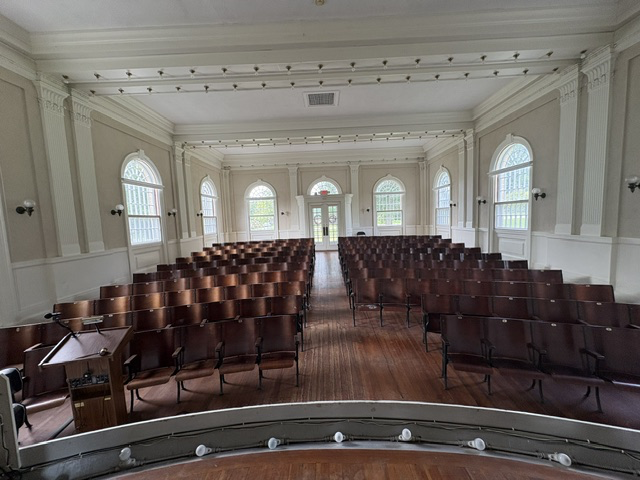
The Lecture Hall at Palmer Memorial Hall
The lecture hall inside Palmer Memorial Hall was designed to seat approximately two hundred people and included a stage and backstage area. Its sloping wooden floor, rows of folding chairs, and tall arched windows created a welcoming setting for lectures, performances, meetings, and other community gatherings. The first public program was held on May 2, […]
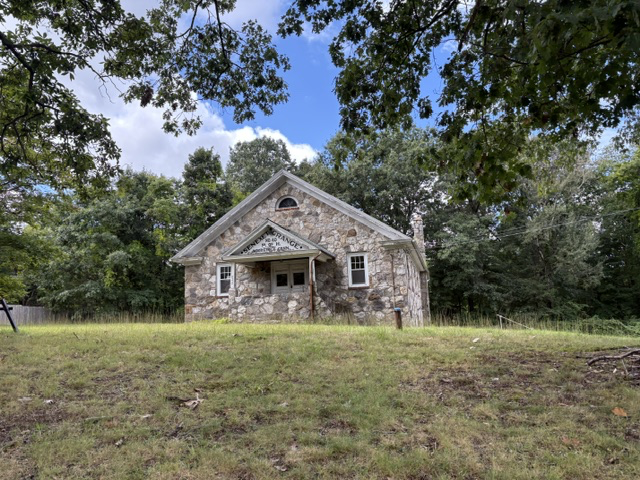
Senexet Grange No. 40
Senexet Grange No. 40 was established as a local chapter of the Order of Patrons of Husbandry, commonly known as the Grange. Founded nationally in 1867, the organization was created to support farmers and their families through education, cooperation, fellowship, and collective action. The letters “P. of H.” displayed on the building identify its connection […]
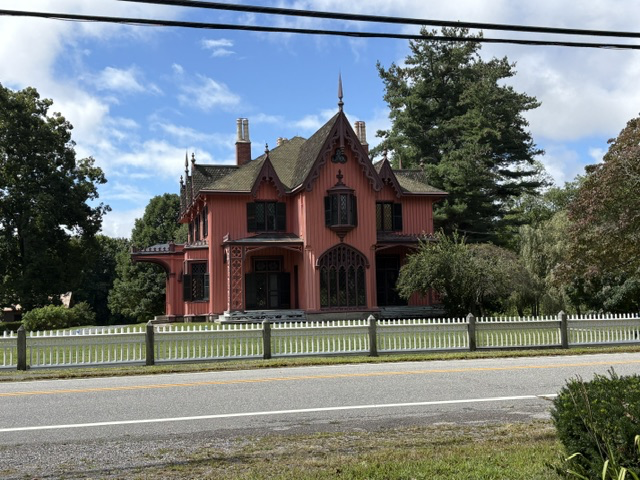
Roseland Cottage
Roseland Cottage was constructed in 1846 as the summer home of Henry Chandler Bowen and his family. Bowen was born in Woodstock but built his career in New York City as a successful businessman, newspaper publisher, and philanthropist. Although he spent much of his adult life in New York, he maintained a strong attachment to […]
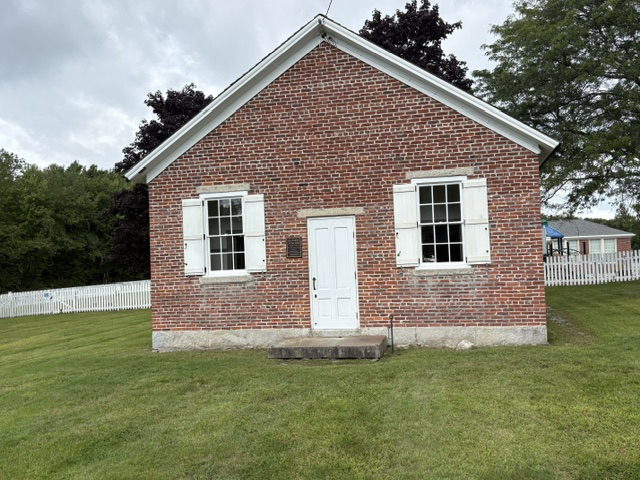
Quasset School
The history of Quasset School began in 1748, when a small district school was established to educate children living in this rural section of Woodstock. The surviving brick schoolhouse was constructed in 1854, replacing an earlier building while continuing a local educational tradition that had already existed for more than a century. Like other district […]
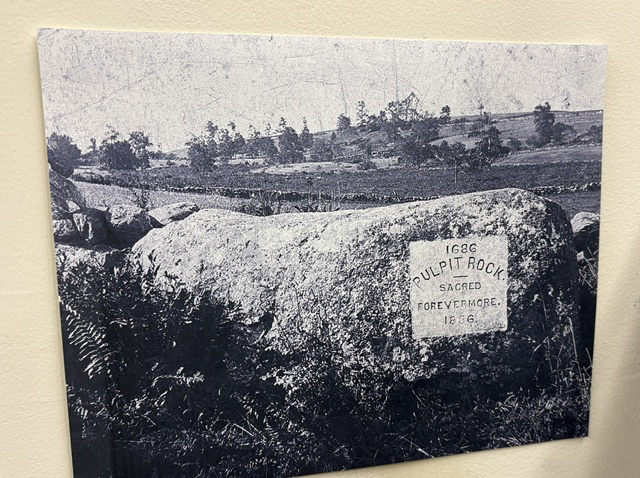
Pulpit Rock
When Woodstock’s first English settlers arrived from Roxbury, Massachusetts, in 1686, they entered a landscape without churches, meetinghouses, or other public buildings. Until a meetinghouse could be constructed, they gathered for Sunday worship around a large glacial boulder that became known as Pulpit Rock. In this open-air sanctuary, the rock served as a natural focal […]
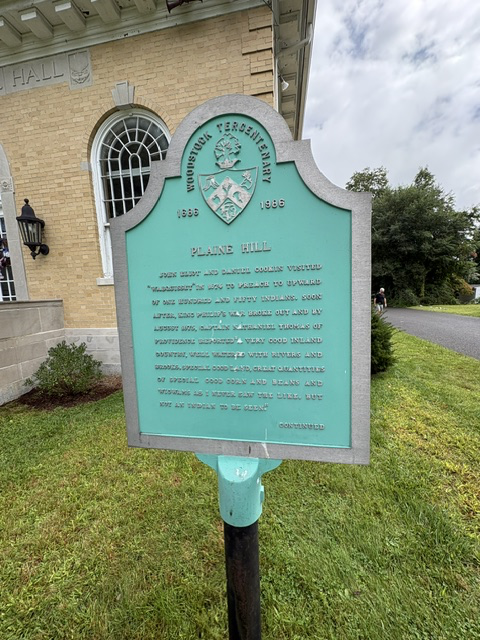
Plaine Hill
This marker preserves the name Plaine Hill, once used for the elevated village center now known as Woodstock Hill. Its inscription describes an established inland community with numerous buildings, substantial homes, productive land, orchards, and livestock. The words offer a glimpse of how earlier observers viewed Woodstock as a prosperous rural village shaped by agriculture […]
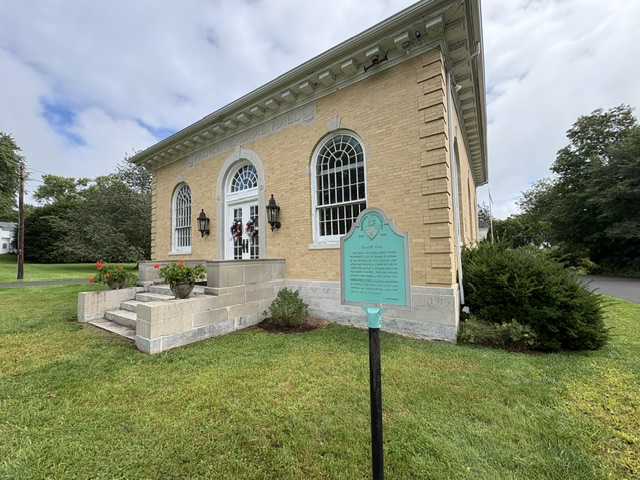
Palmer Memorial Hall
Standing prominently on Woodstock Hill, Palmer Memorial Hall is distinguished by its pale yellow brick, symmetrical design, and tall arched windows. Constructed at a time when most buildings in Woodstock were made of wood or darker brick, its unusual color and Classical Revival architecture made it an immediate landmark within the village. The story of […]
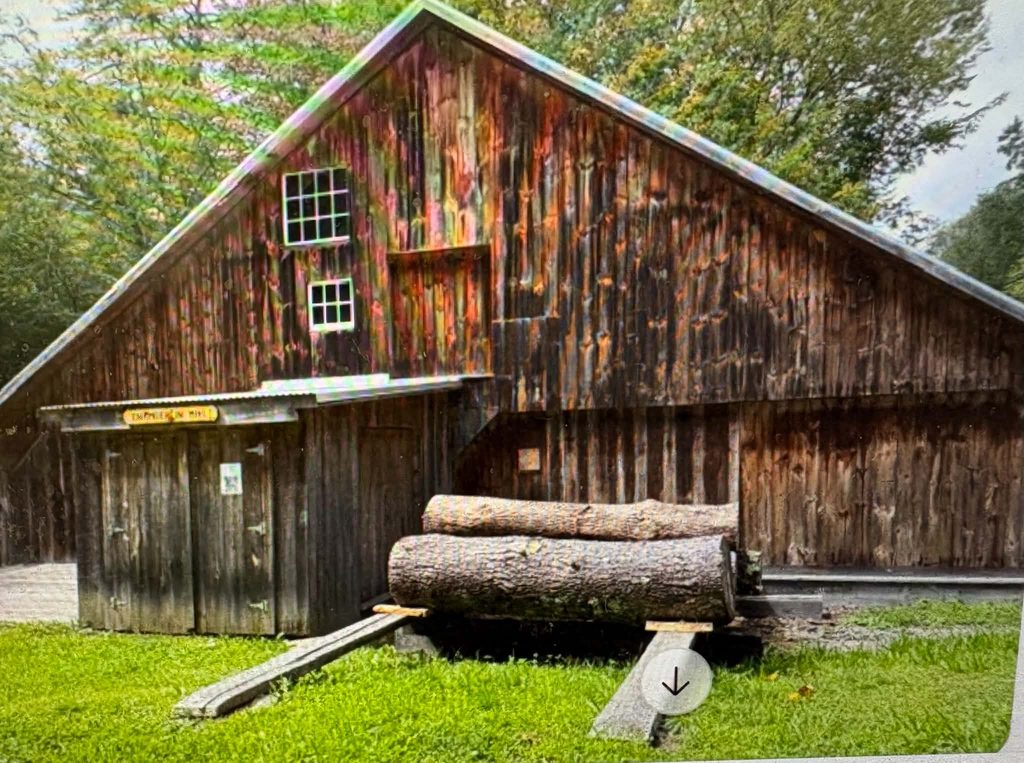
Chamberlin Mill
Standing beside the Still River in Woodstock Valley, Chamberlin Mill preserves an important part of the town’s agricultural and industrial history. Mills have operated at this location since the eighteenth century, when Manasseh Hosmer maintained a gristmill here. By the early nineteenth century, Abijah Sessions had established a sawmill on the property, beginning a family […]
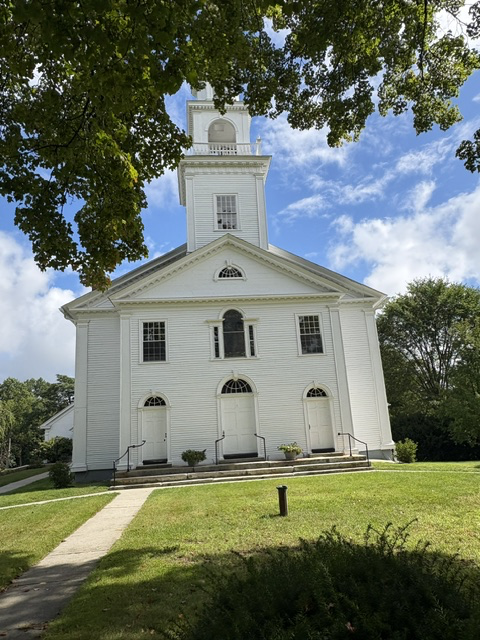
First Congregational Church of Woodstock
The First Congregational Church of Woodstock traces its beginnings to 1690, only a few years after settlers from Roxbury, Massachusetts, established the community they initially called New Roxbury. In early New England towns, the meetinghouse stood at the center of both religious and civic life. It was where residents worshiped, discussed community matters, and marked […]

