The Woodstock Academy Classroom Building
Standing prominently above Woodstock Green, the historic Woodstock Academy Classroom Building was completed in 1873. It replaced an earlier academy building that had served the school founded by James and John McClellan in 1801 and chartered by the Connecticut legislature the following year.
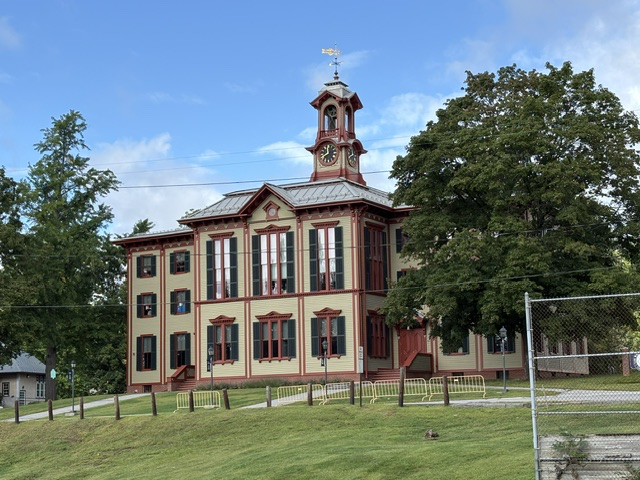
The new building was made possible in large part through the efforts of Henry Chandler Bowen, a Woodstock native, Academy graduate, and successful New York businessman. Bowen offered $5,000 toward its construction and another $5,000 for the school’s endowment, provided that the town and local residents also contributed. His challenge encouraged the community to support a building that reflected the importance it placed upon education.
Designed by Norwich architect Alexander G. Cutler, the three-story wooden building is a distinctive example of Italianate school architecture. Its tall windows, paneled pilasters, projecting central section, decorative brackets, and two-stage clock and bell tower give it an appearance unlike that of a typical rural schoolhouse. Its elevated position made it a commanding presence within the village and a recognizable landmark for generations of students.
The classroom building is the oldest surviving structure on the Woodstock Academy campus. It was added to the National Register of Historic Places in 1984 and is also part of the Woodstock Hill Historic District. Although the Academy has expanded far beyond this original setting, the building remains a visible connection to its nineteenth-century history and to the people of Woodstock who helped ensure its survival.
Read More From Nancy
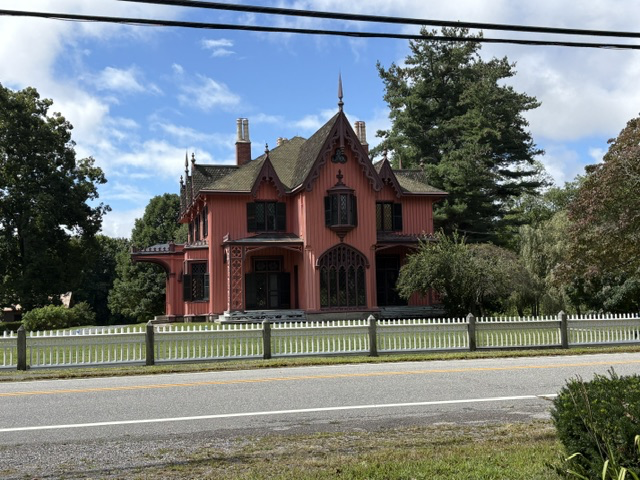
Roseland Cottage
Roseland Cottage was constructed in 1846 as the summer home of Henry Chandler Bowen and his family. Bowen was born in Woodstock but built his career in New York City as a successful businessman, newspaper publisher, and philanthropist. Although he spent much of his adult life in New York, he maintained a strong attachment to […]
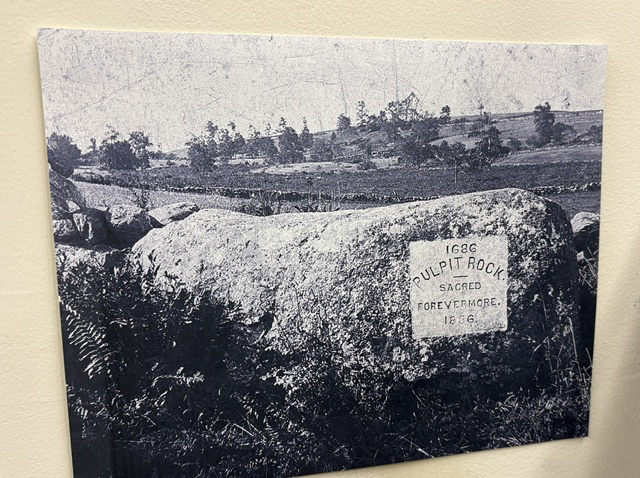
Pulpit Rock
When Woodstock’s first English settlers arrived from Roxbury, Massachusetts, in 1686, they entered a landscape without churches, meetinghouses, or other public buildings. Until a meetinghouse could be constructed, they gathered for Sunday worship around a large glacial boulder that became known as Pulpit Rock. In this open-air sanctuary, the rock served as a natural focal […]
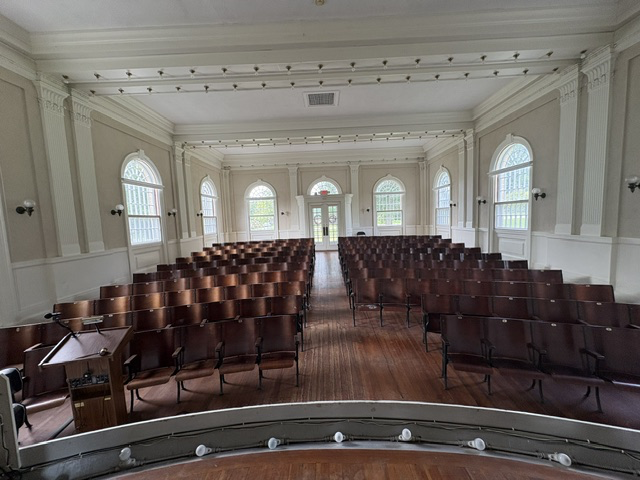
The Lecture Hall at Palmer Memorial Hall
The lecture hall inside Palmer Memorial Hall was designed to seat approximately two hundred people and included a stage and backstage area. Its sloping wooden floor, rows of folding chairs, and tall arched windows created a welcoming setting for lectures, performances, meetings, and other community gatherings. The first public program was held on May 2, […]

