Pulpit Rock
When Woodstock’s first English settlers arrived from Roxbury, Massachusetts, in 1686, they entered a landscape without churches, meetinghouses, or other public buildings. Until a meetinghouse could be constructed, they gathered for Sunday worship around a large glacial boulder that became known as Pulpit Rock. In this open-air sanctuary, the rock served as a natural focal point for the small community’s religious services.
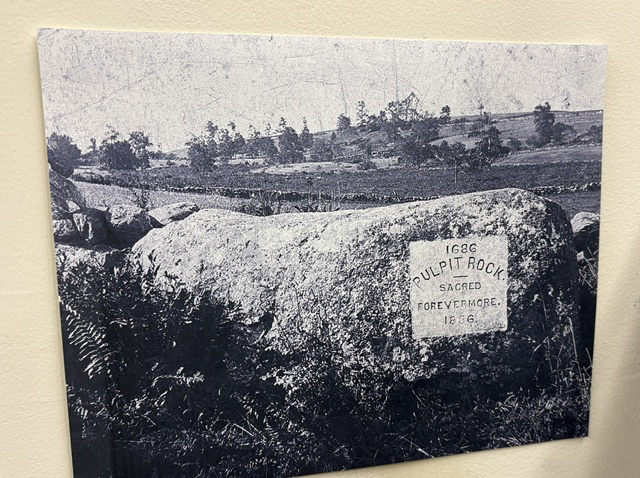
The site stood near the Old Connecticut Path, part of an early network of trails connecting Massachusetts with settlements farther south and west. Woodstock was initially called New Roxbury, and its first residents depended upon one another as they established farms, built homes, and organized the institutions necessary for a permanent settlement. Their gatherings at Pulpit Rock helped create the religious and communal foundation from which the town developed.
During Woodstock’s bicentennial celebration in 1886, residents formally dedicated the site and inscribed the rock with the words “1686 Pulpit Rock—Sacred Forevermore—1886”. At the conclusion of the celebration, Colonel Alexander Warner proposed that the gathering adjourn until September 7, 1986. Edwin Holmes Bugbee amended the motion, proposing that the people of Woodstock meet every one hundred years for the next one thousand years. The motion was adopted.
The community honored that promise during Woodstock’s tercentenary in 1986, returning to commemorate the town’s beginnings three centuries after the first settlers worshiped there. Pulpit Rock remains a reminder that Woodstock’s earliest public gathering place was not a grand building, but a simple boulder around which a new community began to take shape.
Read More From Nancy
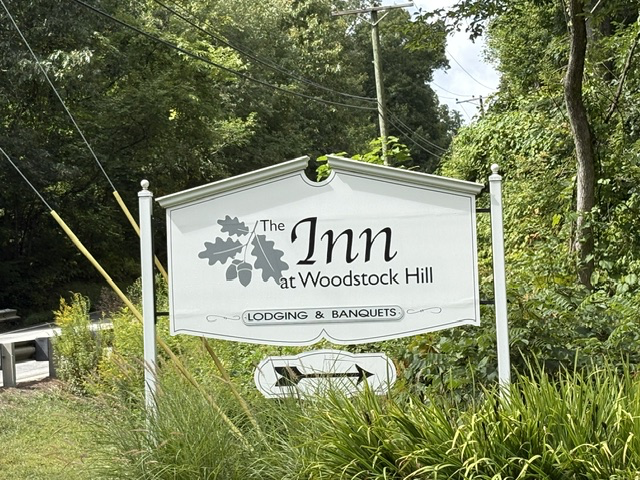
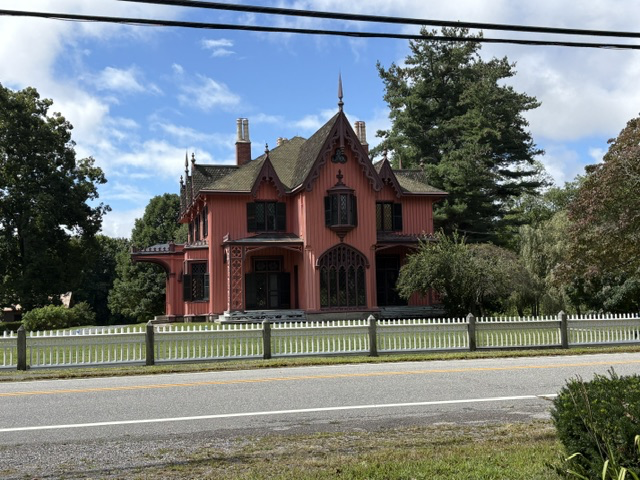
The Matthew Bowen Homestead / The Inn at Woodstock Hill
The house now known as the Inn at Woodstock Hill was constructed in 1816 by William Bowen and later became known as the Matthew Bowen Homestead. Located on Plaine Hill Road, it was part of a working farm owned by generations of the Bowen family, one of Woodstock’s most prominent early families. The original house […]
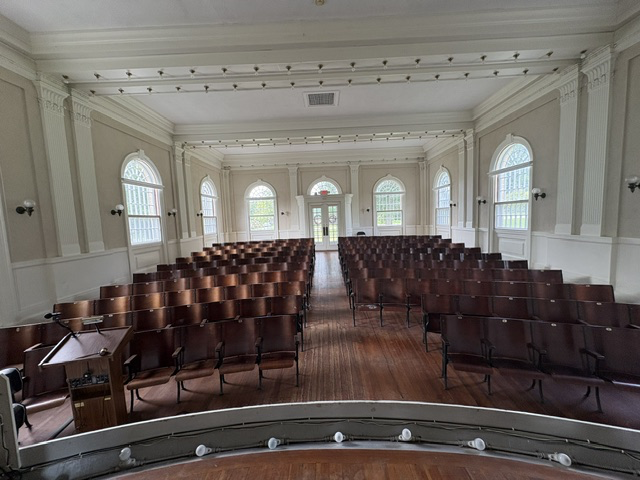
The Lecture Hall at Palmer Memorial Hall
The lecture hall inside Palmer Memorial Hall was designed to seat approximately two hundred people and included a stage and backstage area. Its sloping wooden floor, rows of folding chairs, and tall arched windows created a welcoming setting for lectures, performances, meetings, and other community gatherings. The first public program was held on May 2, […]
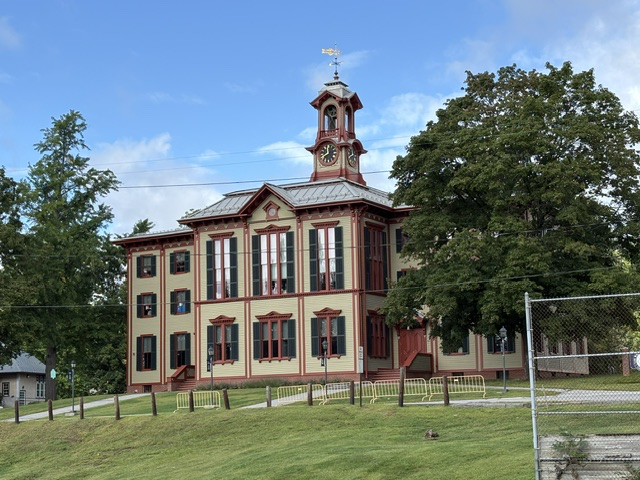
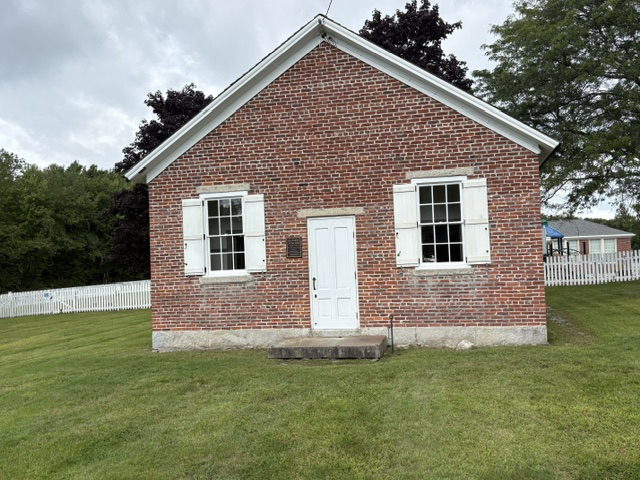
The Woodstock Academy Classroom Building
Standing prominently above Woodstock Green, the historic Woodstock Academy Classroom Building was completed in 1873. It replaced an earlier academy building that had served the school founded by James and John McClellan in 1801 and chartered by the Connecticut legislature the following year. The new building was made possible in large part through the efforts […]

