Historic Fish Auction Hall
During our visit to Hamburg, we explored the waterfront that has shaped the city’s identity and prosperity for centuries. Along the Elbe River stands the historic Fish Auction Hall, or Fischauktionshalle, a reminder of the time when fishing boats, merchants, and dockworkers filled this part of the harbor.
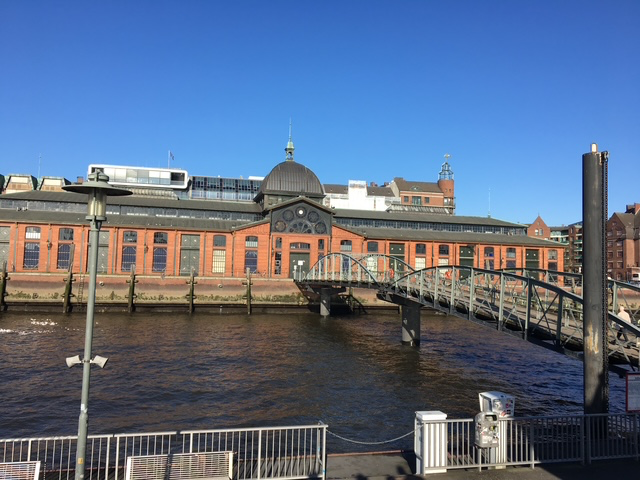
The fishing tradition in this area dates to 1703, when Altona established its own fish market. At the time, Altona was an independent community and a commercial rival of neighboring Hamburg. By the end of the nineteenth century, its growing fishing industry needed a larger and more efficient place where freshly landed catches could be sold, packed, and shipped.
The Fish Auction Hall was constructed in 1895–96 beside Altona’s newly developed fishing port. Its steel framework and brick walls were modeled after the spacious form of an ancient Roman market hall. A connection to the docks allowed fishing vessels to unload their catches directly beside the building. Inside, buyers competed for fresh fish that would quickly be distributed to shops, restaurants, and markets throughout the region.
Hamburg and Altona eventually combined their fish-market operations, and Altona became part of Hamburg in 1937. The auction hall continued serving the fishing industry, but the building was badly damaged during the Second World War. Later alterations obscured much of its original design, and by the 1970s it stood empty and deteriorating along the waterfront.
A major restoration undertaken between 1982 and 1984 rescued the hall and returned much of its original character. The building was given a new purpose as a public gathering place while preserving its connection to the traditional Sunday Fish Market. Early each Sunday morning, vendors sell fish, fruit, flowers, clothing, and other goods as early risers mingle with people ending a Saturday night in the nearby entertainment district. Music and breakfast inside the hall have become part of the experience.
The Fish Auction Hall represents more than Hamburg’s fishing industry. Its survival preserves the story of the rivalry between two neighboring cities, the labor of generations who depended upon the Elbe, and the successful restoration of a waterfront landmark. What began as a working center of commerce remains part of the life of Hamburg, continuing to bring people together beside the river.
Read More From Nancy
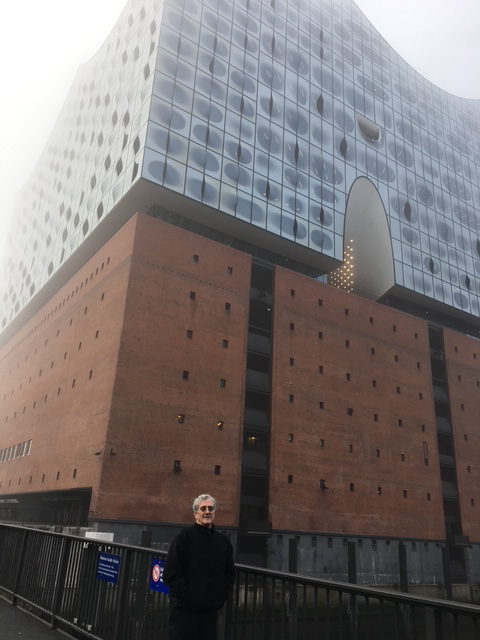
The Elbphilharmonie
We had the opportunity to explore some of Hamburg during the time we spent teaching there. Our work has taken us to cities around the world, and whenever our schedule allowed, we tried to experience something of the history and character of the place we were visiting. In Hamburg, one of the most striking sights […]
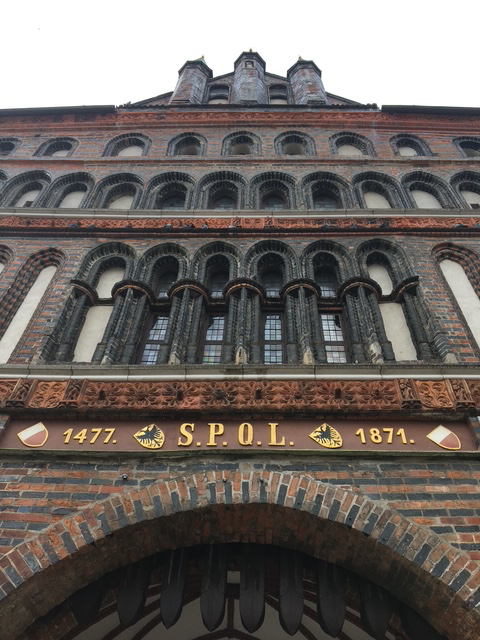
S.P.Q.L. – The Senate and People of Lübeck
While standing beneath the Holstentor in Lübeck, one detail caught my attention. Above the entrance are the letters S.P.Q.L., an inscription modeled after the famous Roman initials S.P.Q.R., meaning “The Senate and People of Rome.” In Lübeck, the letters stand for Senatus Populusque Lubecensis—”The Senate and People of Lübeck.” The inscription reflects the city’s pride in its long […]
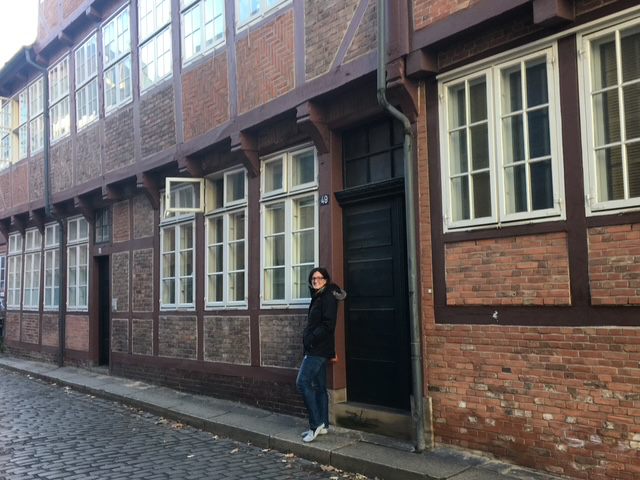
Bäckerbreitergang
While visiting Hamburg, we walked along Bäckerbreitergang, where this row of carefully restored half-timbered houses offers a rare glimpse of the city’s earlier residential neighborhoods. The photograph was taken beside number 49, the first house in a surviving group extending from numbers 49 through 58. The buildings date from the late eighteenth and early nineteenth […]

