Cole’s Hill
Rising steeply above Plymouth’s waterfront, Cole’s Hill was the colony’s first burial ground. During the devastating winter of 1620–1621, nearly half of the Mayflower’s passengers died from disease, exposure, and the effects of their difficult voyage. Many were buried here in graves overlooking the harbor where their ship remained anchored.
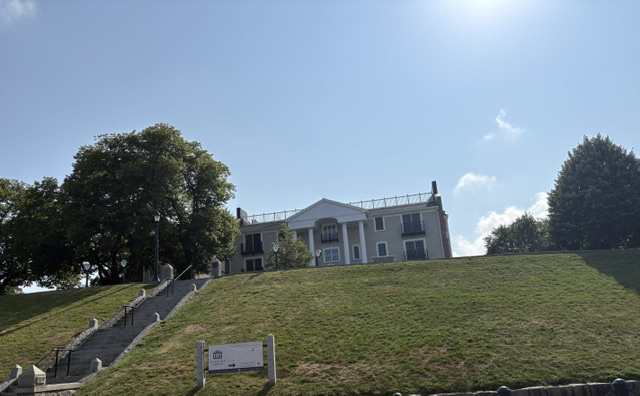
According to tradition, the settlers leveled the graves and planted grain over them so that outsiders would not know how severely their numbers had been reduced. The burials were not marked with permanent stones, and the individual locations were eventually lost. Among those believed to have been buried on the hill were Plymouth’s first governor, John Carver; his wife, Katherine; Rose Standish; William Mullins; and numerous other men, women, and children.
The hill took its name from James Cole, who settled nearby during the 1630s and operated a tavern in the area. Today, a long stairway climbs from the waterfront toward the Mayflower Society House, an eighteenth-century mansion standing above the hill. The house was built in 1754 by Edward Winslow, a great-grandson of Mayflower passenger and Plymouth governor Edward Winslow, and was acquired by the General Society of Mayflower Descendants in 1941.
Cole’s Hill is now part of Pilgrim Memorial State Park and is Plymouth’s only National Historic Landmark. Its grassy slope appears peaceful, yet beneath that landscape lies the story of the colony’s most desperate season and of the people whose lives ended before the settlement they helped establish could truly begin.
Read More From Nancy
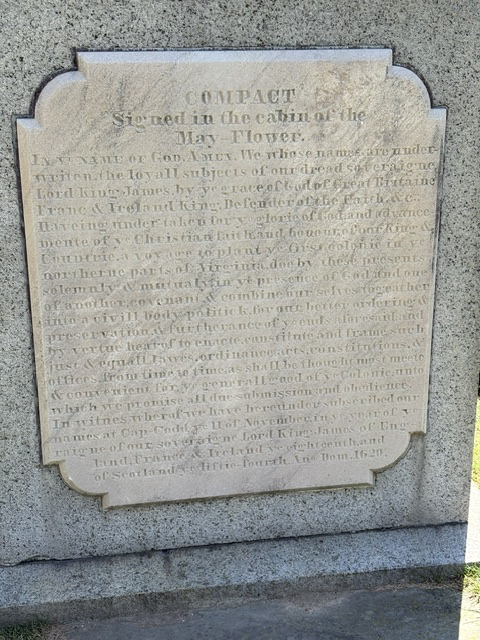
Mayflower Compact
Carved into this stone is the text of the Mayflower Compact, a remarkably short agreement created at an extraordinary moment. Long before there was a permanent settlement at Plymouth, before houses had been built or fields planted, the passengers aboard the Mayflower faced a fundamental question: how would they govern themselves once they went ashore? […]
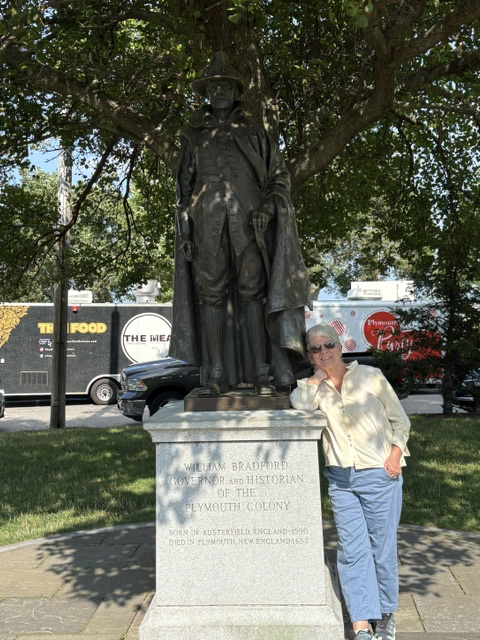
William Bradford Statue
Standing near Plymouth Harbor is this imposing statue of William Bradford, one of the most important figures in the story of Plymouth Colony. Bradford crossed the Atlantic aboard the Mayflower in 1620 and, after the death of Governor John Carver the following spring, was elected governor of Plymouth Colony. He would serve in that position […]
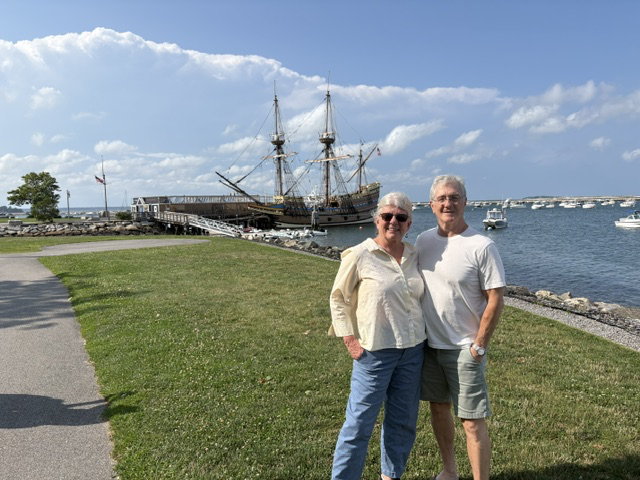
The Mayflower
Standing along the Plymouth waterfront, Mayflower II immediately connects the town to the story that has defined it for more than four centuries. The ship behind us is not the original Mayflower, but a full-scale reproduction built in England and sailed across the Atlantic in 1957 as a symbol of friendship between the United States […]

