Red Auerbach
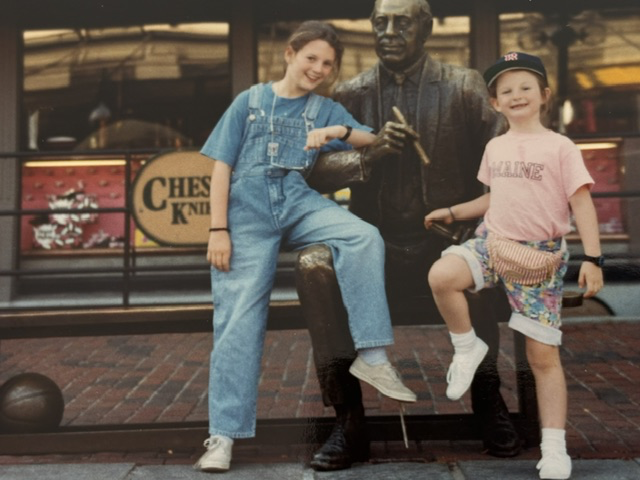
This bronze statue honors Arnold “Red” Auerbach, the coach and executive who helped establish the Boston Celtics as one of the most successful franchises in professional sports. Auerbach coached the Celtics from 1950 through 1966, leading the team to nine NBA championships, including an unprecedented eight consecutive titles from 1959 through 1966.
Auerbach’s influence extended beyond the team’s championship record. In 1950, the Celtics selected Chuck Cooper, the first Black player drafted by an NBA team. During the 1964–65 season, Auerbach fielded the league’s first all-Black starting lineup. When he retired from coaching in 1966, he appointed Bill Russell as his successor, making Russell the first Black head coach of a major professional sports team in the United States.
The cigar in Auerbach’s hand became one of his most familiar trademarks. He would light one near the end of a game when he believed a Celtics victory was secure. What began as a personal ritual became a lasting symbol of the team’s remarkable success during his years in Boston.
The statue was created by sculptor Lloyd Lillie and dedicated at Faneuil Hall Marketplace on September 20, 1985, Auerbach’s sixty-eighth birthday. Rather than placing him on a high pedestal, the sculpture presents him seated on a bench, allowing visitors to sit beside him and become part of the memorial.
During one of our family visits to Boston, our daughters sat beside Red Auerbach, joining the many visitors who have shared his bench over the years. The statue is characteristic of Boston, where reminders of the people who shaped the city are woven into places we encounter during an ordinary day.
Read More From Nancy
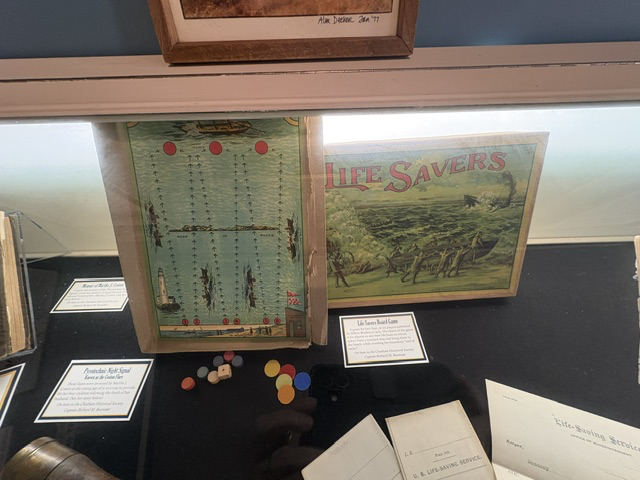
Life Savers and the Rise of American Board Games
The game Life Savers transformed the dangers of a shipwreck into a contest of rescue. Produced by the Milton Bradley Company near the turn of the twentieth century, the game challenged players to send lifeboats to a wrecked vessel, rescue its sailors, and return them safely to shore. Its illustrated cover, playing board, spinner, and colored pieces […]
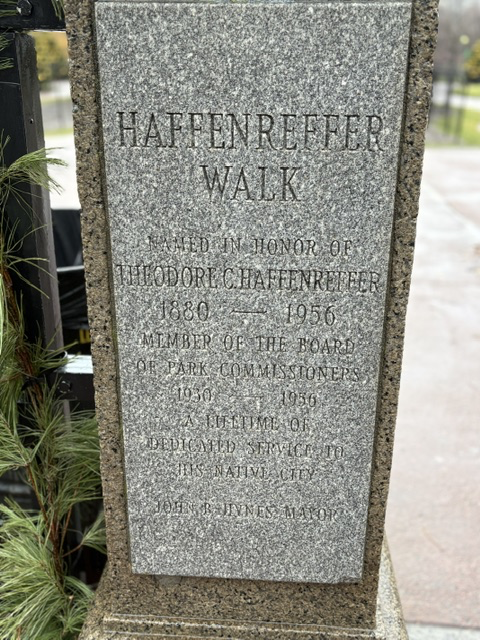
Haffenreffer Walk
While walking through the Boston Public Garden, I noticed this granite marker identifying Haffenreffer Walk. The inscription says that the walkway was named for Theodore Haffenreffer, 1880–1956, who served on Boston’s Board of Park Commissioners from 1930 until his death in 1956—a remarkably long period of service to the city’s parks. Haffenreffer was also part […]
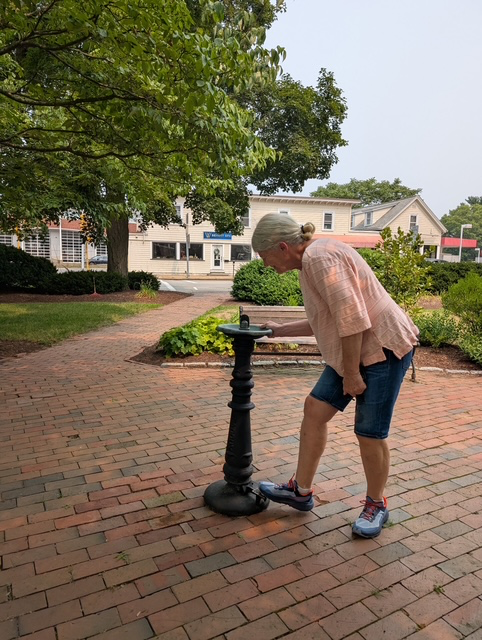
Water Fountain in Wellesley
Though I have walked the parks and paths of Wellesley, Massachusetts for years, I had not paused at this water fountain before. Growing up, I often drank from fountains because they were everywhere. The label on the base read: Murdock Manufacturing, Cincinnati, OH, a company founded in 1853. I learned that Murdock became one of […]

