The Dorr Rebellion Memorial
This boulder monument stands in Acote’s Hill Cemetery, near the ground where the Dorr Rebellion reached its final confrontation in June 1842. Although it is located in a cemetery, it is not Thomas Wilson Dorr’s grave. Dorr died in 1854 and was buried at Swan Point Cemetery in Providence. This memorial marks the place where his effort to reform Rhode Island’s government came close to becoming an armed conflict.
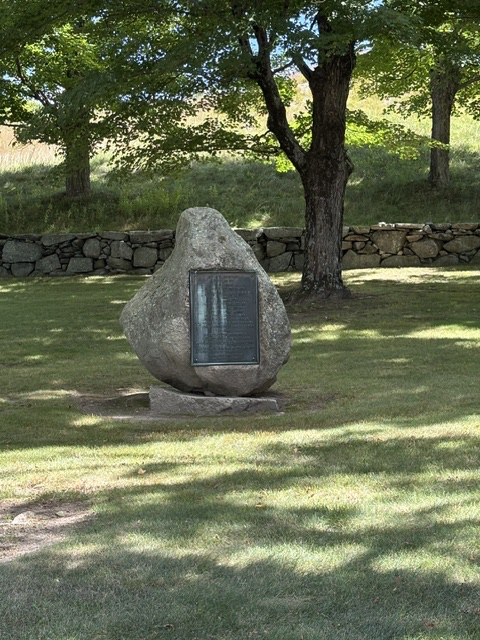
After an unsuccessful attempt to take control of the state arsenal in Providence, Dorr and his remaining supporters gathered in Chepachet. They fortified Acote’s Hill and prepared to resist the established government. When a much larger force loyal to Governor Samuel Ward King advanced toward the village, Dorr recognized that continuing would lead to unnecessary bloodshed. He released his followers and fled before the opposing troops reached the hill.
The confrontation at Acote’s Hill therefore ended without the battle many had feared. State troops occupied Chepachet, seized the abandoned fortifications, and commandeered the nearby Pettingill-Mason House for use as a field hospital. Although the rebellion had been suppressed, the demands for political reform could no longer be dismissed. Rhode Island adopted a new constitution later in 1842 that broadened voting rights, though significant restrictions remained.
The monument was erected in 1912, seventy years after the rebellion, by the Rhode Island Citizens Historical Society Association. Governor Aram J. Pothier accepted it on behalf of the state, and Rhode Island historian Thomas Williams Bicknell delivered the historical address. By then, Dorr was increasingly remembered not simply as a defeated rebel, but as a reformer whose actions had helped force Rhode Island to confront the limitations of its colonial government.
Its placement at Acote’s Hill was deliberate. The memorial stands within the landscape where Dorr’s followers assembled and where the state militia brought the rebellion to an end. The cemetery surrounding it adds a quiet solemnity, but the boulder commemorates an idea rather than a burial: the belief that political representation should extend beyond a privileged class of property owners.
Today, the monument preserves Chepachet’s place in the history of American voting rights. It reminds visitors that the expansion of democracy was not completed at the nation’s founding. It continued through local struggles such as the Dorr Rebellion, when ordinary residents challenged an inherited political system and demanded a greater voice in the government that ruled them.
Read More From Nancy
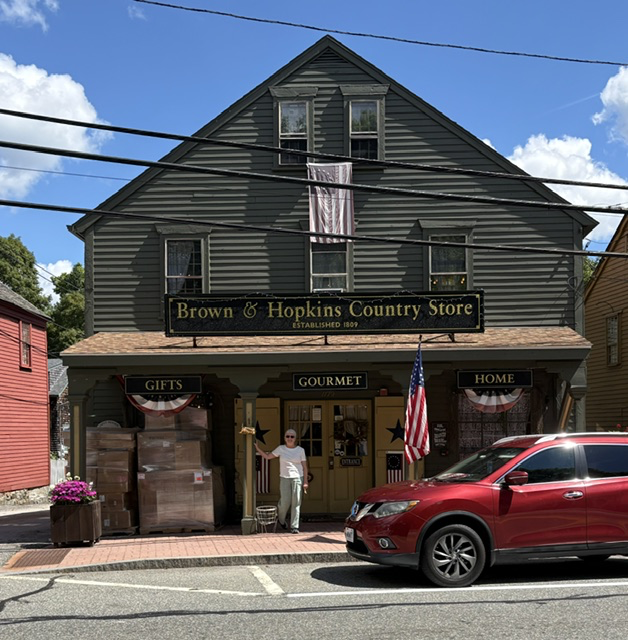
Brown & Hopkins Country Store
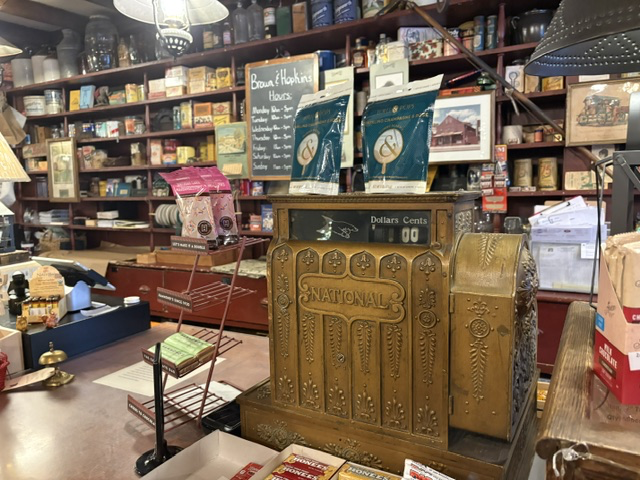
Standing along Putnam Pike in the center of Chepachet, Brown & Hopkins Country Store is recognized as the oldest continuously operating country store in the United States. The building was constructed in 1799 by Timothy Wilmarth as a residence and hattery, where hats were made and sold. In 1809, Ira Evans purchased the property and […]
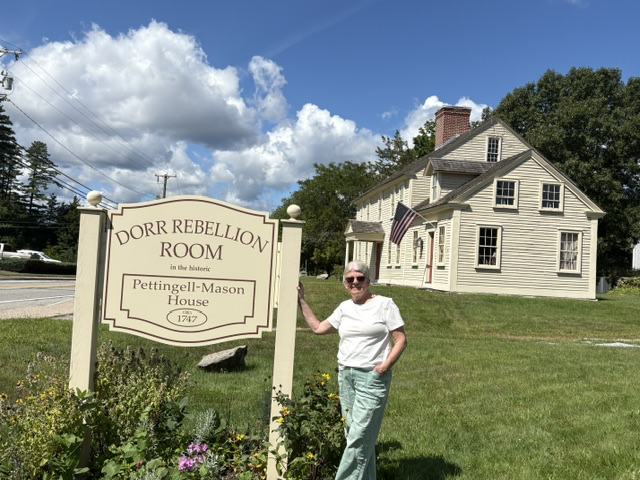
The Pettingill-Mason House and the Dorr Rebellion Room
Traditionally dated to 1747, the Pettingill-Mason House is a substantial colonial home standing at the foot of Acote’s Hill. Constructed with a heavy post-and-beam frame, the house was organized around a large central chimney with four fireplaces. Its hand-hewn timbers, wide-plank floors, narrow stairways, and stone foundation preserve the character of an eighteenth-century Rhode Island […]
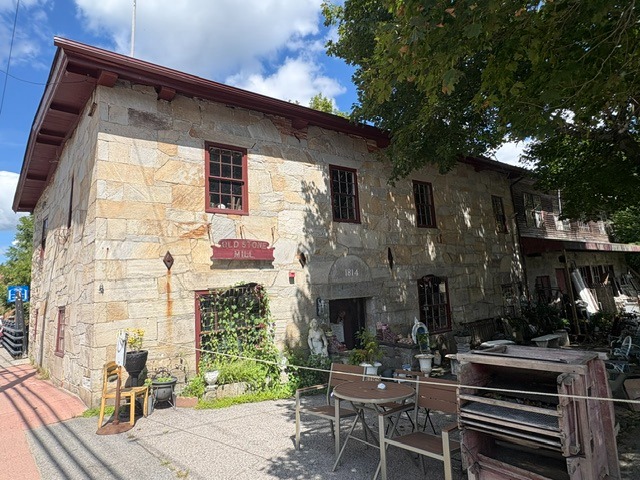
The Old Stone Mill
Beside the Chepachet River, the Old Stone Mill preserves a substantial remnant of the village’s early textile industry. Also known as the Lawton Owen Mill, the building bears the date 1814 above its entrance. Its stone walls stand close to both the river and Putnam Pike, placing it within the landscape of waterpower, transportation and […]

