The Canton Copper Works
The restored brick building at the Paul Revere Heritage Site preserves a part of Paul Revere’s life that is often overshadowed by his midnight ride. Revere was not only a patriot, silversmith, and messenger of the Revolution. He was also an ambitious entrepreneur who helped establish the American copper industry during the early years of the new nation.
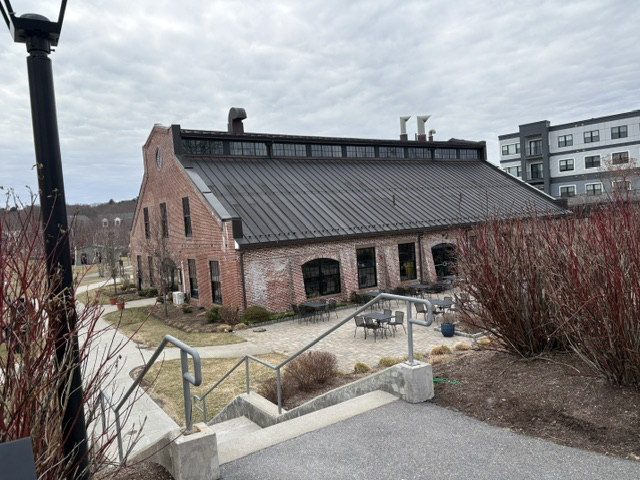
In 1801, when he was sixty-six years old, Revere purchased this property along the East Branch of the Neponset River in Canton. The location offered something essential to early manufacturing: dependable waterpower. Revere needed the river to operate the machinery that would roll large pieces of copper into thin, uniform sheets. At the time, the United States relied heavily on Great Britain for manufactured copper, and the British closely protected their production methods.
Copper sheathing was especially important to the young United States Navy. Wooden ships were vulnerable to marine worms, rot, and the accumulation of barnacles, which damaged their hulls and reduced their speed. Covering the hull with copper offered protection and allowed a vessel to remain at sea longer without extensive repairs. Revere succeeded in producing rolled copper of sufficient size and quality for this demanding use, making his Canton operation the first successful commercial copper-rolling mill in the country.
Copper produced by Revere’s company was used to repair the hull of the USS Constitution, helping preserve the warship that became known as “Old Ironsides”. The company also supplied copper for Robert Fulton’s early steamboats and for the dome of the Massachusetts State House. Through this work, Revere helped reduce the nation’s dependence on imported British copper while supporting its naval, architectural, and industrial development.
The building in this photograph is not Revere’s original 1801 mill. It was constructed around 1850 by his son, Joseph Warren Revere, who continued and expanded the family business after Paul Revere’s death in 1818. Its broad brick arches, large windows, and long industrial interior reflect the growth of the company from Revere’s experimental operation into an established manufacturing enterprise. It is now the largest surviving structure from the original Revere Copper Company complex.
For many years, the building stood neglected and deteriorating. Its eventual restoration preserved the historic exterior while adapting the interior for contemporary use. Today, the lower level contains the Northern Spy restaurant, while the upper floor serves as Copper Mill Hall, an exhibit and gathering space associated with the Paul Revere Museum of Discovery and Innovation. The restored copper roof is an especially appropriate reminder of the material that once defined the site.
Read More From Nancy
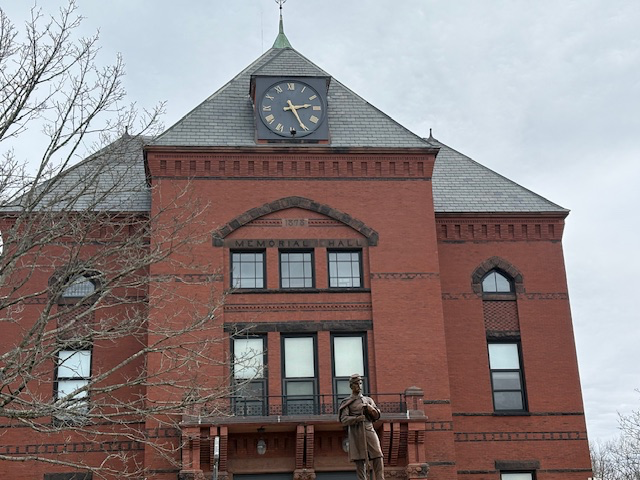
1878 Memorial Hall
Memorial Hall in Canton, dated 1878, was built as a lasting tribute to the town’s Civil War veterans. Like many Massachusetts towns, Canton sent men to serve in the war, and the hall stood as a public expression of remembrance for those who fought and for those who never came home. Rather than creating only a […]
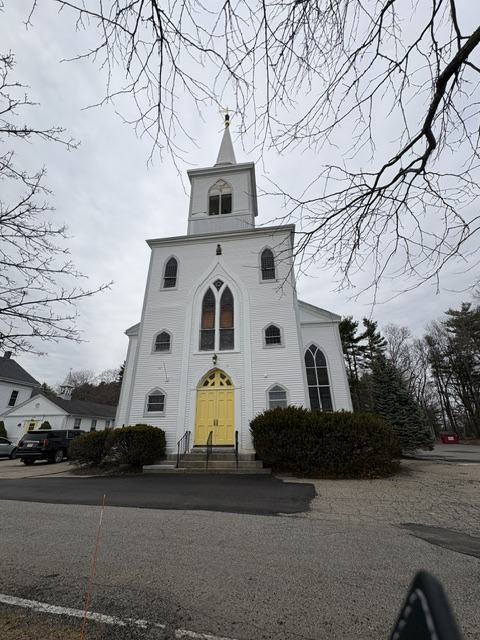
The First Parish Church of Canton
The white meetinghouse of First Parish Unitarian Universalist Church has stood along Washington Street for two centuries, but the congregation it serves is even older. First Parish was formally gathered in 1717, when Canton was still part of the larger town of Stoughton. Like many early New England religious societies, the parish was closely connected […]
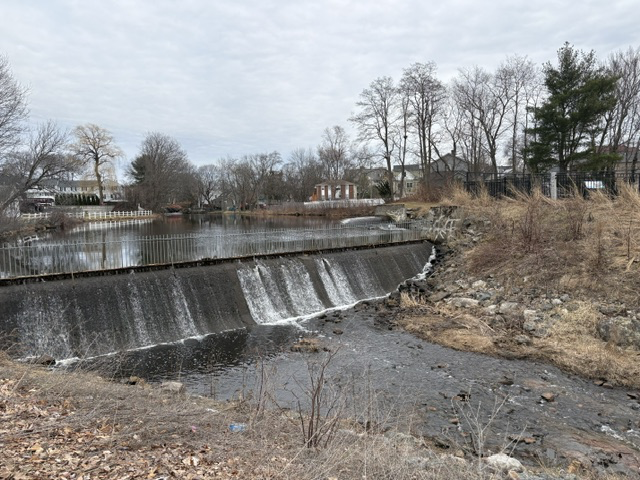
Neponset River
The Neponset River has shaped the history of eastern Massachusetts for centuries, long before factories and mills appeared along its banks. Rising in Foxborough and flowing more than 25 miles to Boston Harbor, the river provided food, transportation, and power for generations of Native peoples and later for colonial settlements that grew eside it. Its steady current and changing […]

