Haffenreffer Walk
While walking through the Boston Public Garden, I noticed this granite marker identifying Haffenreffer Walk. The inscription says that the walkway was named for Theodore Haffenreffer, 1880–1956, who served on Boston’s Board of Park Commissioners from 1930 until his death in 1956—a remarkably long period of service to the city’s parks.
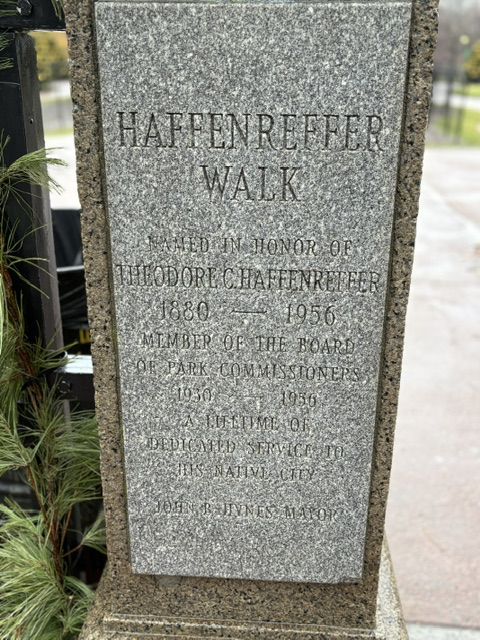
Haffenreffer was also part of a family whose name was once very familiar in Boston. His father, Rudolph Haffenreffer, had established the Haffenreffer Brewery in Jamaica Plain in 1870 after acquiring an earlier brewery there. The business became an important part of Jamaica Plain’s industrial history and remained in operation until 1965. Theodore and his brother later became involved in the family brewing business.
But it was Theodore’s work with Boston’s parks that brought his name to the Public Garden. During his 26 years on the Park Commission, he participated in the stewardship of a park system that included not only the Public Garden but the larger network of Boston parks that had been developing since the Park Commission was established in 1875.
After his death, the central pathway through the Public Garden was named Haffenreffer Walk in his honor. The route crosses the Garden from the Arlington Street side toward Boston Common and passes directly over the lagoon by way of the familiar Public Garden footbridge. Granite markers such as this one were placed near the entrances to commemorate him.
The inscription ends by recognizing his “lifetime of dedicated service to his native city”. That is what makes this marker interesting. Haffenreffer wasn’t a president, general or nationally famous figure. He was a Boston businessman who devoted more than a quarter century to helping oversee the city’s parks.
I have walked through the Public Garden many times, but finding this marker gave the familiar pathway another layer of history. The paths, trees, bridges and gardens we enjoy today didn’t simply appear and remain unchanged. Generations of Bostonians were responsible for preserving and caring for them, and in this case the city chose to put one of their names directly on the path beneath our feet.
Read More From Nancy
Vault Alarm
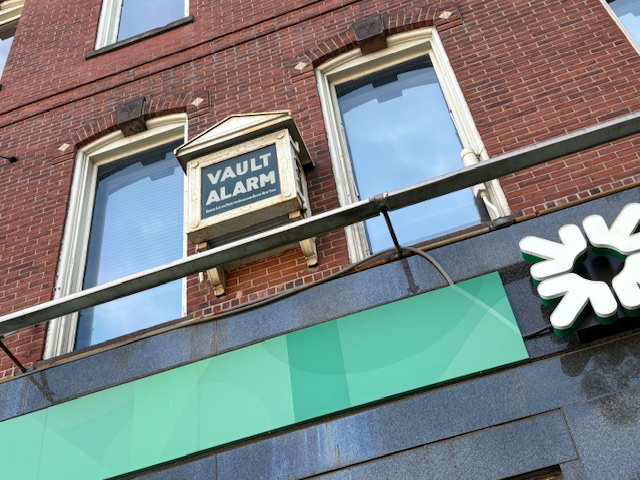
Looking up, above the street level to the second floor of the Citizens Bank in Natick, I noticed a small metal box mounted on the exterior wall. It reads: Vault Alarm This is a relic from a time when security was mechanical. In the late 19th and early 20th centuries, banks were designed to safeguard […]
Massachusetts Veterans War Memorial Tower
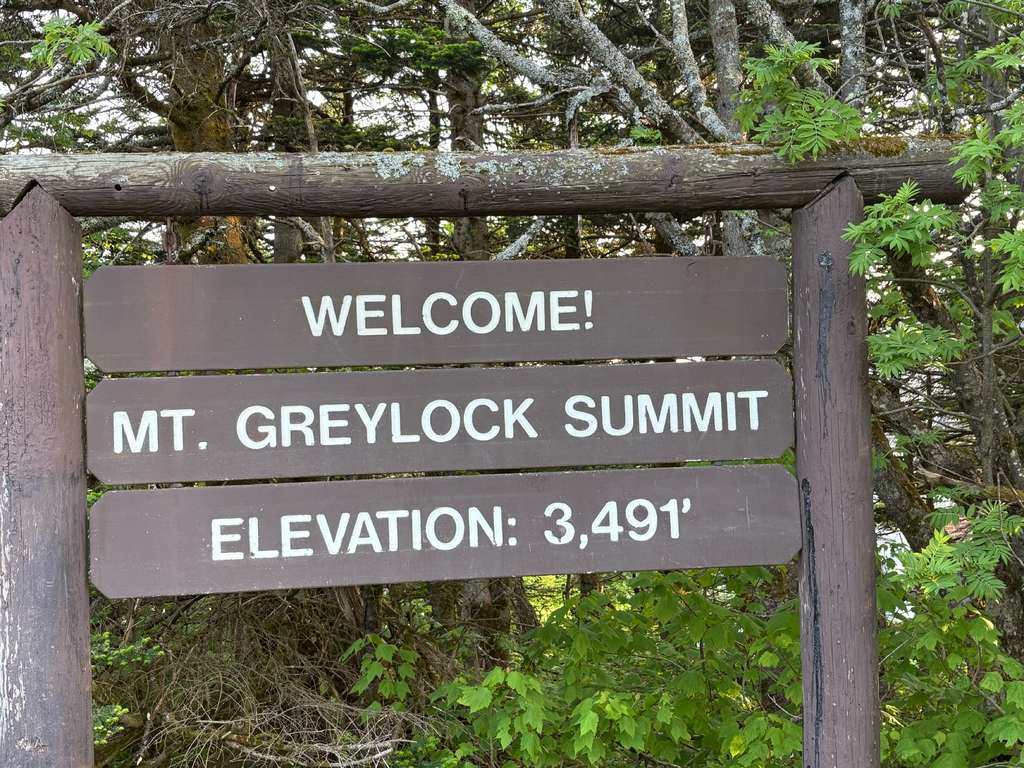
Last year we camped near Mount Greylock, and although we have spent so much of our lives exploring New England, this was the first time we made our way to the summit. It was another reminder to me that exploration never really ends. No matter how many places we have visited, there is always another […]
The Campbell Kids Shopping Game
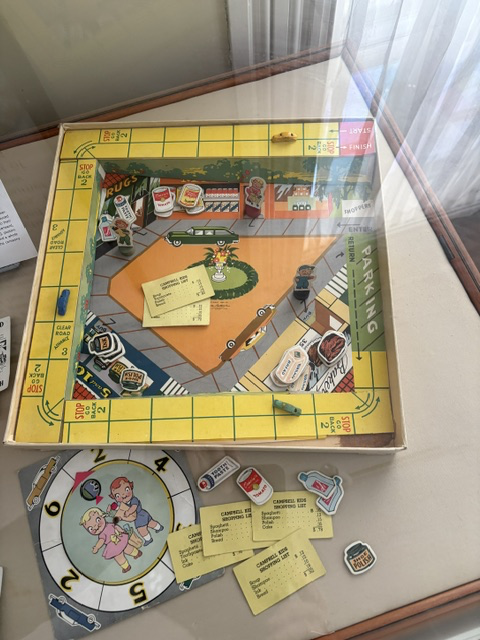
One of the things I enjoy most about visiting local history museums is discovering artifacts that tell the story of everyday life. Community museums often preserve the objects that filled ordinary homes. This 1955 Campbell Kids Shopping Game is one of those treasures. Produced by Parker Brothers in partnership with the Campbell Soup Company, the […]

