St. Paul’s Anglican Church
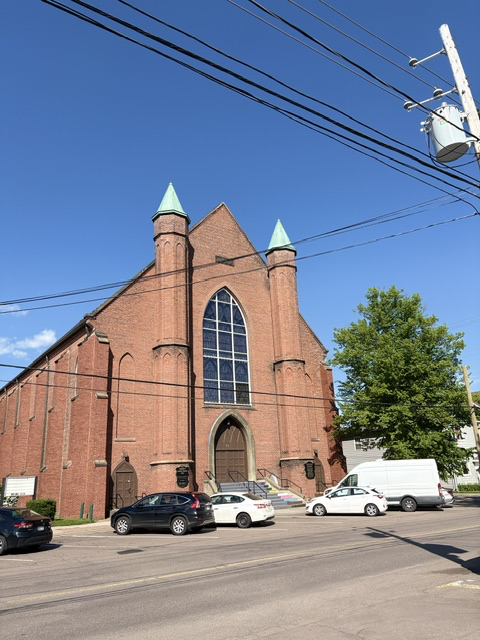
While walking through Charlottetown, I photographed St. Paul’s Anglican Church. After seeing the soaring spires of St. Dunstan’s Basilica nearby, St. Paul’s presented a very different architectural presence. Its broad brick façade and Gothic window are comparatively restrained, but the congregation behind this church reaches back almost to the beginnings of British Charlottetown.
When Prince Edward Island became a separate British colony in 1769, money was set aside to support a Church of England clergyman. Establishing an actual congregation proved more difficult. The first appointed rector never came to the Island, and for several years visiting missionaries provided occasional services. The Reverend Theophilus DesBrisay eventually began his ministry here, and the first entry in St. Paul’s parish records dates to August 21, 1777.
The congregation gathered in the ballroom of Richardson’s Coffee House. In 1790, Lieutenant Governor Edmund Fanning purchased a house and set aside part of it for worship. Five years later, St. Paul’s finally had its first purpose-built church. Interestingly, that early building was shared by members of both the Church of England and the Church of Scotland—a reminder of how small Charlottetown still was at the end of the 18th century.
The congregation would occupy several churches as Charlottetown grew. One was destroyed by a severe windstorm in 1833. Another was constructed beginning in 1835 and consecrated the following year. By the end of the 19th century, St. Paul’s was ready for the much larger church that stands today.
The present St. Paul’s was designed by one of Prince Edward Island’s most important architects, William Critchlow Harris, and completed in 1896. The first service was held on May 10 of that year, and the church was consecrated in July. Harris approached church architecture in an unusual way: he was deeply interested in music and believed the design of a church should enhance its sound as well as its appearance. St. Paul’s is considered one of his finest works.
Inside, Harris used the shape of the sanctuary, wooden vaulting and carefully selected woods to improve acoustics. A juniper sounding post was even installed beneath the chancel floor. The success of St. Paul helped establish a model Harris would use for numerous other churches throughout Prince Edward Island and Nova Scotia.
What makes St. Paul’s particularly interesting within my Charlottetown collection is its age as a congregation. The parish was keeping records in 1777, decades before Charlottetown was incorporated as a city in 1855, nearly ninety years before the Charlottetown Conference of 1864, and almost a century before Prince Edward Island entered Confederation.
The church in my photograph dates from 1896, but the community it represents is much older. Generations of Charlottetown residents worshipped together in ballrooms, houses and earlier churches before this building ever appeared on Prince Street. St. Paul’s is therefore more than another beautiful old church. Its history reaches back to a Charlottetown that was still taking shape.
Read More From Nancy
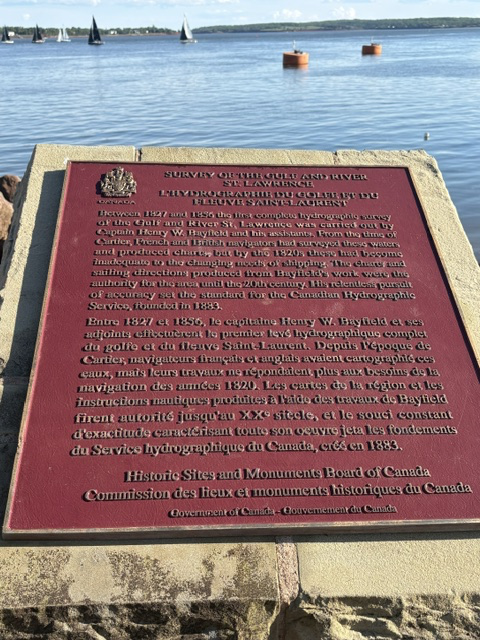
Captain Henry Wolsey Bayfield
Walking along the Charlottetown waterfront, it is easy to simply enjoy the view across the harbor. Sailboats move across the water, the opposite shore seems close by, and today we give little thought to knowing exactly where the channels, shoals and underwater hazards are located. A plaque along the waterfront introduced me to Captain Henry […]
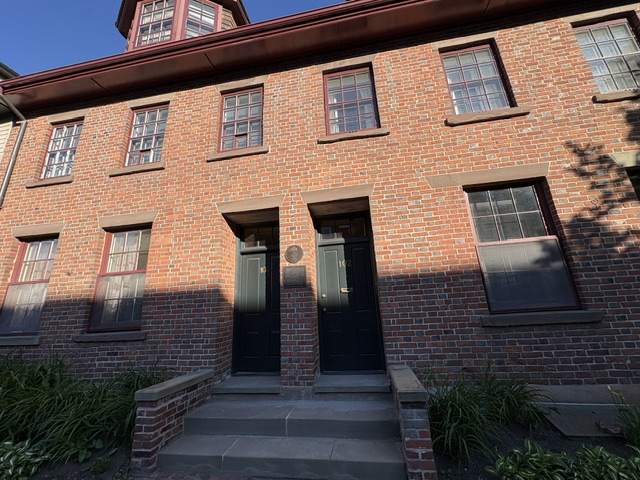
The Gainsford House
While walking along Water Street in Charlottetown, I photographed this substantial brick house without realizing just how old it was. Built between 1832 and 1834, the Gainsford House is the oldest surviving brick residence in Charlottetown and one of the city’s important links to its early 19th-century past. John and Elizabeth Gainsford built the house […]
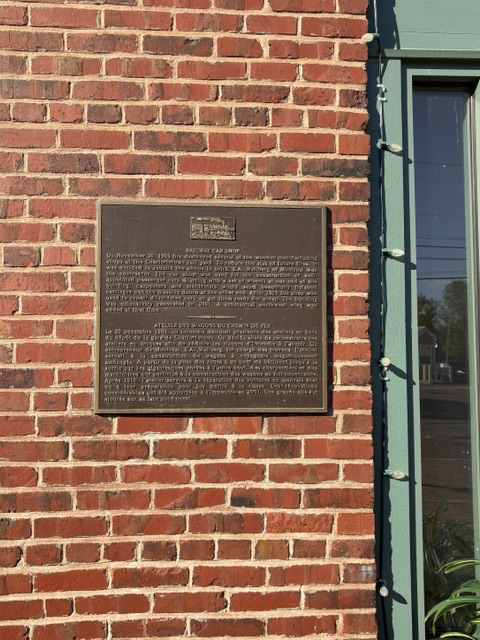
The Railway
While walking through Charlottetown, I came across this old Railway Car Shop. At first, it seemed like another surviving industrial building, but the nearby interpretive panels revealed a much larger story. Prince Edward Island’s railway didn’t simply change how Islanders traveled. It helped change the political future of the Island itself. Before the railway was […]

