The Dowry Chest
This painted wooden chest at the Nichols House Museum in Boston is more than an attractive piece of antique furniture. Dating from the late 17th century, it is an English oak dowry, or dower, chest that would originally have been used to hold a woman’s personal possessions as she prepared for marriage and the establishment of a new household.
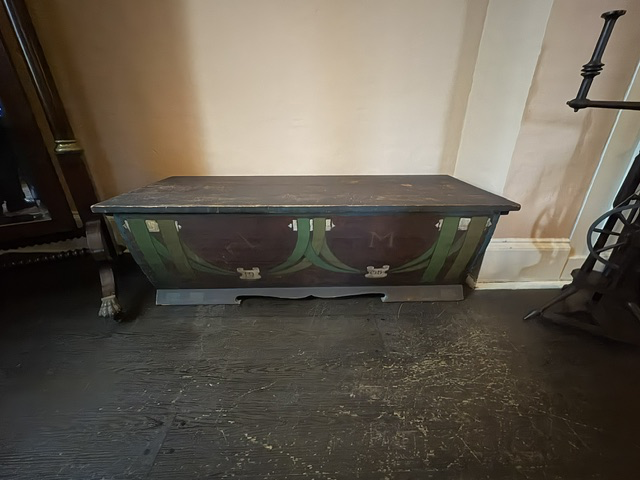
The initials “H.I.” painted across the front are believed to identify the woman for whom the chest was originally made. Inside would have been stored valuable personal belongings, particularly textiles such as clothing, linens and other household goods. At a time when many of these items were made by hand, their preparation could represent years of work and considerable value. The chest itself became both the container for those possessions and part of the property a woman brought into her marriage.
The Nichols family purchased the chest in England in 1910 from John Wilson & Son, by which time it was already more than two centuries old. When brought to their Beacon Hill home, it was initially placed in the front entrance hall and was later moved to the foot of Rose Standish Nichols’s bed. Rose had a strong interest in historic decorative arts, and pieces such as this helped create the sense of an earlier English and colonial past within the Nichols home.
There is also a deeper story contained in this object. In the 17th century, when the chest was made, marriage profoundly affected a woman’s legal and economic independence. Under the English legal principle of coverture, much of a married woman’s property came under the control of her husband. A dowry chest therefore represents not simply preparations for marriage, but the very different position women occupied within the society of the period.
That is what makes this chest particularly interesting to me. At first, it appears to be simply a beautifully painted old storage chest. But the initials on its front connect us to an unidentified woman who lived more than three centuries ago, while its later place in Rose Nichols’s home connects it to another generation of women whose opportunities were beginning to change dramatically.
The chest survived both worlds. Made in England for a woman preparing for marriage in the 1600s, it eventually crossed the Atlantic and found a home in the bedroom of an independent woman on Beacon Hill. In that journey, a practical piece of furniture became an unexpected witness to centuries of change in women’s lives.

Read More From Nancy
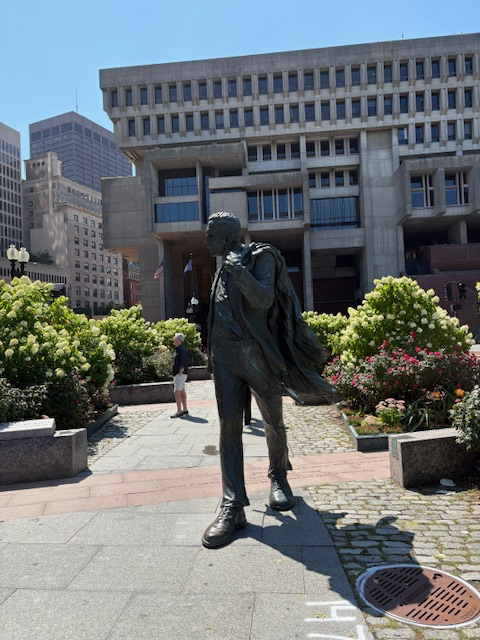
Mayor Kevin White
Walking near Faneuil Hall, it is easy to focus on the history you expect to find: Revolutionary sites, early American stories, the familiar markers of the city’s beginnings. Just beyond that, is a figure that is hard to ignore: the life size bronze statue of Kevin H. White. Located at street level and captured mid-stride, the sculpture immediately […]
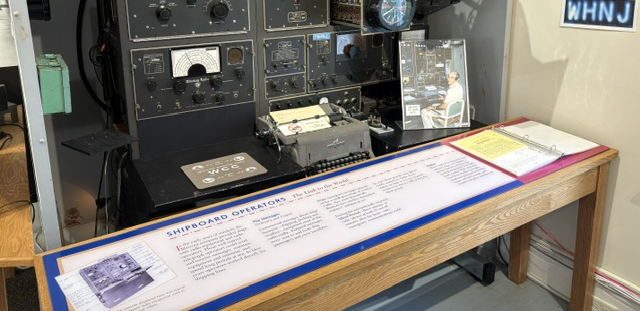
SS HOPE Shipboard Radio
The shipboard radio station from the SS HOPE, preserved at the Marconi-RCA Wireless Museum, represents the vital communications link between a ship at sea and the world on shore. The vessel began its service as the USS Consolation, a United States Navy hospital ship commissioned in 1945. It treated wounded service members during the Korean War and […]
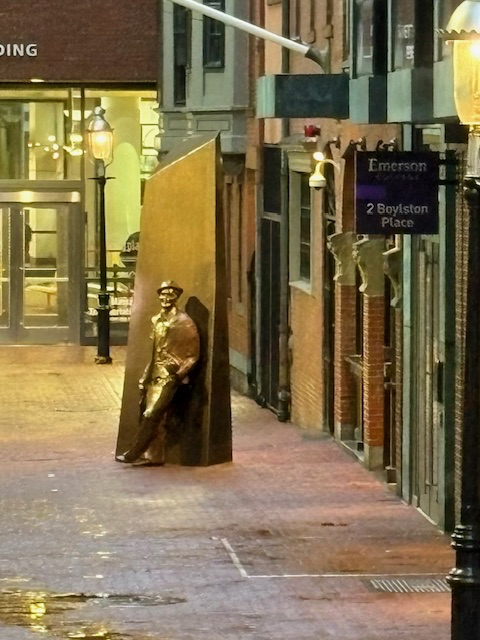
Norman Lear Statue
Heading back to our car, I stopped to grab this photo in the alley near Emerson College. It is one of those narrow Boston passageways that I might have easily walked past without a thought but tucked into this space is something special: a life-size bronze statue of Norman Lear. Lear attended Emerson in the early 1940s, enrolling […]

