Berliner Dom
When Marty and I visited Berlin, our timing happened to coincide with a celebration of Martin Luther. It was the 500th anniversary of the Protestant Reformation in 2017, commemorating Luther’s posting of the Ninety-Five Theses in Wittenberg on October 31, 1517. Throughout Germany, churches were filled with visitors who had traveled to take part in the anniversary events.
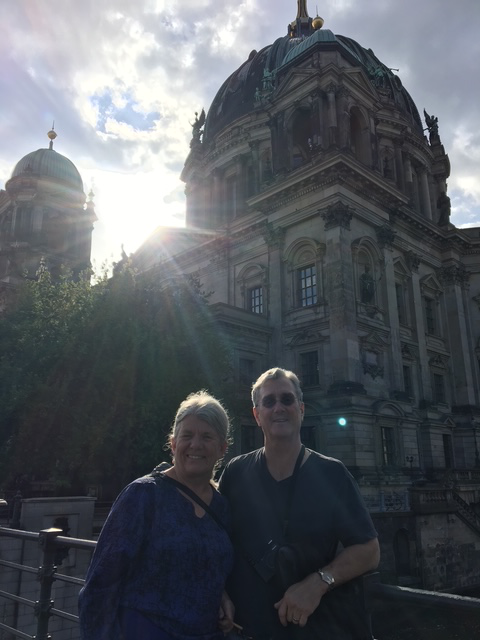
Here we are outside the Berliner Dom, Berlin’s great Protestant cathedral on Museum Island. Although its enormous dome and elaborate architecture can easily suggest one of Europe’s great Catholic cathedrals, the Berliner Dom belongs to Germany’s Protestant tradition. Its history reflects both Lutheran and Reformed influences that became intertwined in Prussia.
The present cathedral was built between 1894 and 1905 during the reign of Kaiser Wilhelm II, replacing an earlier cathedral on the site. Designed by Julius Carl Raschdorff, it was intended to be a monumental Protestant church worthy of the capital of the relatively new German Empire. It also served as the court and dynastic church of the Hohenzollerns, the family that ruled Brandenburg and Prussia and eventually provided the German emperors. Their connection remains particularly visible in the Hohenzollern Crypt beneath the cathedral, where members of the dynasty were buried over several centuries.
The building also carries the scars of modern German history. It was severely damaged during World War II, including a devastating fire in its dome following an air raid in 1944. Because it stood in East Berlin after the war, restoration took decades. The cathedral finally reopened in 1993, after the reunification of Germany.
Being there during the Reformation anniversary gave our visit another dimension. Martin Luther himself had died centuries before the present Berliner Dom was constructed, but the religious transformation he began in 1517 ultimately shaped the Protestant world to which this cathedral belongs.
Read More From Nancy
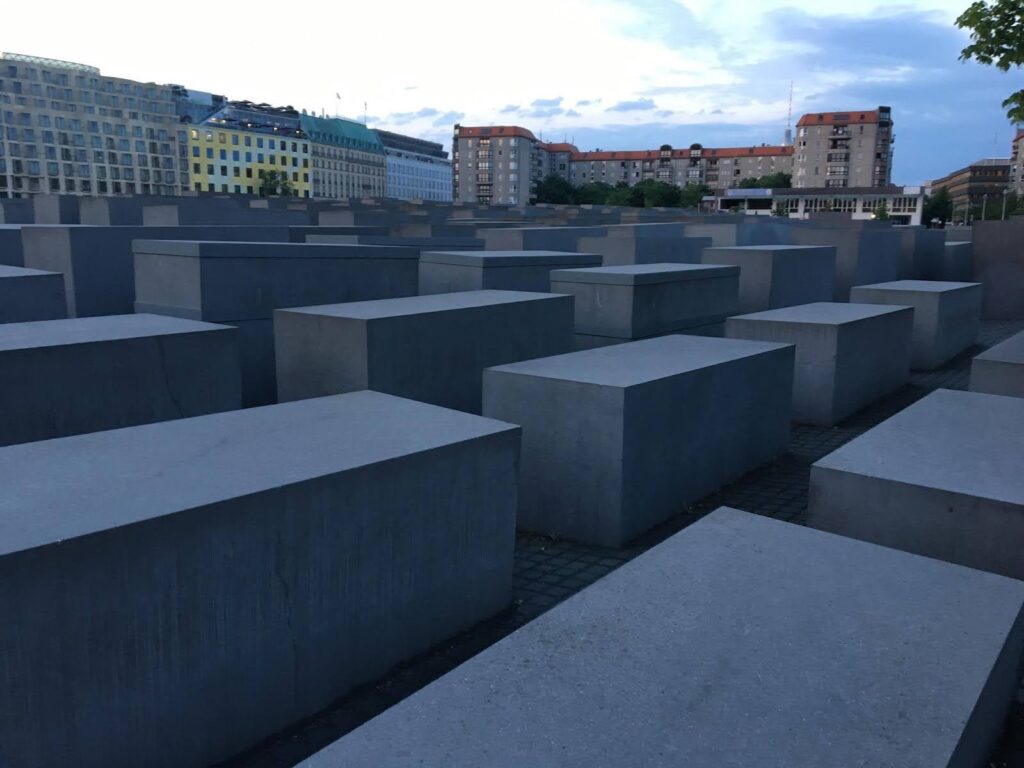
Holocaust Memorial
There are places that we visit, and then there are places we enter. This memorial in Berlin is one of those places. From a distance, the Memorial to the Murdered Jews of Europe, appears like a vast field of concrete blocks stretching across the city near the Brandenburg Gate. But as we walk into it, the […]
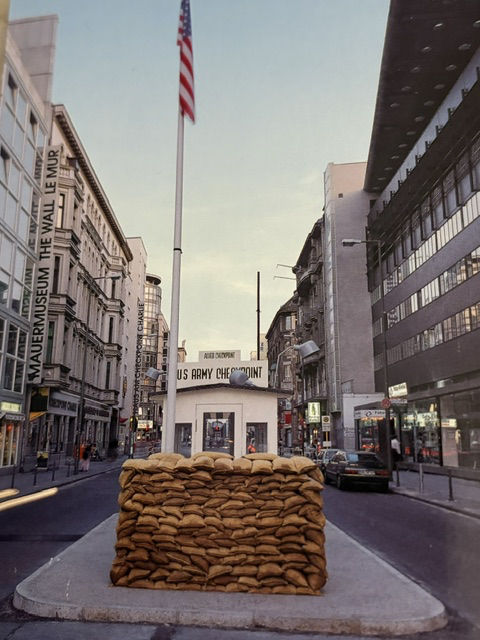
Checkpoint Charlies
The photograph captures one of the most powerful symbols of the Cold War and the division of Berlin during the twentieth century. Standing in the middle of the street is a reconstruction of the famous American checkpoint known as Checkpoint Charlie. This was once the best-known crossing point between East Berlin and West Berlin during […]
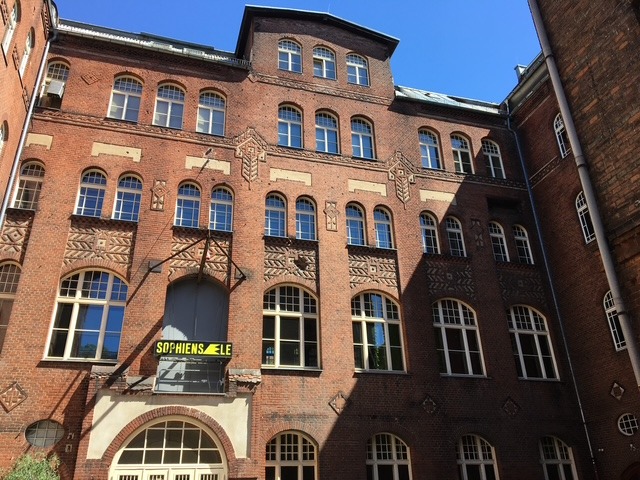
Sophiensæle
Behind the street frontage on Sophienstraße, the brick building now known as Sophiensæle began as a clubhouse for Berlin’s craftsmen’s association. Built in 1904–1905, it provided a setting for workers’ education and collective activity. The clubhouse also became a meeting place for the political left. Rosa Luxemburg, Karl Liebknecht, Clara Zetkin, and Erich Mühsam spoke […]

