St. Peter’s Square
Photographs of St. Peter’s Square do not convey its size. It was only when we were actually standing there and walking across the enormous open space that I began to appreciate its massiveness. The people crossing the square seemed small against the architecture surrounding them, and the distance from one side to the other was far greater than photographs had ever suggested.
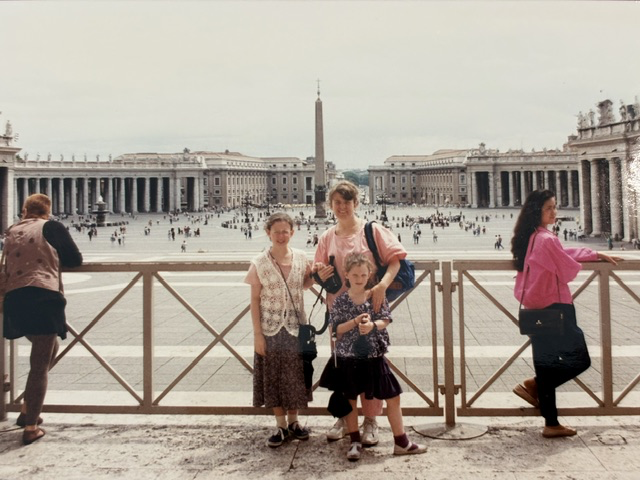
The great piazza was designed by Gian Lorenzo Bernini for Pope Alexander VII between 1656 and 1667. Bernini created two enormous semicircular colonnades that seem to reach outward from St. Peter’s Basilica. Four rows of massive Doric columns form the curved arms of the square, which Bernini envisioned as the welcoming embrace of the Church.
The dimensions help explain what we experienced. The elliptical portion of the square is nearly 800 feet across. The colonnades contain 284 columns and 88 pilasters, with 140 statues of saints standing along the balustrades above. Yet because everything is constructed on such an enormous scale, it is difficult to comprehend those numbers until you begin walking through the space.
Bernini also left visitors a wonderful architectural surprise. Set into the pavement near the obelisk are two circular markers indicating the focal points of the elliptical square. If you stand on one of these spots and look toward the four rows of columns, something remarkable happens: the columns line up so precisely that the four rows appear to become a single row. Move away from the spot and the other columns gradually reappear. It is a reminder that Bernini was designing not only buildings, but what the person standing within them would actually see and experience.
At the center of all this Baroque architecture stands something far older: the Vatican Obelisk. The ancient Egyptian granite monument was brought to Rome by Emperor Caligula in A.D. 37 and erected in the circus later associated with Nero. Christian tradition places the martyrdom of St. Peter in this general area.
In 1586, Pope Sixtus V ordered the obelisk moved to its present position. Moving a monument weighing hundreds of tons without modern machinery was an enormous engineering undertaking. Architect Domenico Fontana organized hundreds of workers, horses, ropes, pulleys and wooden machinery to raise and reposition it. The obelisk was standing here decades before Bernini designed the square, so Bernini incorporated this ancient monument into the center of his new creation.
There is another reason for the square’s enormous size. It was created to hold people, thousands and sometimes tens of thousands of them. For centuries pilgrims have gathered here, and today the square continues to fill for papal audiences, Masses, Easter and Christmas celebrations, canonizations and other major events of the Catholic Church.
Standing there helped me understand Bernini’s design in a way that photographs never had. This was not simply an impressive space in front of an impressive church. Everything was considered from the approach to the basilica, the sweep of the colonnades, the ancient obelisk at the center, even the precise point from which four rows of columns suddenly appear to become one. You have to stand there. You must walk across it. Only then do you begin to understand just how massive St. Peter’s Square really is.
Read More From Nancy
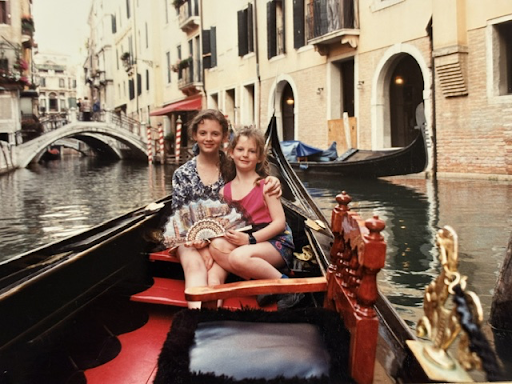
Gondola Ride
First trips to Italy almost must include Venice, and for us that meant experiencing the city the way generations of Venetians have done for centuries, by boat. A gondola ride through the canals quickly became one of the highlights of our journey and remains one of those family memories that has not fad. Venice itself […]
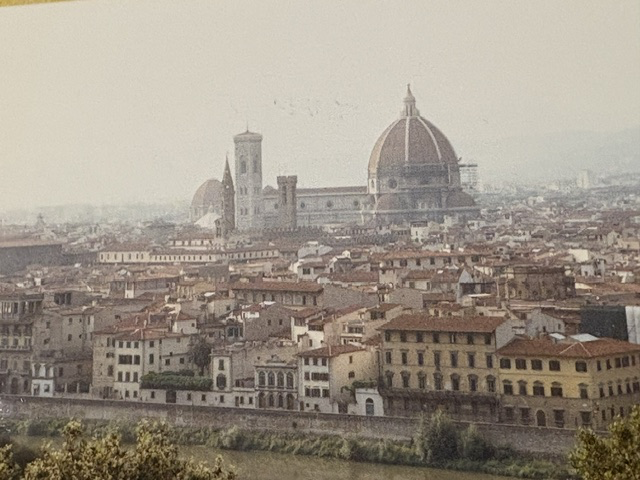
The Florence Skyline
Seen from the hills south of the Arno River, Florence reveals itself not as a collection of separate monuments but as a complete historic city. Rows of closely packed buildings spread across the valley, their warm stone walls and red-tiled roofs creating a remarkably unified landscape. Rising above them are the towers, domes and church […]
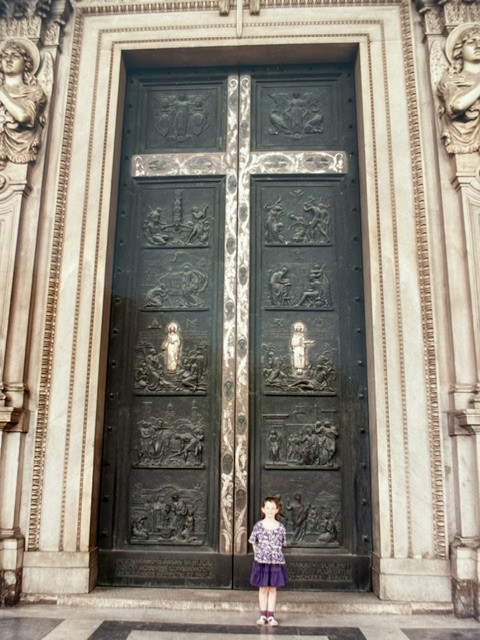
The Holy Door of St. Peter’s Basilica
On one of our family trips to Rome, we visited St. Peter’s Basilica, where this photograph of Erin was taken standing in front of the enormous bronze Holy Door. Known as the Porta Santa, it is one of the most significant entrances to St. Peter’s Basilica and has been associated with the Catholic Church’s Jubilee […]

